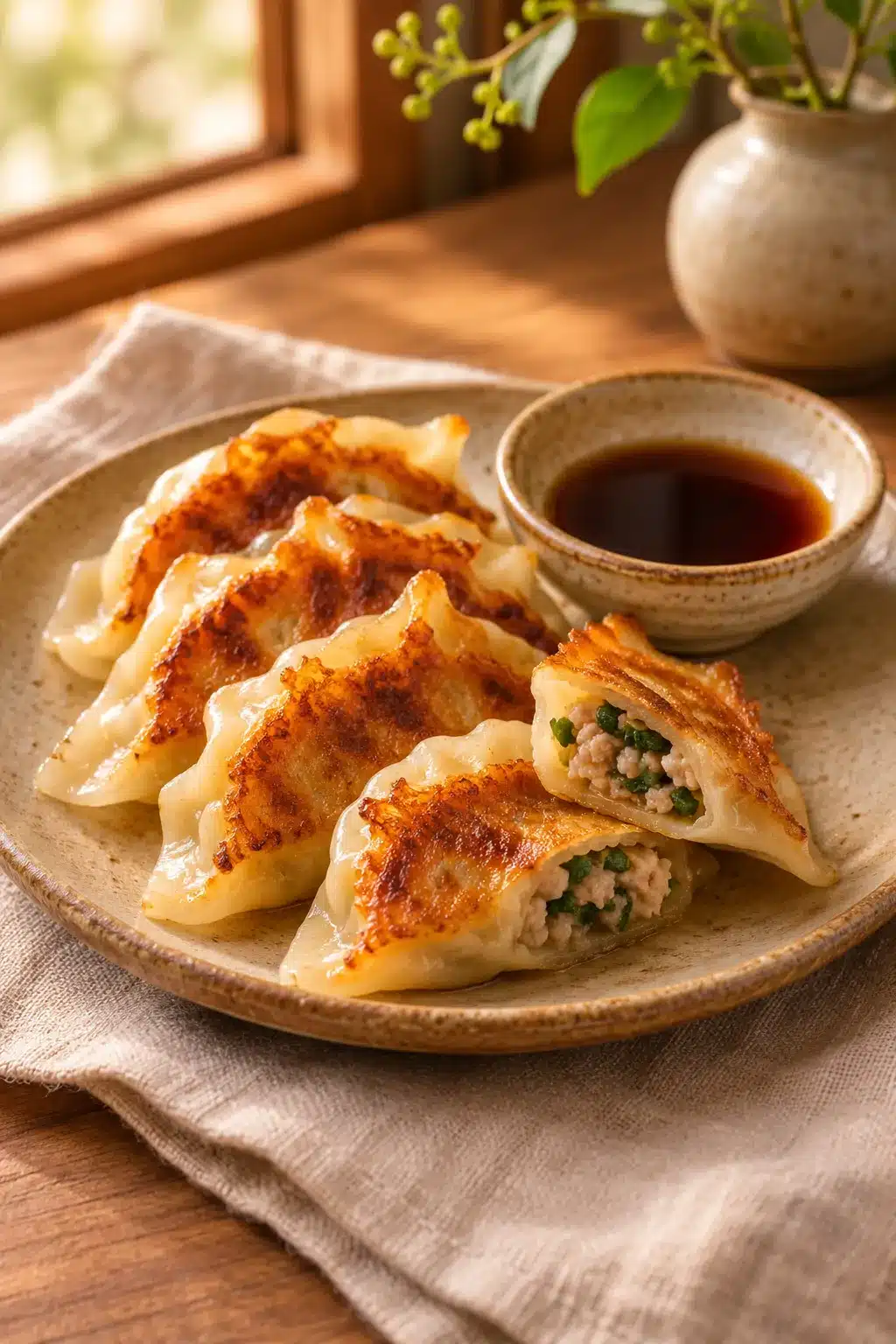

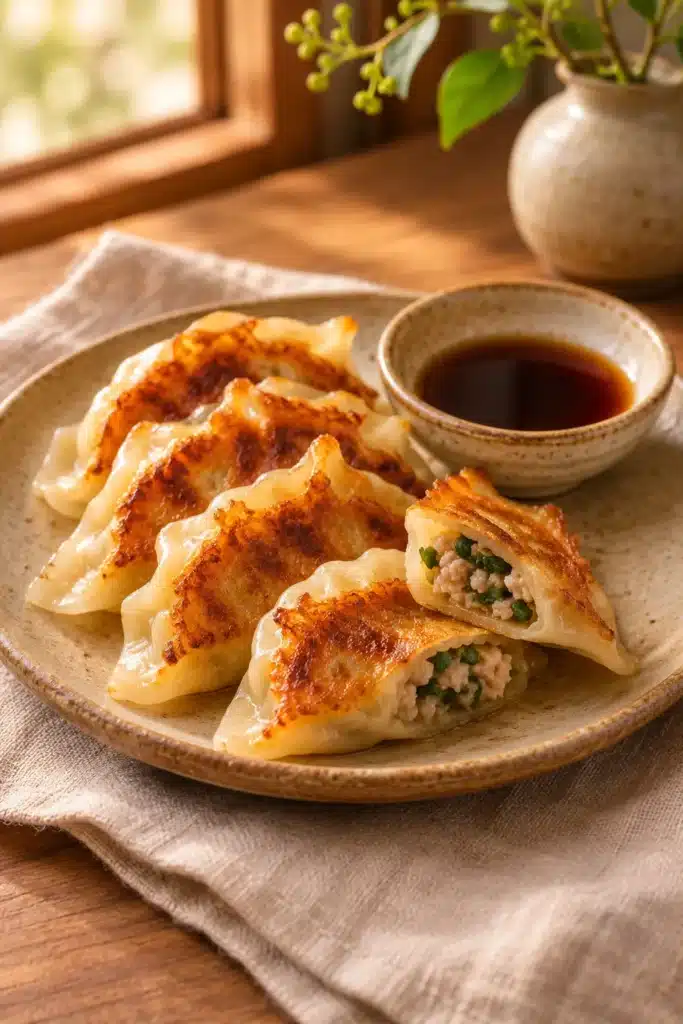
Japanese gyoza dumplings bring together a savory pork filling, tender cabbage, garlic chives, ginger, and sesame in wrappers that turn crisp underneath while steaming tender on top. The shaping takes a little patience, but the process is easy to break into batches, and the covered skillet finish cooks the filling while creating that signature golden base. Serve these dumplings hot with a sharp soy-vinegar dip and chili oil for a lively appetizer or casual shared meal.
What makes these Japanese gyoza dumplings work
The filling balances rich pork with finely chopped cabbage and aromatic garlic chives. Salting the cabbage first draws out excess moisture, so the mixture stays cohesive instead of watery inside the wrappers. Cornstarch helps bind the filling, while sesame oil and ginger give it a rounded, distinctly savory aroma.
The cooking method uses two textures in one pan. The dumplings first sear in oil, then steam briefly with water under a lid. When the water evaporates, the bottoms return to the hot surface and become crisp and golden while the wrapper tops remain tender.
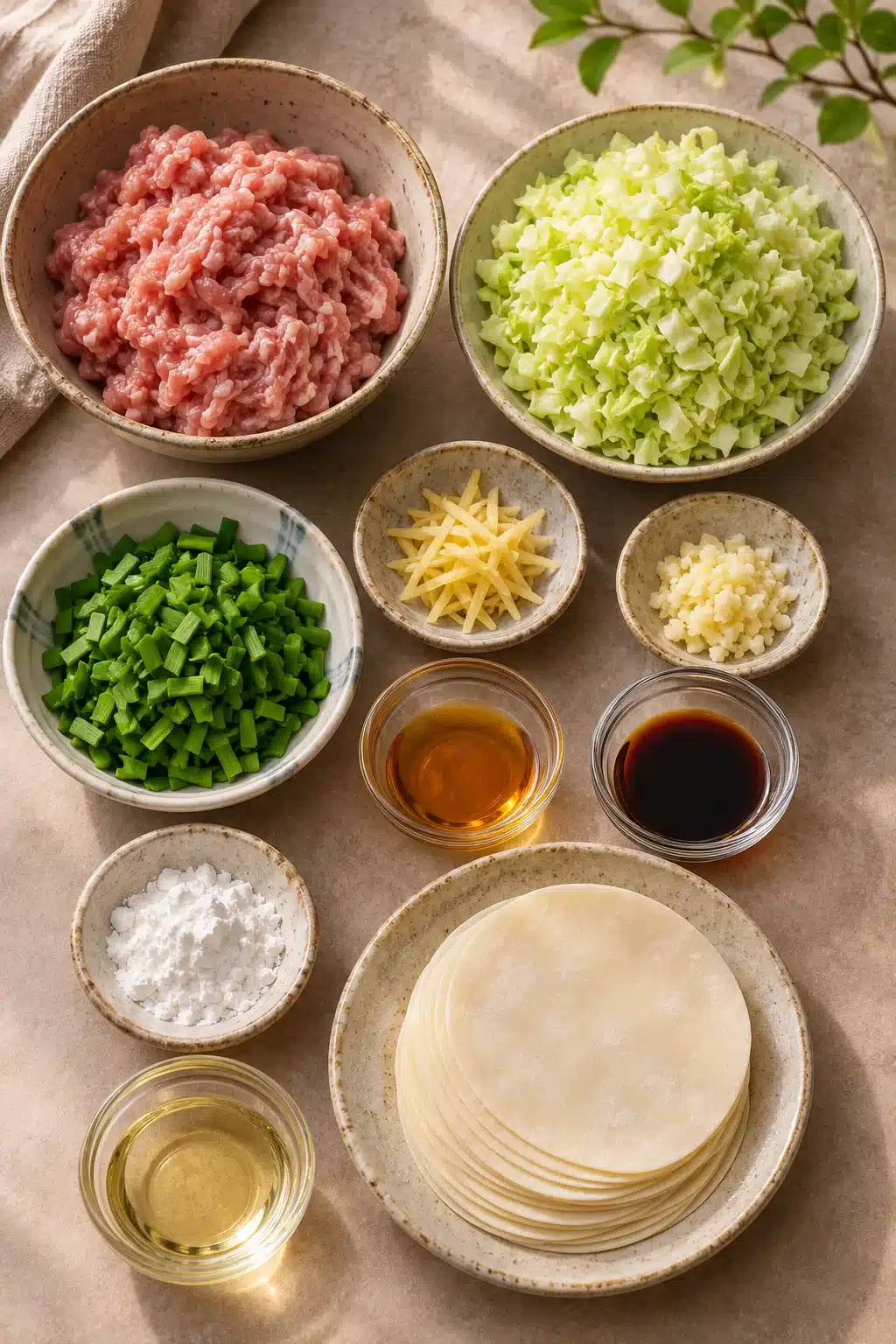
Ingredients for Japanese gyoza dumplings
- 1 1/2 cups finely chopped green cabbage
- 1 teaspoon salt, divided
- 1 lb / 500 g ground pork
- 1 cup finely chopped garlic chives
- 1 crushed garlic clove
- 1 teaspoon grated ginger
- 1 teaspoon sesame oil
- 1 tablespoon cornstarch for the filling
- 2 teaspoons soy sauce
- 1 teaspoon cornstarch for the tray
- 40-45 round gyoza or wonton wrappers
- 3 tablespoons vegetable oil
- Optional dipping sauce: soy sauce, rice wine vinegar, and chili oil
Why this gyoza method works
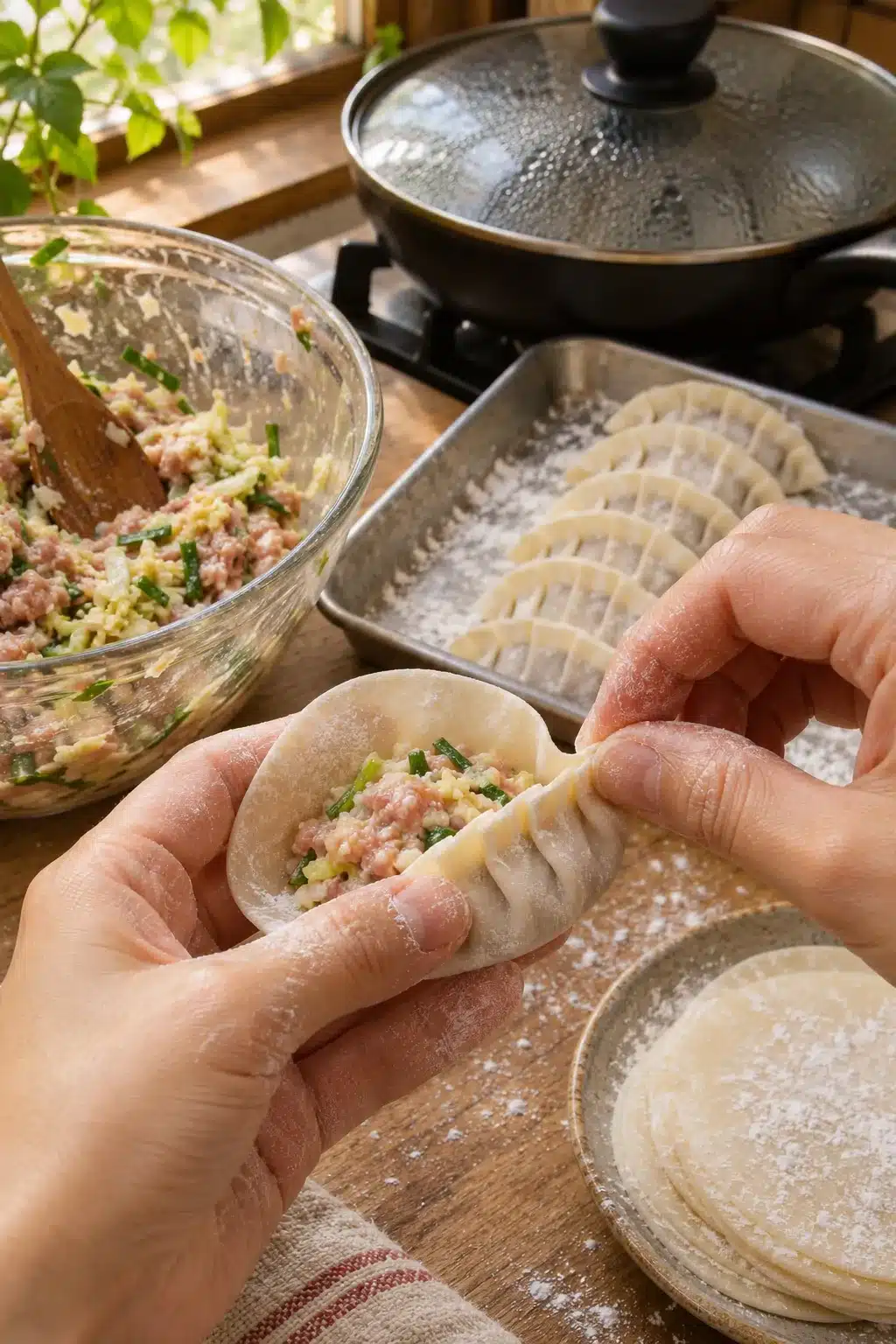
The filling is compact enough to pleat without tearing the wrappers, and the covered skillet gives the pork time to cook through without drying the edges. The final uncovered moments matter: they drive off the last moisture and let the browned bases firm up again.
How to make them
- Combine the cabbage and 1/2 teaspoon of the salt in a small bowl. Set aside for 20 minutes so the cabbage wilts slightly.
- Put the pork, garlic chives, garlic, ginger, sesame oil, cornstarch, soy sauce, and the remaining 1/2 teaspoon salt in a large bowl. Squeeze excess water from the cabbage and add it.
- Mix the filling thoroughly with your hands until evenly combined.
- Sprinkle a baking tray with 1 teaspoon cornstarch.
- Place one wrapper on your palm. Moisten half its edge with water, add a slightly heaped tablespoon of filling, fold the wrapper over, pleat the edge, and press to seal. Repeat with the remaining wrappers and filling.
- Heat 1 tablespoon oil in a large lidded skillet over medium-high heat. Arrange about 12 gyoza in slightly overlapping rows and cook until the bottoms are light golden.
- Pour 1/3 cup water around the gyoza and cover immediately. Cook until the water evaporates and the wrappers look slightly translucent, about 3 to 4 minutes.
- Use an egg flip to transfer the gyoza to a plate golden-side up. Repeat with the remaining batches.
- Serve with soy sauce, rice wine vinegar, and chili oil, either separately or mixed to taste.
Serving ideas
Serve the gyoza as an appetizer with the dipping sauce in small bowls. For a more complete meal, pair them with steamed rice, cucumber salad, or a simple broth. A batch of 40 to 45 pieces is well suited to a game-night platter or a casual dinner where everyone can reach for a few.
Tips and an optional variation
Keep unused wrappers covered with a slightly damp towel so their edges do not dry out. Do not overfill: a slightly heaped tablespoon leaves enough room to seal cleanly. If the bottoms brown before the water evaporates, lower the heat slightly for the next batch.
Optional variation: Replace part of the pork with finely chopped shrimp, keeping the filling compact and making sure the center is fully cooked before serving. This changes the flavor but keeps the same shaping and skillet method.
Storage and reheating
Cool cooked dumplings promptly, refrigerate them in a covered container, and reheat them in a lightly oiled skillet so the bottoms regain some crispness. You can also freeze uncooked shaped gyoza on a tray, then transfer them to a freezer bag once firm. Cook frozen dumplings without thawing, allowing extra covered time for the filling to heat through.
Common search questions
How do you keep gyoza from sticking?
Dust the tray with cornstarch and avoid letting shaped wrappers sit in pooled moisture. In the skillet, use enough oil to coat the base before arranging the dumplings.
Why do gyoza have crisp bottoms?
The dumplings fry first, then steam. Once the water cooks away, the bottoms contact the hot oiled skillet again and become crisp.
What sauce goes with pork gyoza?
A simple mixture of soy sauce, rice wine vinegar, and chili oil gives salty, tangy, and spicy notes without masking the filling.
Japanese gyoza dumpling FAQs
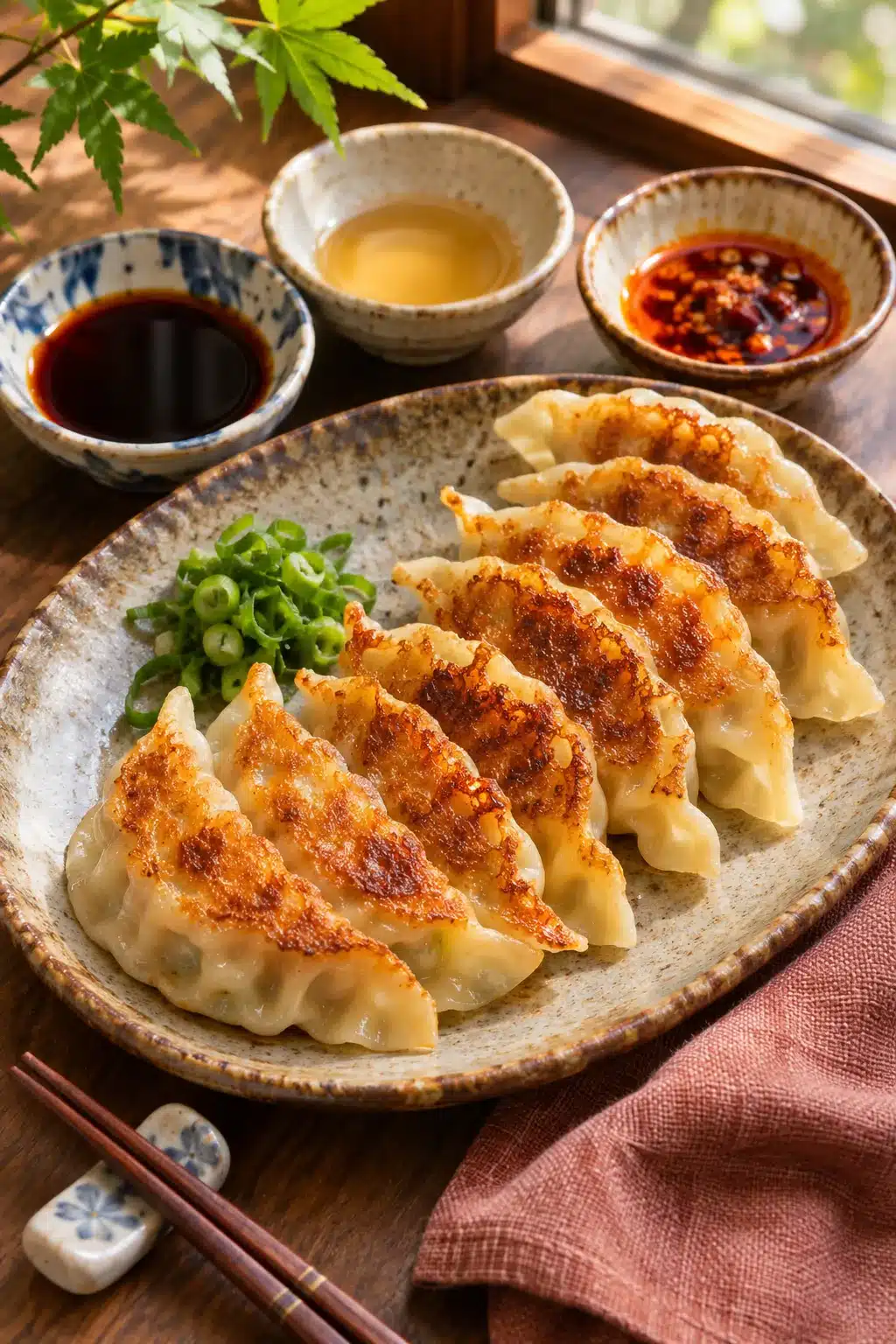
With a flavorful filling and a reliable fry-then-steam method, these Japanese gyoza dumplings are a practical recipe for sharing. Shape them at your own pace, cook them in small batches, and serve them while the bottoms are still crisp.

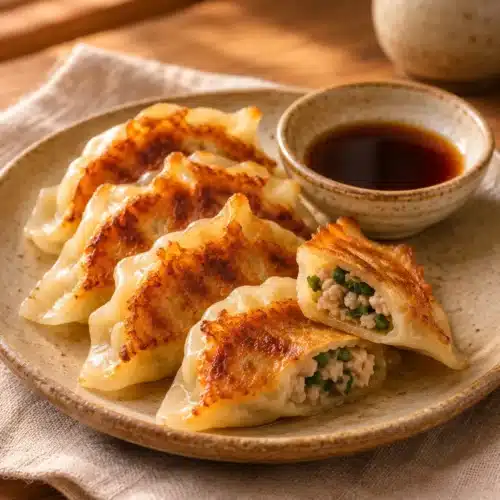
Japanese Gyoza Dumplings with Pork and Chives
Ingredients
Ingredients
- 1 1/2 cups green cabbage very finely chopped
- 1 teaspoon salt divided
- 1 lb / 500 g ground pork use a relatively fatty mince
- 1 cup garlic chives finely chopped
- 1 clove garlic crushed
- 1 teaspoon ginger grated
- 1 teaspoon sesame oil none
- 1 tablespoon cornstarch for the filling
- 2 teaspoons soy sauce for the filling
- 1 teaspoon cornstarch for the tray
- 40-45 round gyoza or wonton wrappers about 1 1/2 packets
- 3 tablespoons vegetable oil for cooking
- soy sauce to serve
- rice wine vinegar to serve
- chili oil to serve
Instructions
Instructions
- Combine the cabbage and 1/2 teaspoon of the salt in a small bowl. Set aside for 20 minutes so the cabbage wilts slightly.
- Put the pork, garlic chives, garlic, ginger, sesame oil, cornstarch, soy sauce, and the remaining 1/2 teaspoon salt in a large bowl. Squeeze excess water from the cabbage and add it.
- Mix the filling thoroughly with your hands until evenly combined.
- Sprinkle a baking tray with 1 teaspoon cornstarch.
- Place one wrapper on your palm. Moisten half its edge with water, add a slightly heaped tablespoon of filling, fold the wrapper over, pleat the edge, and press to seal. Repeat with the remaining wrappers and filling.
- Heat 1 tablespoon oil in a large lidded skillet over medium-high heat. Arrange about 12 gyoza in slightly overlapping rows and cook until the bottoms are light golden.
- Pour 1/3 cup water around the gyoza and cover immediately. Cook until the water evaporates and the wrappers look slightly translucent, about 3 to 4 minutes.
- Use an egg flip to transfer the gyoza to a plate golden-side up. Repeat with the remaining batches.
- Serve with soy sauce, rice wine vinegar, and chili oil, either separately or mixed to taste.