
There’s nothing quite like the smell of baked salmon drifting through the house on a quiet weeknight. It’s that warm, savory aroma that instantly feels like comfort food, even if you’re just whipping it up on a whim. I remember the first time I made baked salmon—it was totally accidental, honestly. I was looking for something healthy but delicious, and I threw together some lemon, herbs, and a drizzle of olive oil. The result? A flaky, tender piece of fish that practically melted in my mouth. Since then, baked salmon has become my go-to dinner—trust me, it’s a lifesaver on busy nights when I want something nourishing without spending hours in the kitchen. Plus, it’s kid-friendly, budget-friendly, and so versatile. Whether you’re serving it with rice, roasted veggies, or just a squeeze of lemon, this baked Salmon Recipe is bound to become a staple in your household too. Let’s dive into what makes this dish so special and how to make it perfect every time.
Thank you for reading this post, don't forget to subscribe!What is baked salmon?
Baked salmon is simply salmon fillets cooked in the oven until they’re perfectly tender and juicy. Think of it as the fuss-free way to enjoy this rich, omega-3-packed fish. The beauty of baked salmon is how adaptable it is—whether you prefer it lemony and herbaceous, garlic-infused, or topped with a sweet glaze, it handles all flavors beautifully. The name “baked salmon” might sound straightforward, but don’t let that fool you. It’s essentially a blank canvas that allows your culinary creativity to shine. I love how effortless it is—no need for fancy equipment or complicated techniques. Just a Sheet Pan, some good-quality salmon, and a sprinkle of seasonings, and you’re good to go. Over the years, I’ve tested this with different marinades, spice blends, and topping ideas, and I’ve learned that the key is not overcooking it. Once you master the timing, every piece turns out perfectly flaky and moist, which is exactly what I want in a fish dish.
Why you’ll love this recipe?
Why is baked salmon a favorite?
- Flavor: The smell alone makes everyone in the house come running. The salmon turns out buttery, tender, with subtle hints of lemon, garlic, or herbs—whatever you fancy. What I love most about this is how the simple seasonings create such a vibrant, fresh taste that feels a little special even on an average weeknight.
- Simplicity: No fancy techniques, no fuss. You basically line a baking sheet, season the fish, and pop it in the oven. That’s it. Cleanup is a breeze too, making it perfect when I’m craving healthy food but don’t want to be chained to the stove.
- Cost-efficient: a product that is cost-efficient. Salmon is surprisingly affordable, especially if you buy it in bulk or from a good fishmonger. It’s also so much healthier than takeout or heavily processed meals, and I always feel good about giving my family something nourishing.
- Versatility: This baked salmon can go in so many directions. I’ve done Mediterranean style with olives and feta, or simply topped it with a Honey Mustard glaze. It works with all sorts of sides—rice bowls, roasted veggies, steamed greens, you name it. Plus, it’s equally delicious cold on sandwiches the next day, which makes it a real workweek hero.
How to Make Baked Salmon
Quick Overview
This baked salmon recipe is all about keeping things simple while maximizing flavor. You start by preheating your oven and lining a baking sheet with parchment paper. Then, you season your salmon fillets with salt, pepper, lemon, and your favorite herbs. Pop them into the oven at a moderate temperature, usually 400°F (200°C), and bake for about 12-15 minutes. The magic is in watching it turn flaky and opaque — no dry, overcooked fish here! If you’re feeling adventurous, throw on a quick glaze or topping during the last few minutes. That’s it. The result? Juicy, tender, perfectly baked salmon that feels like a restaurant-quality meal but is super easy to make at home.
Ingredients
For the Salmon:
– 4 salmon fillets (about 6 oz each, skin on or off, depending on preference)
– 2 tablespoons olive oil (good quality but not extra virgin—just enough to coat)
– 1 lemon (for zest and juice)
– Salt and freshly ground Black Pepper
– 2 cloves garlic, minced (optional but adds a nice punch)
– Fresh herbs: dill, parsley, or thyme (your choice! Fresh is best but dried works if you’re in a pinch)
For the Glaze or Topping:
– 2 tablespoons honey or maple syrup (for a touch of sweetness)
– Dijon mustard (if you want a tangy kick)
– A sprinkle of chili flakes or paprika (for a smoky, spicy touch)
Step-by-Step Instructions
Step 1: Preheat & Prep Pan
Set your oven to 400°F (200°C). Line a baking sheet with parchment paper or a silicone baking mat—trust me, cleanup is so much easier, and it prevents sticking. Pat your salmon dry with paper towels; it helps the seasonings stick and promotes even cooking. If you like crispy edges, leave the skin on, but I usually remove it for a cleaner presentation and easier serving.
Step 2: Mix Dry Ingredients
In a small bowl, combine salt, pepper, garlic (if using), and herbs. This seasoned mix is your flavor base. I always do this first—it’s like setting the scene for the flavor to shine. If you’re a lemon lover, zest a lemon right into the mix to add bright citrus notes directly into the seasoning.
“New family favorite! This Simple Baked Salmon in Foil Packets was so flavorful and ridiculously easy. Crowd-pleaser for sure.”
Step 3: Mix Wet Ingredients
In another bowl, whisk together olive oil, lemon juice, and a touch of honey or maple syrup if you’re going for a glaze. You want everything well combined but not too heavy. Sometimes I test the mixture with a spoon — if it feels silky and coats the back of a spoon, you’re good to go.
Step 4: Combine
Brush the salmon fillets with the wet mixture carefully — this helps keep the fish moist. Then sprinkle the dry seasoning evenly over each piece. Trust me, don’t skip this step; it’s the secret to that perfectly seasoned, flavorful crust.
Step 5: Prepare Filling
If you’re adding a glaze or topping, mix honey and mustard and set aside. For a more savory twist, sprinkle chopped herbs or a dusting of paprika on top of the fillets. The key is balance — don’t overload, but add enough to make it look inviting.
Step 6: Layer & Swirl
If you’re feeling fancy, you can swirl a little of the glaze into the top of the fillets before baking, creating a marbled effect. Just a gentle swirl with a toothpick works wonders. It’s a great way to enhance flavor without much extra effort.
Step 7: Bake
Place the fish in the oven and bake for 12-15 minutes. Every oven is different, so start checking at 12 minutes. The salmon should be opaque and easily flake with a fork. Overbaking can make it dry, so keep a close eye. If you’re using a thermometer, aim for 125°F (52°C) in the thickest part for perfect doneness.
Step 8: Cool & Glaze
Once baked, let the salmon rest for a few minutes. This helps redistribute the juices and keeps it moist. If you want to add a final glaze, brush it on while it’s still warm. The smell of that sweet honey-glazed fish is irresistible and will make everyone eager to dig in.
Step 9: Slice & Serve
Use a sharp knife to gently slide under each fillet. Serve it plated with lemon wedges, fresh herbs, or your favorite sides. I love pairing this with roasted veggies or a simple green salad. Sometimes I toss leftover pieces into a pasta or a grain bowl for an instant lunch. Nothing fancy, just hearty, satisfying bites.
What to Serve It With
This baked salmon is incredibly versatile, so I always have ideas ready for different occasions:
- For breakfast or brunch: Flake some on a toasted bagel with cream cheese and dill. It’s basically salmon lox, but way easier—and no curing required.
- For a casual dinner: Serve alongside roasted sweet potatoes and steamed spinach. Drizzle a little extra lemon over everything. My kids ask for this all the time—especially after a long day!
- As a light lunch: Make salmon salads with crunchy greens, cherry tomatoes, and a vinaigrette. I sometimes add a handful of capers or a sprinkle of feta for extra flavor.
- For a special dinner: Plat with wild rice or quinoa, a drizzle of herbed yogurt, and some grilled asparagus. I like to keep the presentation simple but elegant—everyone eats with their eyes first, right?
Honestly, this dish is so good that I find myself sneaking leftovers straight from the fridge. It’s as satisfying cold as it is fresh from the oven. Plus, leftovers reheat beautifully in the microwave or oven, making it a true weeknight hero.
“The Simple Baked Salmon in Foil Packets turned out amazing. My kids asked for seconds. Saving this one!”
Top Tips for Perfecting Your Baked Salmon
After making this dish countless times, I’ve picked up a few tricks that are worth sharing:
- Zucchini Prep: I used to include zucchini in my salmon bake, but it released too much moisture and made everything soggy. Now, I prefer roasting zucchini separately or slicing thin and salting it beforehand to draw out excess water. It keeps things crisp and fresh.
- Mixing Advice: Don’t overmix the seasonings or the fish—keep everything gentle. Overmixing can toughen the flesh, and you want that melt-in-your-mouth texture. When in doubt, fold ingredients together rather than stirring vigorously.
- Swirl Customization: For visual appeal, I love swirling a bit of spicy sriracha or a dark balsamic glaze into the honey-mustard glaze before brushing. It’s a little surprise in every bite.
- Ingredient Swaps: If you don’t have fresh herbs, dried is fine—just cut the quantity by half. For oil, you can swap olive for avocado or even melted butter for richness.
- Baking Tips: Make sure to position your rack in the middle and avoid opening the oven too often. Use a timer, but check a few minutes early—every fish is different. The goal is to see the fish opaque and flaky; that’s when you know it’s perfect.
- Glaze Variations: Experiment with different sweetness levels or spices—a pinch of cumin or coriander can add unexpected depth. The consistency should be thick enough to stay on the fish but not gloopy.
Over the years, I’ve learned that patience and attention to detail are key. Even if I’ve made this dozens of times, I still get excited when I see that beautiful, flaky finish. My biggest tip: don’t forget to serve it with a big squeeze of lemon—trust me, bright citrus makes all the difference.
Storing and Reheating Tips
This baked salmon keeps well for a day or two, which makes leftovers a real bonus. Here’s how I handle storing and reheating:
- Room Temperature: Not recommended for more than two hours—bacteria love warm fish. Best to pop leftovers into the fridge quickly.
- Refrigerator Storage: Keep salmon in an airtight container or wrap tightly with foil. It’s usually good for 2-3 days. To keep it moist, drizzle a little fresh lemon juice over before reheating.
- Freezer Instructions: Seal portions in freezer-safe bags, removing as much air as possible to prevent freezer burn. It’s best used within three months. Thaw overnight in the fridge, then reheat gently in the oven at low temperature or microwave.
- Glaze Timing: If you want that shiny, flavorful glaze to stay bright, apply it just before serving. If you’re reheating, do so first, then brush on fresh glaze and give it a quick broil if needed to caramelize a bit.
For best flavor, I recommend reheating in the oven to avoid drying it out — it keeps the juicy texture intact. Just cover with foil, heat at 300°F for about 10 minutes, and you’re set. Sometimes, I toss shredded leftover salmon into a pasta dish or wrap it in a tortilla for a quick snack—delicious either way.
Frequently Asked Questions
Final Thoughts
Honestly, there’s something magical about baking salmon perfectly every time. It’s one of those dishes I keep coming back to because it’s healthy, quick, and impossible to mess up—plus, it always impresses family and friends. The best part? Watching that beautiful, flaky fish emerge from the oven, smelling so good that everyone hovers nearby, eager to dig in. Whether you’re cooking for a weeknight dinner or a casual gathering, this baked salmon will never let you down. Play around with flavors, add your favorite herbs or toppings, and make it your own. Remember, the secret is in the timing—don’t overcook! I can’t wait to hear how yours turns out. Share your variations in the comments or tag me on social media. Happy baking and savoring every bite!

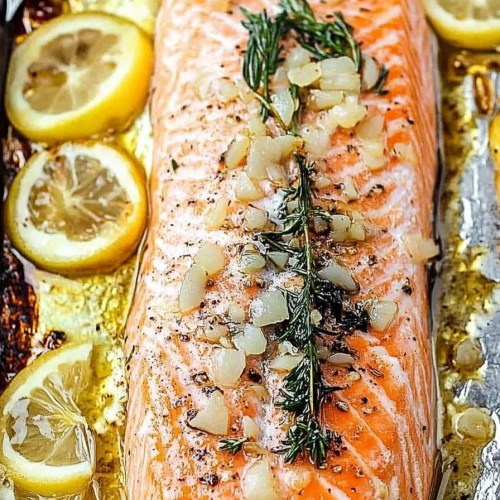
baked salmon
Ingredients
Main Ingredients
- 2.5 pounds salmon fillet
- 0.125 teaspoon salt
- 0.125 teaspoon pepper
- 1 medium lemon sliced
- 4 sprigs fresh dill
- 2 tablespoons cold butter
- 0.25 cup olive oil
- 2 tablespoons lemon juice
- 1 teaspoon dijon mustard
- 2 teaspoons honey
- 2 tablespoons fresh chopped dill
- 0.125 teaspoon garlic powder
- 0.125 teaspoon onion powder
- 1 tablespoon pickle juice
- 1 teaspoon lemon juice
- 1 tablespoon fresh chopped dill
Instructions
Preparation Steps
- Begin by removing any excess moisture from the salmon fillet with a paper towel and sprinkle the salmon fillet with salt and pepper. Set aside.
- Prepare the marinade by placing olive oil, lemon juice, dijon mustard, honey, dill, salt, and garlic into a bowl and whisking until all ingredients are combined.
- Place a large piece of tin foil onto a baking sheet, fold up the edges to contain liquid, and pour the marinade onto the foil.
- Lay the salmon fillet skin side up into the marinade and let it sit for 15-30 minutes.
- Preheat the oven to 375ºF.
- Flip the salmon over to skin side down and lay lemon slices and dill sprigs on top.
- Wrap the salmon carefully in the foil, folding all edges so no air escapes.
- Bake the salmon for 25-35 minutes, depending on thickness.
- Prepare tartar sauce by mixing all ingredients in a bowl and refrigerate.
- Check if salmon is cooked; it should be pink and flake easily.
- Remove from oven, discard dill and lemon slices, and turn oven to broil.
- Top the salmon with cold butter and broil uncovered for 2-5 minutes until caramelized.
- Let rest for 5 minutes, then serve with tartar sauce.