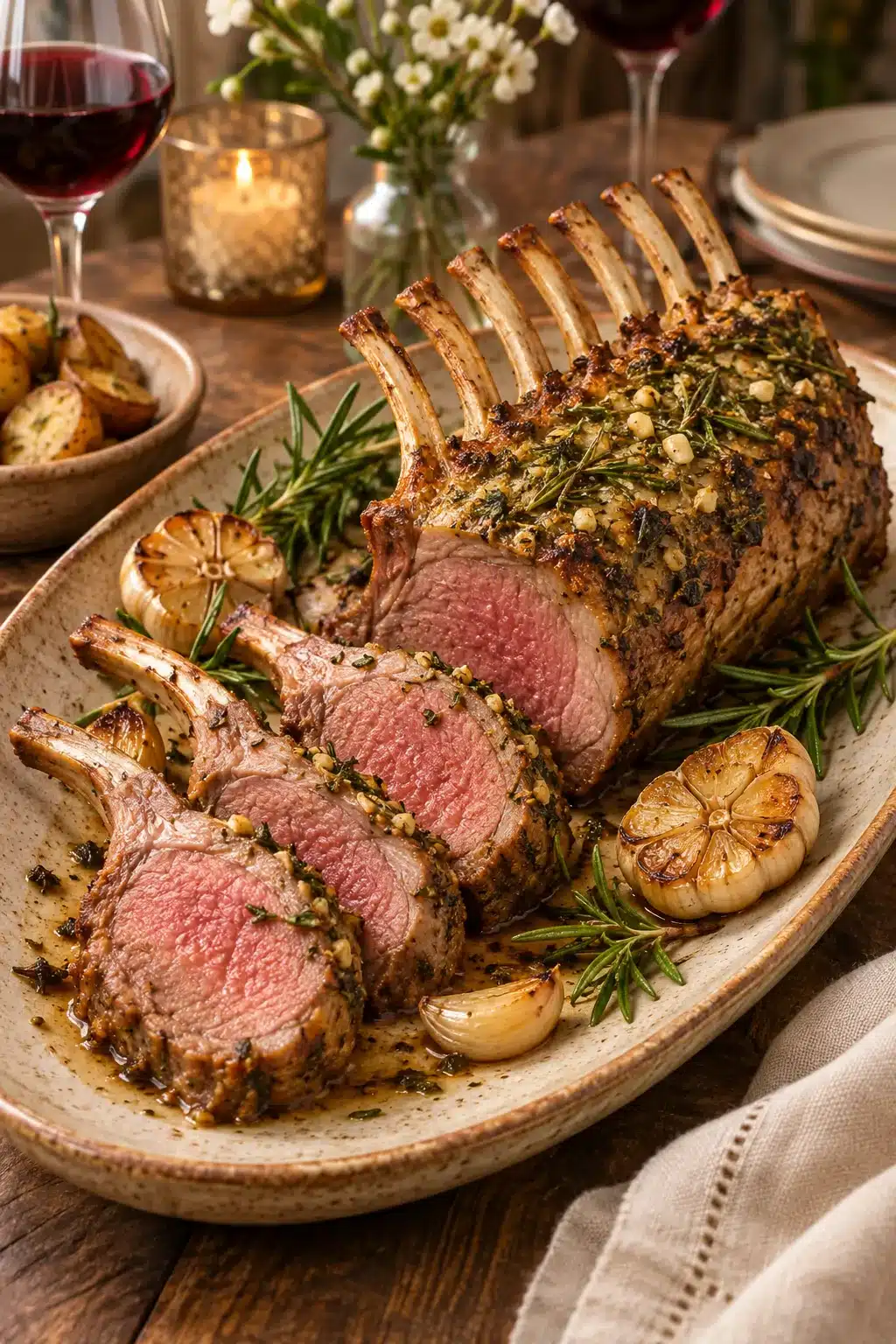

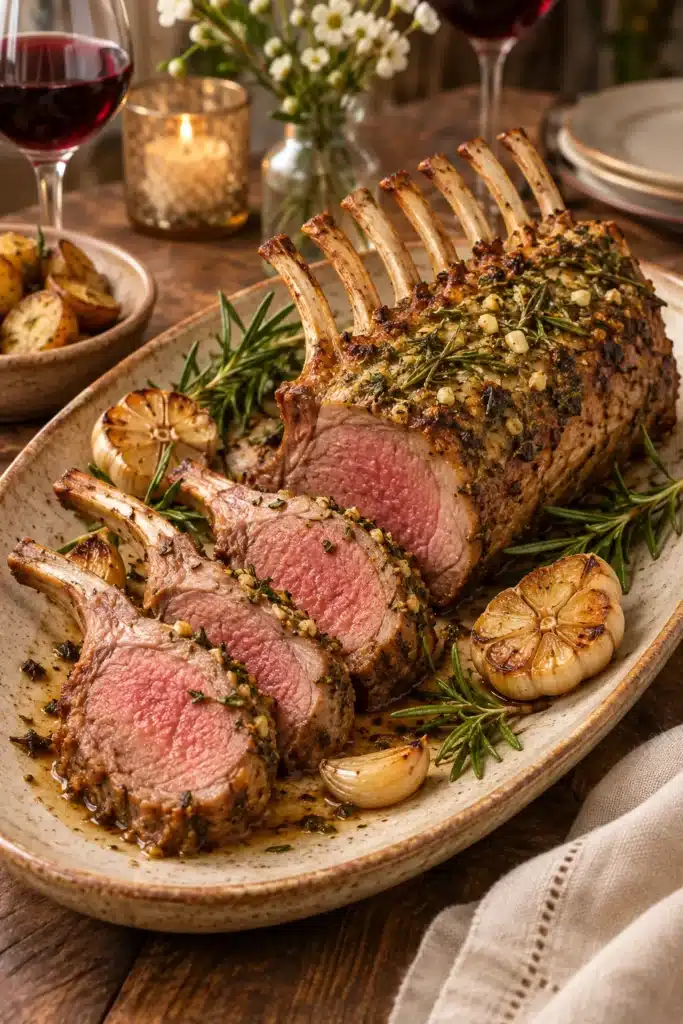
Roasted rack of lamb is an elegant centerpiece that is surprisingly practical for dinner. This version uses garlic, rosemary, Dijon mustard, and panko to make a savory crust over tender lamb, while a hot oven keeps the cooking time short. The key is watching the internal temperature rather than relying only on the clock. With a short rest before slicing, roasted rack of lamb gives you rosy, juicy chops and a crisp, fragrant exterior.
What Is Roasted Rack of Lamb?
A rack is a row of lamb rib chops left together and frenched, meaning the rib bones are exposed and the meat is trimmed neatly. Roasting the rack whole protects the interior from drying while the outer surface browns. Once rested, it can be sliced into individual chops between the bones. The result feels special enough for a holiday meal but needs only a skillet, a bowl, and a baking temperature.
Why This Roasted Rack of Lamb Works
Searing first creates a browned foundation and adds savory drippings to the pan. Dijon gives the breadcrumb coating enough moisture to cling, while its sharp flavor balances the richness of lamb. Garlic and rosemary bring a classic herbal profile without masking the meat. A thermometer provides the most reliable finish: pull the racks at 125°F to 130°F for medium-rare, remembering that the temperature will rise slightly as the lamb rests.
How to Make Roasted Rack of Lamb
Let the lamb lose its refrigerator chill while the oven heats to 425°F. Pat the racks dry so they brown instead of steaming. Season every meaty surface with kosher salt and Black Pepper.
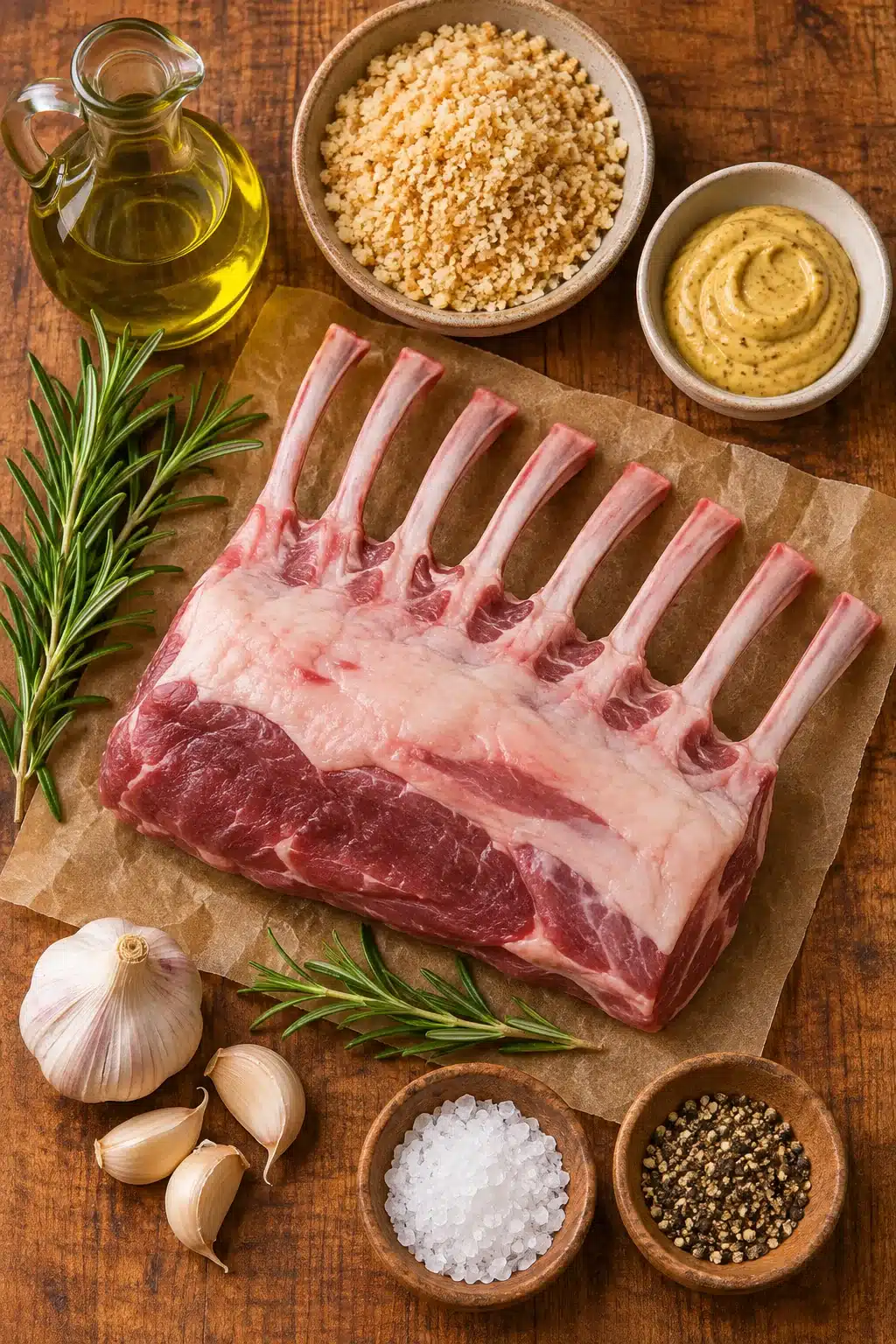
Ingredients
- 2 pounds frenched racks of lamb, trimmed
- 2 tablespoons olive oil, divided
- 4 cloves garlic, minced
- 2 tablespoons fresh rosemary, chopped
- 2 tablespoons Dijon mustard
- 1/2 cup panko breadcrumbs
- 1 teaspoon kosher salt
- 1/2 teaspoon black pepper
Roasted Rack of Lamb Method
- Bring the lamb to room temperature and heat the oven to 425°F.
- Season the racks with salt and pepper. Heat one tablespoon oil in an oven-safe skillet and sear the lamb until browned on all sides.
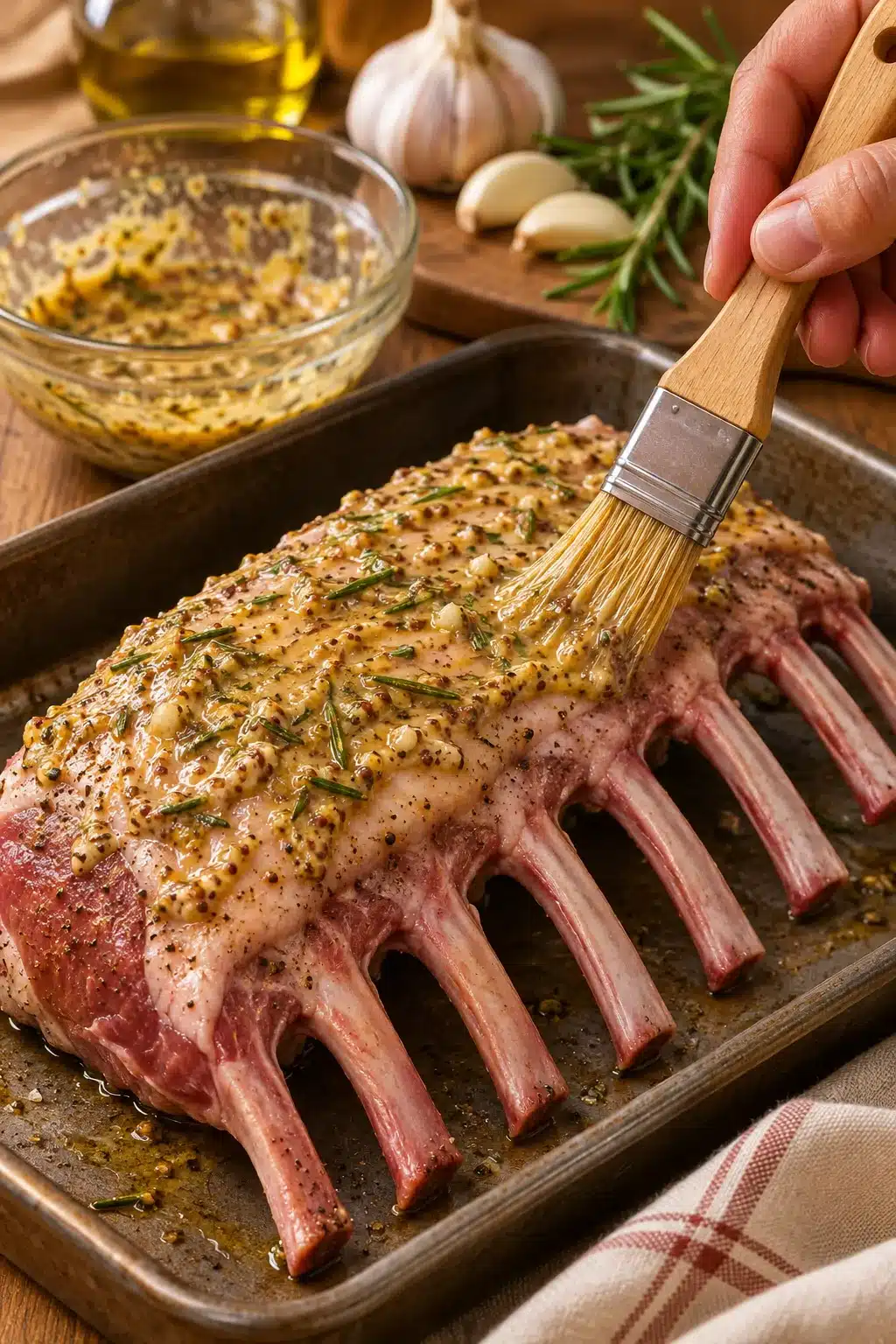
- Mix the remaining oil with garlic, rosemary, Dijon, and breadcrumbs. Press the mixture over the meaty side of each rack.
- Roast until the center reaches 125°F to 130°F for medium-rare, about 15 to 20 minutes.
- Rest the lamb for 10 minutes, then slice between the bones and serve.
Serving Ideas
Slice the rack after resting and arrange the chops with the crust facing up. Creamy mashed potatoes, roasted carrots, Green Beans, or a bright lemony salad all work well. For a dinner-party plate, spoon pan juices around the lamb rather than over the crust, so the breadcrumbs stay crisp. A simple mint sauce or rosemary pan gravy can be offered on the side.
Recipe Tips
Use a thermometer in the thickest center, avoiding the bone. If the crust darkens before the lamb reaches temperature, tent the top loosely with foil. Sear in batches if the skillet is crowded; crowded meat releases steam and will not brown as deeply. Resting is part of the cooking process, so do not cut immediately after the oven.
Optional Variation
For an optional variation, replace half of the rosemary with finely chopped parsley for a fresher herb crust. Keep the lamb, Dijon, garlic, breadcrumb quantity, oven temperature, and internal-temperature target unchanged so the primary recipe remains the same.
Storage and Reheating
Refrigerate cooled lamb in a sealed container for up to three days. Store whole or sliced pieces with any juices so they stay moist. Reheat gently in a covered skillet with a spoonful of stock, or warm in a low oven until just heated through. Avoid high heat, which can take medium-rare lamb to well-done and toughen the center.
Search Questions Answered
How long does roasted rack of lamb take? Allow about 15 minutes to prepare and sear, then 15 to 20 minutes to roast, plus a 10-minute rest. The exact time depends on rack thickness and starting temperature.
What temperature is lamb medium-rare? Remove it at 125°F to 130°F in the center. Carryover cooking during the rest will finish the texture while keeping the slices juicy.
Should lamb rest before slicing? Yes. Ten minutes lets hot juices redistribute and makes it easier to cut clean chops without losing moisture onto the board.
FAQs
Can I prepare the crust ahead?
Yes. Mix the garlic, rosemary, Dijon, and breadcrumbs several hours ahead and refrigerate it covered. Bring it out while the lamb warms.
Can I use dried rosemary?
You can, but use less because dried herbs are concentrated. Fresh rosemary gives the crust a brighter aroma and softer texture.
How do I slice the rack?
Set the rested rack crust-side up and cut down between each rib bone with a sharp knife. Keep the cuts even so every chop has crust.
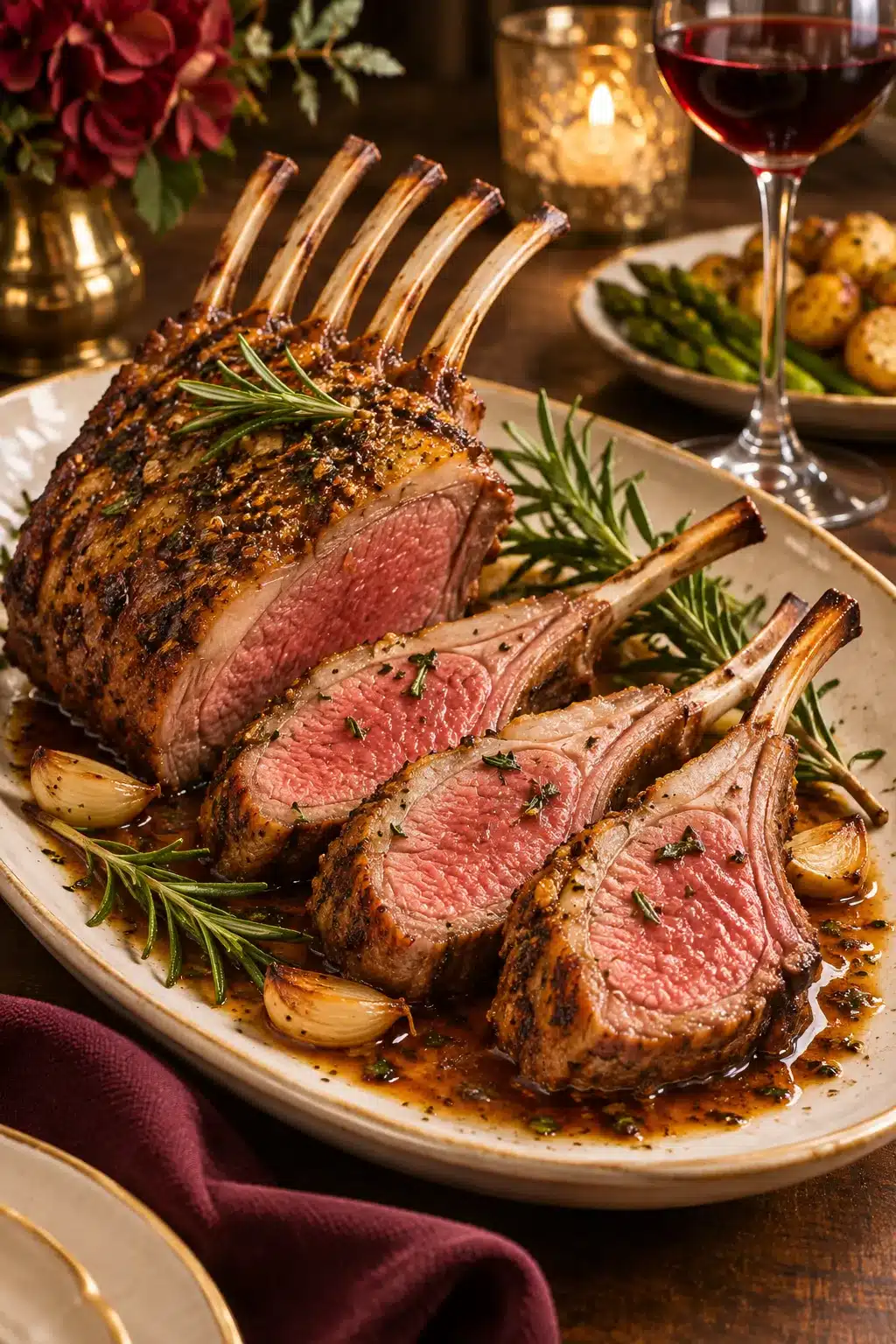
Roasted rack of lamb is at its best when the crust is crisp, the center is rosy, and the slices are served promptly after their rest. Keep the seasoning simple, use the thermometer, and let the lamb be the focus of the plate.
If you are coordinating a full meal, start the lamb after the vegetables are nearly tender. The racks can rest while you finish a sauce or warm bread, and the ten-minute pause gives you a useful window for setting the table. When buying, ask for frenched racks of similar size so they finish together. A little extra fat around the cap is welcome for flavor, but trim any thick, hard pieces that will not soften during the brief roast.
Doneness can look different depending on the cut. The outside will be deeply browned, while the exposed bones may darken quickly. Insert the thermometer from the side into the thickest part of the meat, because inserting it straight down can bring the probe too close to a bone and give a misleading reading. If one rack is smaller, check it first and remove it when ready; the larger rack can continue roasting for a few minutes.
For a polished presentation, wipe the bones clean before serving and stand the chops slightly overlapping on a platter. Spoon a little of the resting juice over the sliced meat, then pass the remaining juice separately. This keeps the crunchy panko coating intact. A squeeze of lemon at the table is also useful because its acidity cuts through the richness without changing the herb-and-mustard character of the recipe.
The breadcrumb crust should feel lightly pressed rather than packed into a thick paste. A loose coating browns evenly and lets the rosemary remain distinct. If the mixture seems dry, add a few drops of Olive oil; if it seems wet, add a small spoonful of panko. These small adjustments depend on the size of the garlic cloves and the moisture of the mustard, so use texture as your guide.
This recipe is especially useful for a date-night dinner, a small holiday gathering, or any meal where you want a centerpiece without a long braise. Four servings means each guest can receive a couple of chops, with vegetables and potatoes alongside. For a larger table, roast additional racks in a second pan rather than crowding One Skillet. Keep the racks spaced apart so hot air can brown the crust.
Do not discard the browned bits left in the skillet. If the pan is oven-safe and not too hot, add a splash of stock after removing the lamb and scrape gently. Simmer it briefly, taste for seasoning, and serve it as a simple jus. This is optional serving guidance only; the primary lamb method remains complete without a sauce.

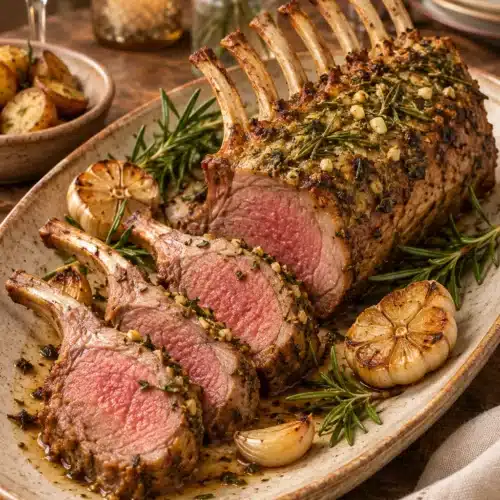
Roasted Rack of Lamb
Ingredients
Ingredients
- 2 pounds frenched racks of lamb trimmed
- 2 tablespoons olive oil divided
- 4 cloves garlic minced
- 2 tablespoons fresh rosemary chopped
- 2 tablespoons Dijon mustard
- 1/2 cup panko breadcrumbs
- 1 teaspoon kosher salt
- 1/2 teaspoon black pepper
Instructions
Instructions
- Bring the lamb to room temperature and heat the oven to 425°F.
- Season the racks with salt and pepper. Heat one tablespoon oil in an oven-safe skillet and sear the lamb until browned on all sides.
- Mix the remaining oil with garlic, rosemary, Dijon, and breadcrumbs. Press the mixture over the meaty side of each rack.
- Roast until the center reaches 125°F to 130°F for medium-rare, about 15 to 20 minutes.
- Rest the lamb for 10 minutes, then slice between the bones and serve.