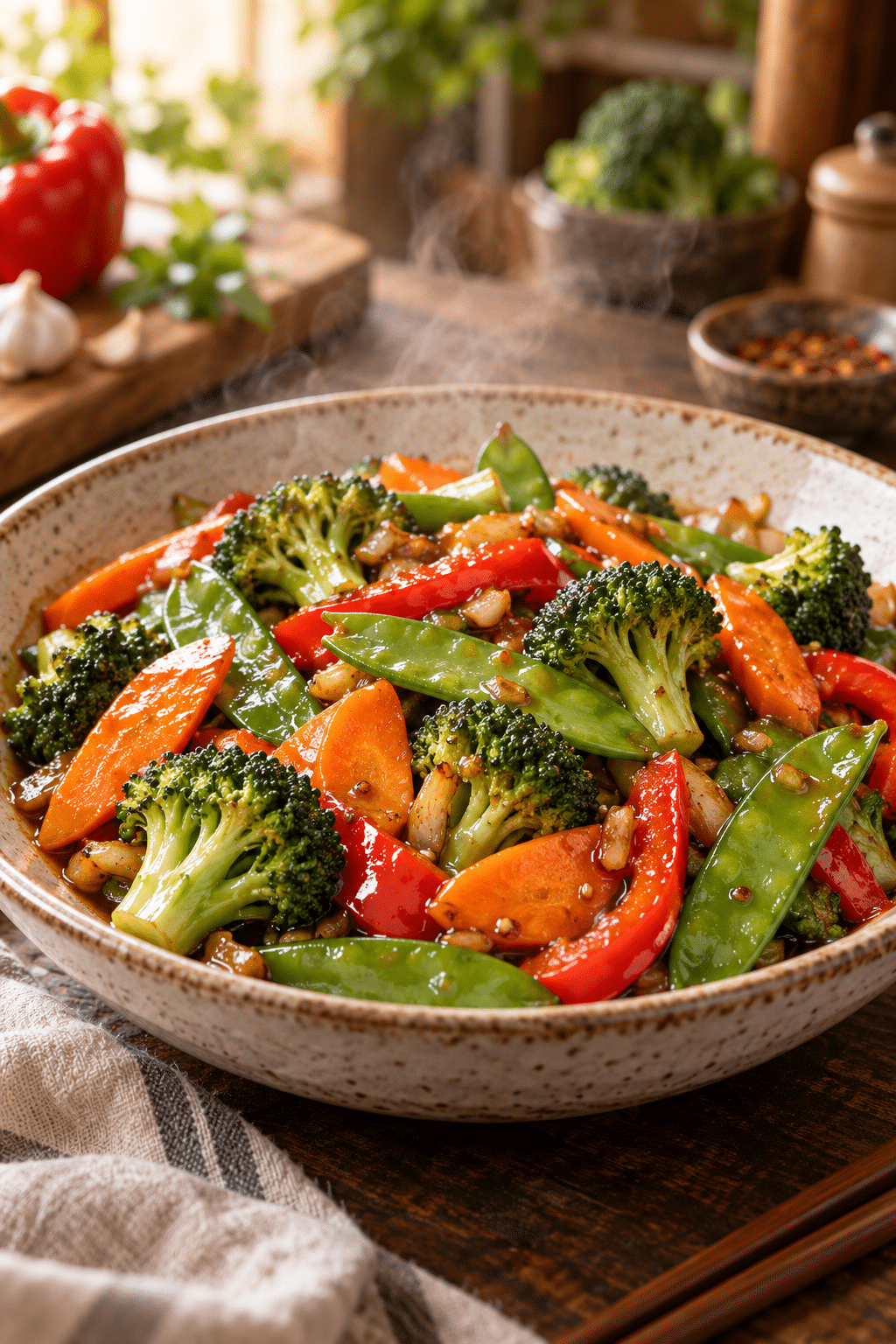

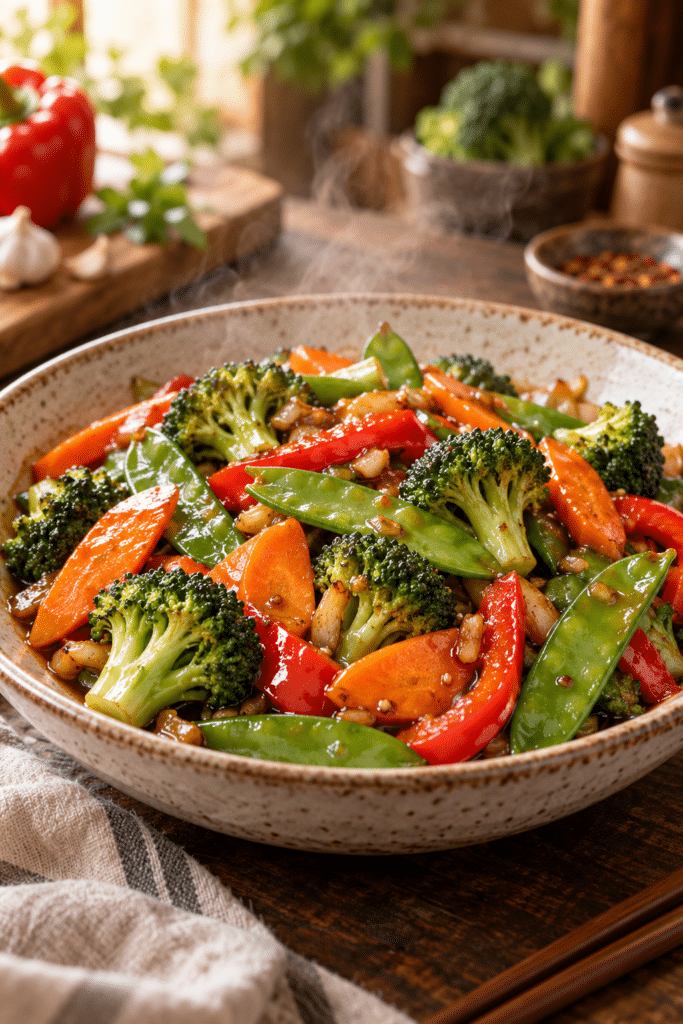
Vegetable Stir Fry is the kind of fast dinner that makes a pile of fresh produce feel exciting rather than obligatory. Colorful carrots, peppers, broccoli, snow peas, onion, garlic, and ginger stay crisp while a quick soy, honey, and rice vinegar sauce slips into every corner. The whole skillet comes together in about 30 minutes, so you can serve it over rice or noodles on a busy evening without sacrificing texture or flavor.
What makes this vegetable stir fry useful
This recipe balances tender-crisp vegetables with a sauce that is savory, lightly sweet, tangy, and glossy. The vegetables are cut into similarly sized pieces so they cook at nearly the same pace, while the aromatics go in after the vegetables have started browning. That short second stage keeps the garlic and ginger fragrant instead of bitter.
Why the sauce works
Soy sauce supplies salt and depth, honey rounds the edges, and rice vinegar keeps the finished dish bright. A small amount of cornstarch mixed with water helps the sauce cling to the vegetables. Whisk the mixture before it reaches the pan because cornstarch settles quickly.
Ingredients for vegetable stir fry
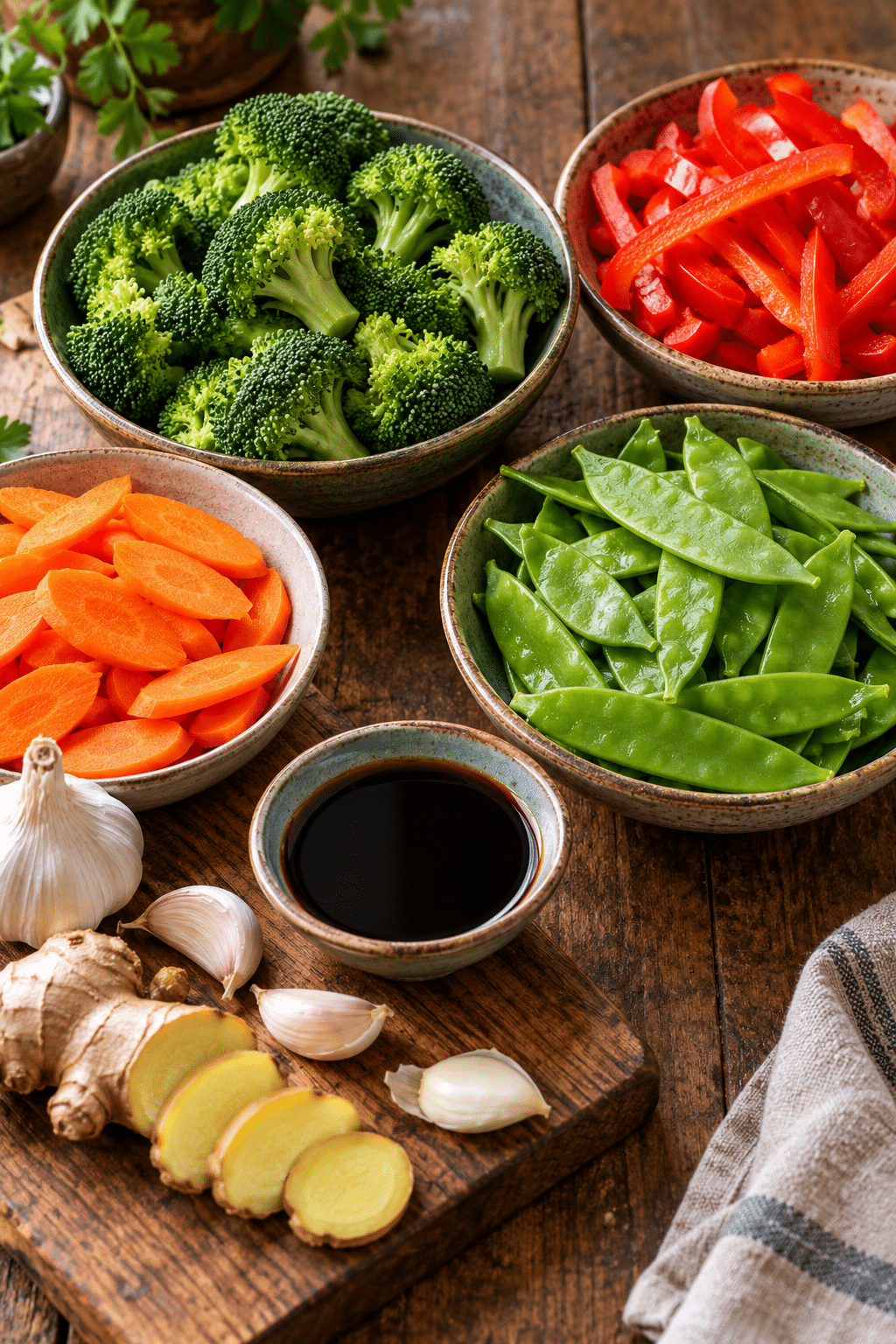
You will need neutral oil, a small onion, carrots, red bell pepper, broccoli florets, snow peas, garlic, fresh ginger, low-sodium soy sauce, honey, rice vinegar, cornstarch, and water. Use a wide skillet or wok so the vegetables sear instead of steaming.
How to make it
Begin by whisking the soy sauce, honey, rice vinegar, cornstarch, and water until smooth. This is the only sauce preparation, so have it beside the stove before cooking starts.
- Whisk the soy sauce, honey, rice vinegar, cornstarch, and water together until smooth.
- Heat half the oil in a large skillet or wok over medium-high heat. Stir-fry the onion, carrots, bell pepper, broccoli, and snow peas until crisp-tender and brightly colored, about 6 to 8 minutes.
- Push the vegetables to the side. Add the remaining oil, garlic, and ginger, and cook for about 30 seconds until fragrant.
- Pour in the sauce and toss everything together. Cook 2 to 3 minutes, stirring, until the sauce thickens and coats the vegetables.
- Serve immediately over rice or noodles, spooning the glossy sauce over each portion.
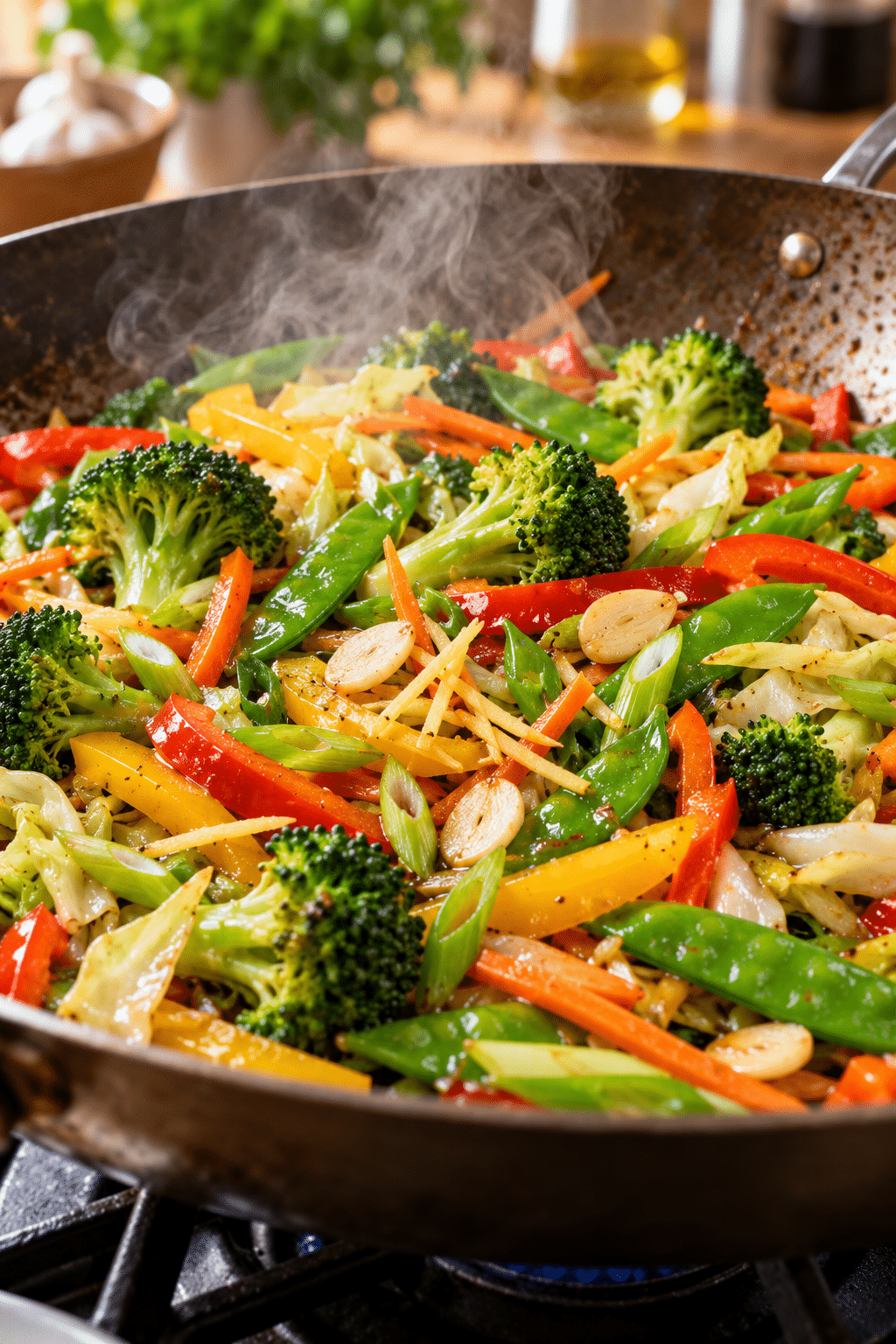
How to judge doneness
Carrots should yield slightly when pressed but still offer a bite. Broccoli should be vivid green with a tender stem, and snow peas should remain snappy. If the vegetables look dry before they are ready, lower the heat slightly and keep them moving. If the pan fills with liquid, increase the heat and give the pieces space.
Serving ideas
Spoon the stir fry over steamed jasmine rice, brown rice, or quick-cooking noodles. For a lighter plate, use cauliflower rice or serve it beside a simple Cucumber Salad. Toasted sesame seeds, sliced scallions, or a few drops of toasted sesame oil make good finishing touches, but the sauce is flavorful enough without them.
Tips and an optional variation
Prep every ingredient before heating the pan because the cooking moves quickly. Cut dense vegetables smaller than soft vegetables, and avoid crowding the skillet. For an optional variation, add thin strips of firm tofu after the vegetables begin to soften; this changes the texture and adds protein without changing the sauce.
Storage and reheating
Cool leftovers promptly and refrigerate them in a covered container for up to three days. Reheat in a hot skillet with a splash of water, tossing just until warmed through. The vegetables will be softer after chilling, so avoid microwaving for too long if you want to preserve some crunch.
Vegetable stir fry FAQs
What vegetables can I use?
Use sturdy, quick-cooking vegetables such as cabbage, mushrooms, zucchini, Green Beans, or baby corn. Keep the total amount similar so the sauce remains balanced.
Can I make it gluten-free?
Yes. Replace regular soy sauce with certified gluten-free tamari and check the labels on the remaining ingredients.
How do I prevent watery stir fry?
Use a wide hot pan, cook in batches if necessary, and do not cover the vegetables. Crowding traps steam and dilutes the sauce.
For a complete meal, pair this skillet with rice and plan to eat it right away while the vegetables are at their brightest. The same method also works for a quick lunch when the vegetables are prepped in advance.
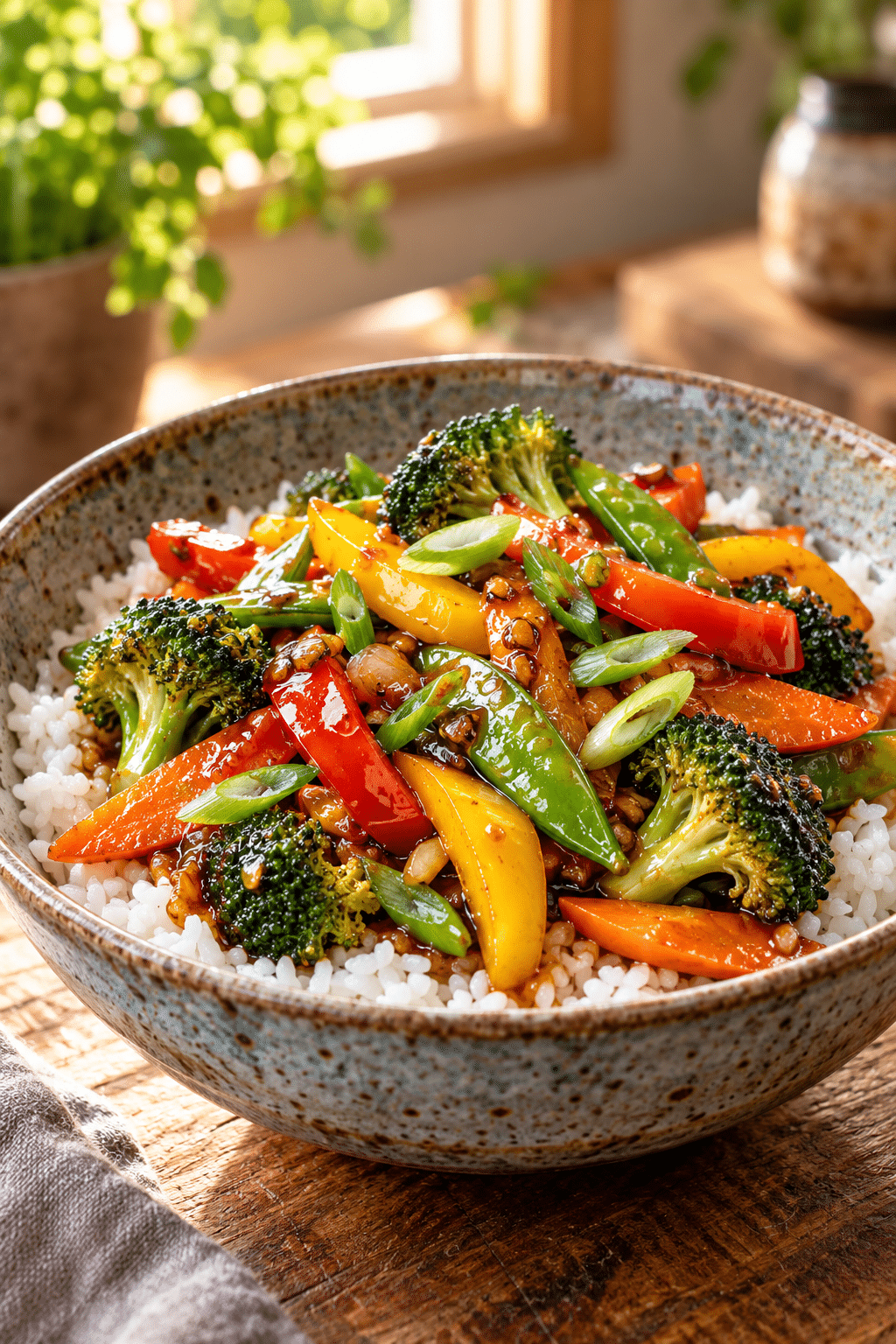
A quick, colorful finish
Because the ingredients are simple, small details matter. Fresh ginger gives the sauce lift, while the brief simmer brings the cornstarch together without turning the vegetables soft. Keep your serving bowls ready before the final toss, and taste one piece of carrot before removing the skillet from the heat. You are looking for a balanced bite: savory sauce, gentle sweetness, a little acidity, and vegetables that still have structure.
This vegetable Stir Fry is best served as soon as the sauce turns glossy and the vegetables remain lively. Keep the cuts even, keep the pan hot, and let the simple sauce do the finishing work.

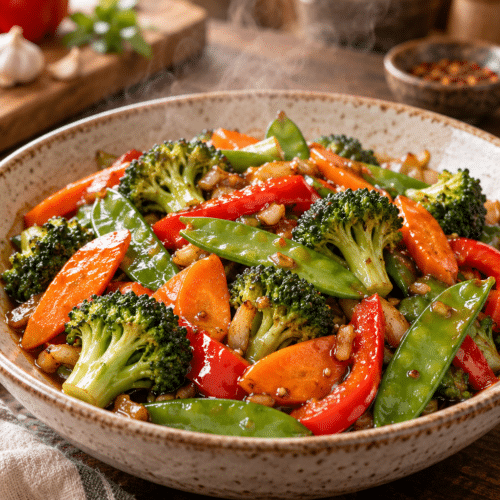
Easy Vegetable Stir Fry with Sweet-Savory Sauce
Ingredients
Ingredients
- 2 tablespoons neutral oil divided
- 1 small onion sliced
- 2 carrots peeled and cut into matchsticks
- 1 red bell pepper sliced
- 2 cups broccoli florets bite-sized
- 1 cup snow peas trimmed
- 3 cloves garlic minced
- 1 teaspoon fresh ginger grated
- 1/4 cup low-sodium soy sauce
- 2 tablespoons honey
- 1 tablespoon rice vinegar
- 1 teaspoon cornstarch mixed with 1 tablespoon water
Instructions
Instructions
- Whisk the soy sauce, honey, rice vinegar, cornstarch, and water together until smooth.
- Heat half the oil in a large skillet or wok over medium-high heat. Stir-fry the onion, carrots, bell pepper, broccoli, and snow peas until crisp-tender and brightly colored, about 6 to 8 minutes.
- Push the vegetables to the side. Add the remaining oil, garlic, and ginger, and cook for about 30 seconds until fragrant.
- Pour in the sauce and toss everything together. Cook 2 to 3 minutes, stirring, until the sauce thickens and coats the vegetables.
- Serve immediately over rice or noodles, spooning the glossy sauce over each portion.