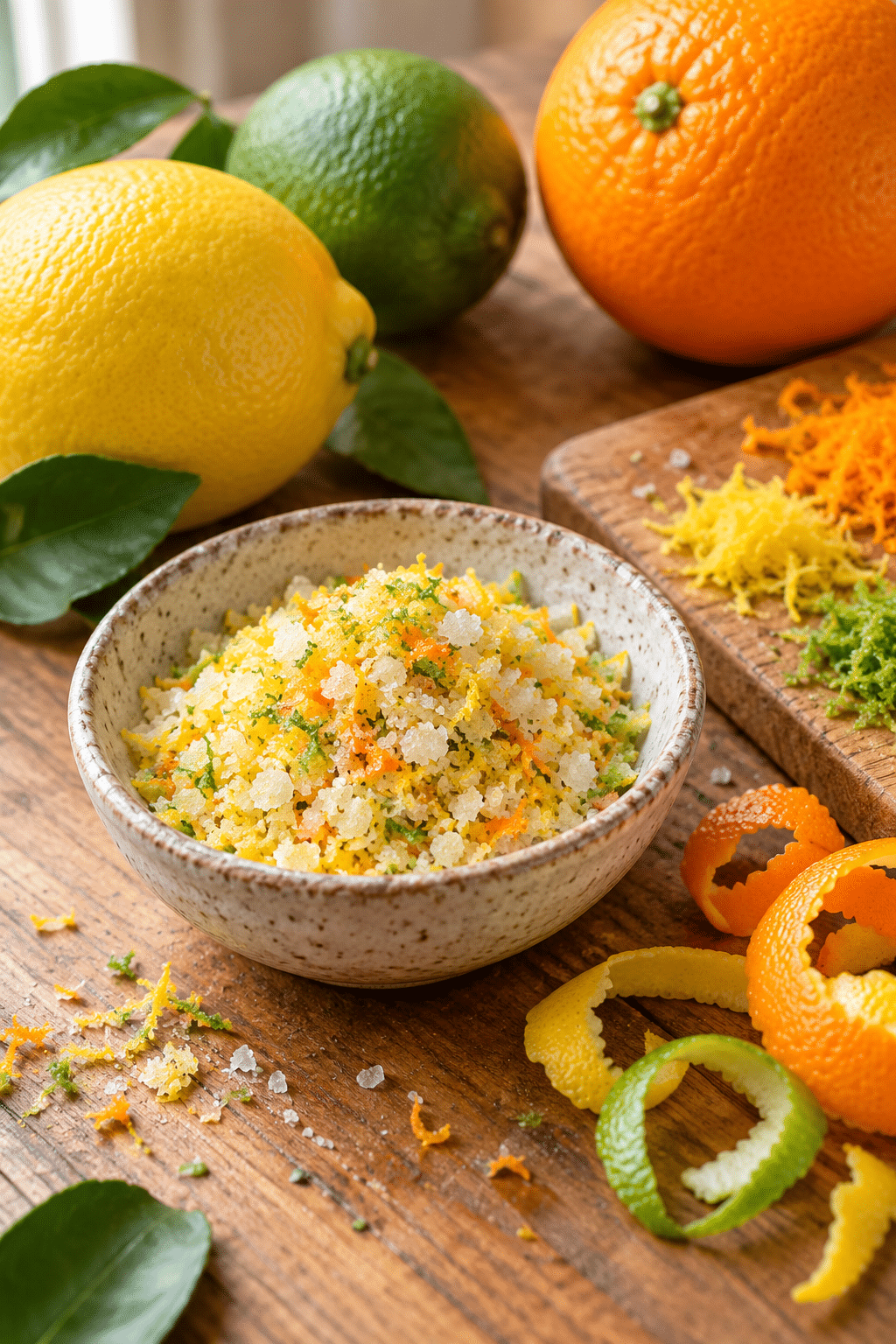

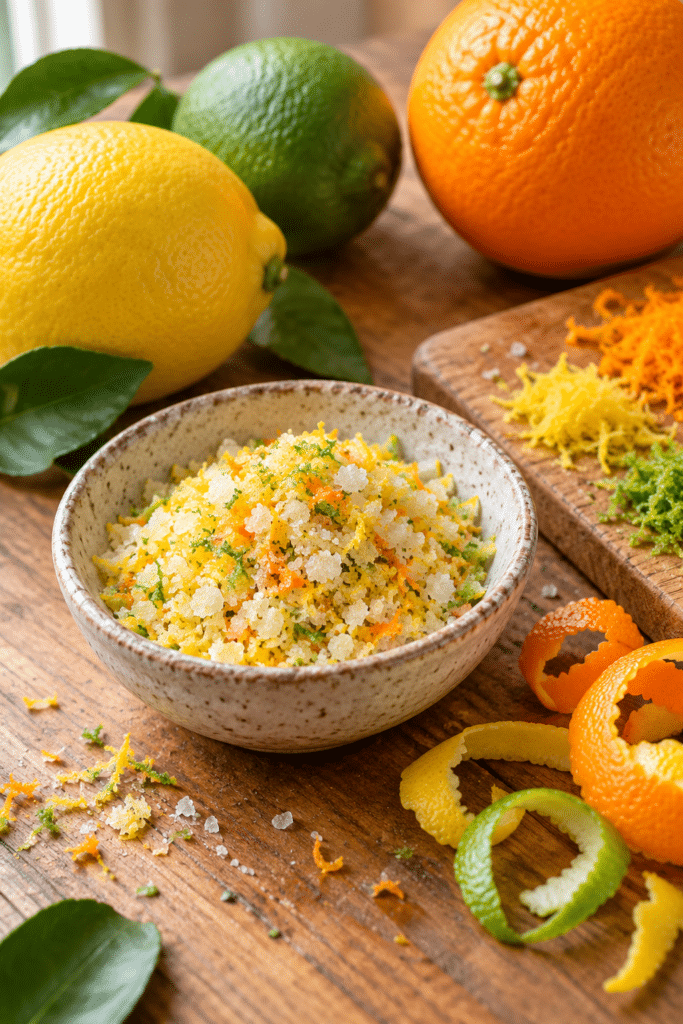
Easy citrus salts turn fresh lemon, lime, or orange zest into a bright finishing seasoning with almost no work. This citrus salt recipe uses equal parts zest and coarse kosher salt, then lets the mixture air-dry until the grains are fragrant and easy to sprinkle. Make one batch for roasted vegetables, grilled fish, cocktails, or a small homemade food gift.
What easy citrus salts are
Citrus salts are a simple pantry condiment made by combining finely grated peel with salt. The salt draws out moisture from the zest while preserving its aroma, leaving you with a concentrated burst of citrus in every pinch. Use one citrus at a time or make separate lemon, lime, and orange batches.
Why this citrus salt recipe works
Equal volumes keep the mixture balanced: enough salt to season and dry the zest, with enough zest to make the citrus unmistakable. Fine zest distributes evenly, while coarse kosher salt gives the finished seasoning a pleasant texture. Air-drying preserves the fresh flavor without requiring a complicated cooking step.
How to make easy citrus salts
Choose firm, unwaxed citrus and wash and dry it well before zesting. Stop when you reach the white pith, which can make the salt bitter. A microplane produces the fine strands this recipe needs, and a shallow plate gives the zest plenty of room to dry.
Ingredients
- 1 part finely grated fresh citrus zest
- 1 part coarse kosher salt
Method
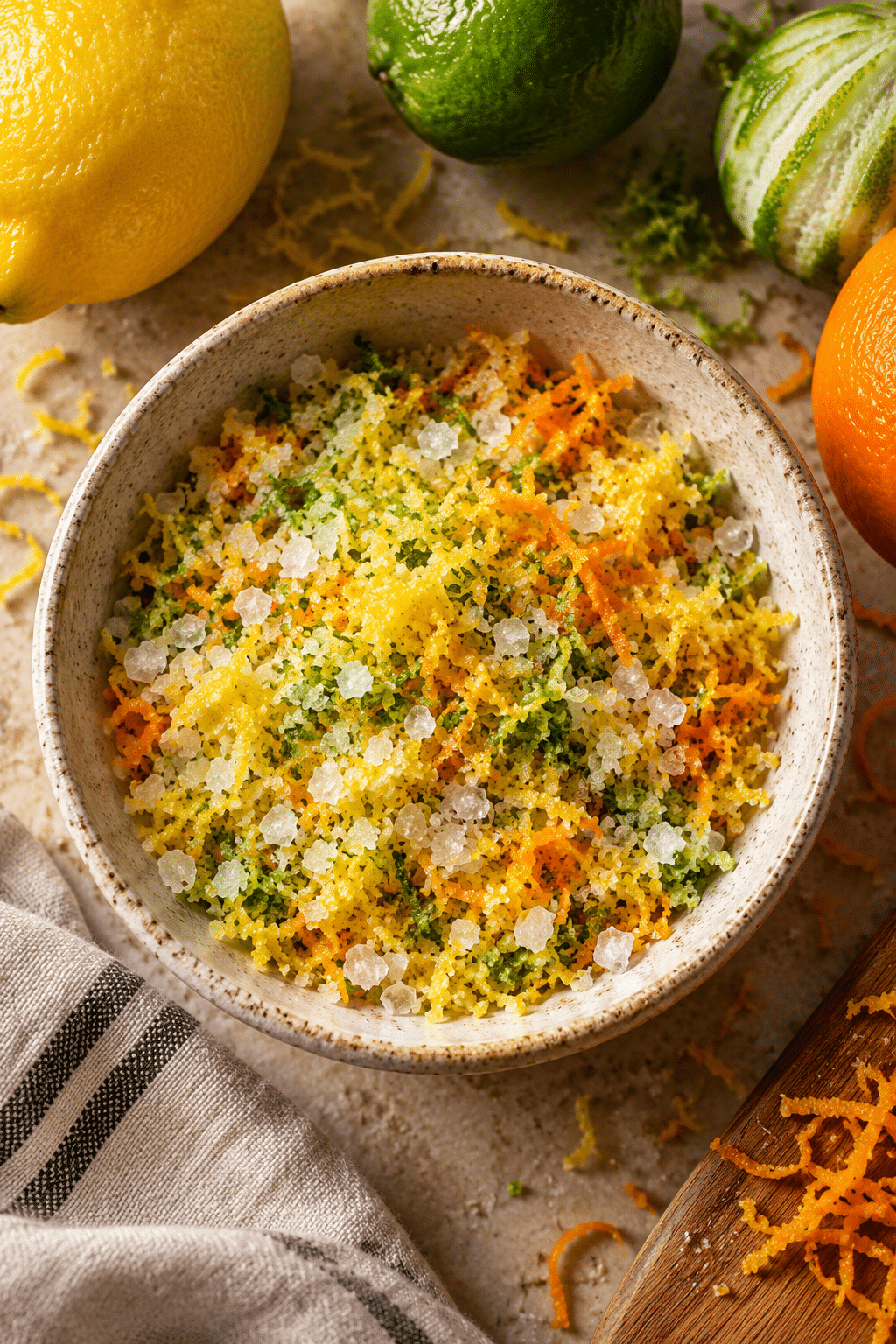
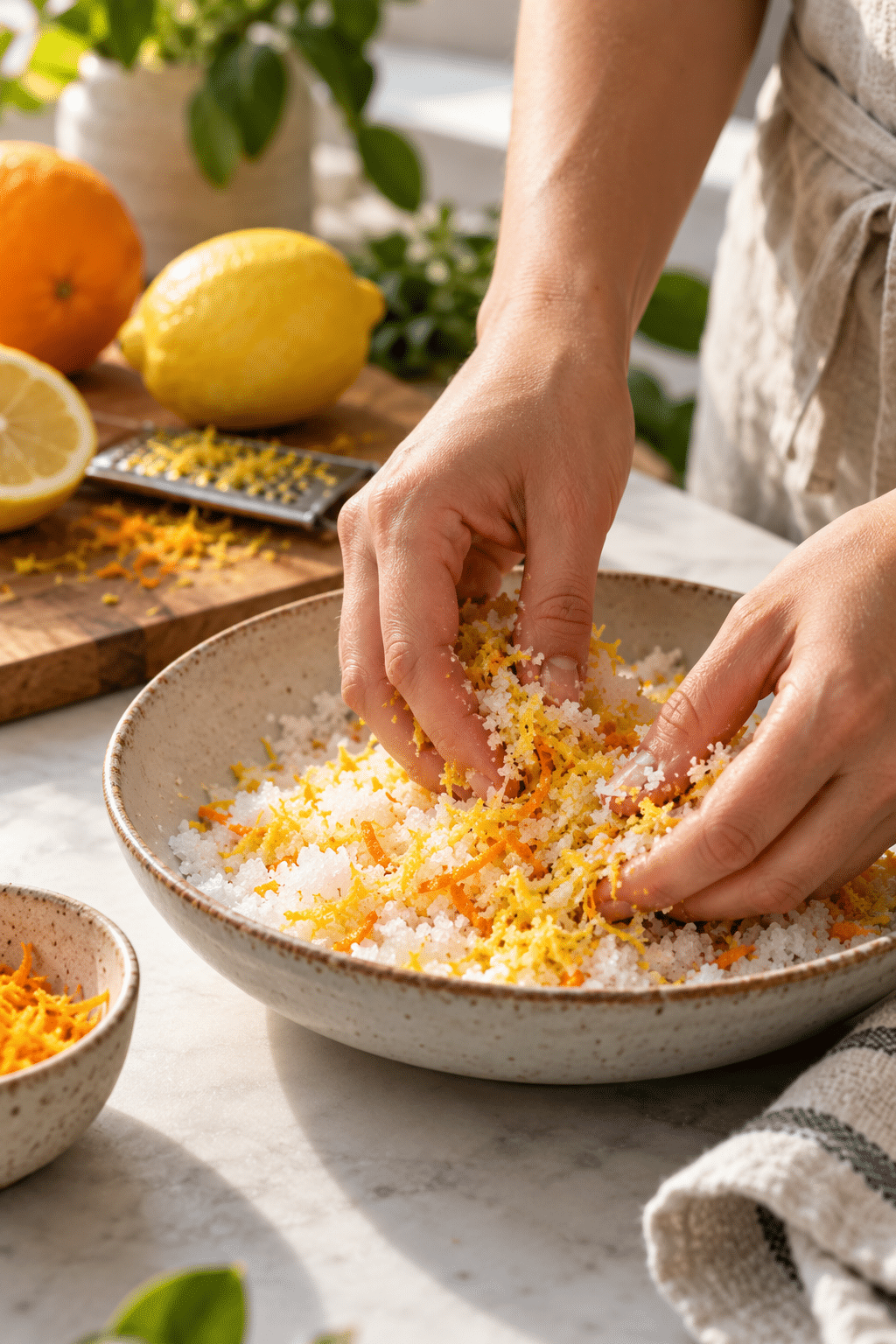
- Add an equal amount of coarse kosher salt to the finely grated citrus zest.
- Mix the zest and salt with your fingertips until every strand of zest is coated.
- Spread the mixture in a thin layer, allow it to air-dry, and store it in a covered container.
Serving ideas
Finish grilled salmon, roasted chicken, avocado toast, steamed vegetables, or a crisp salad with a small pinch. Orange salt is especially good on roasted carrots and dark chocolate; lemon salt lifts fish and pasta; lime salt suits tacos, beans, and margarita rims. Add it at the table so the aroma stays lively instead of disappearing into a long cooking process.
Tips and optional variation
Use a microplane for fine, even zest and keep the salt layer shallow so moisture can escape. Optional variation: combine lemon and orange zest for a softer, floral citrus profile, but keep the total zest volume equal to the salt. For a stronger flavor, let the mixture rest after drying before using it, allowing the fragrant oils to settle into the salt crystals.
Storage and use
Dry the mixture until the zest no longer feels wet or clumps heavily. Store it covered in a cool, dry cupboard and use a clean, dry spoon. If it becomes damp, spread it out again briefly before returning it to the container. Small jars make practical gifts, but label the citrus variety and the date so the flavor is easy to identify.
Choosing the right citrus
Lemon gives the cleanest, sharpest finish and works across savory foods. Lime is greener and more aromatic, making it useful with tacos, rice, beans, and fruit. Orange brings gentle sweetness and pairs well with carrots, duck, chocolate, and sparkling drinks. You can prepare each kind separately or blend them after zesting, as long as the total zest and salt remain equal by volume.
How to use the finished seasoning
Start with a small pinch because the salt is concentrated. Taste a finished dish before adding more, then sprinkle the crystals over the surface rather than stirring them into a large amount of food. This keeps the citrus aroma noticeable and makes the seasoning useful as a final contrast against creamy, roasted, or grilled flavors.
Search-query answers
How do you make citrus salt?
Mix equal volumes of finely grated citrus zest and coarse kosher salt, then air-dry the mixture and store it covered.
What can citrus salt be used for?
Use it as a finishing seasoning for seafood, chicken, vegetables, salads, cocktails, and baked goods.
How long does homemade citrus salt last?
When thoroughly dried and kept airtight, it keeps well as a pantry seasoning; discard it if it develops moisture, mold, or an off smell.
FAQs
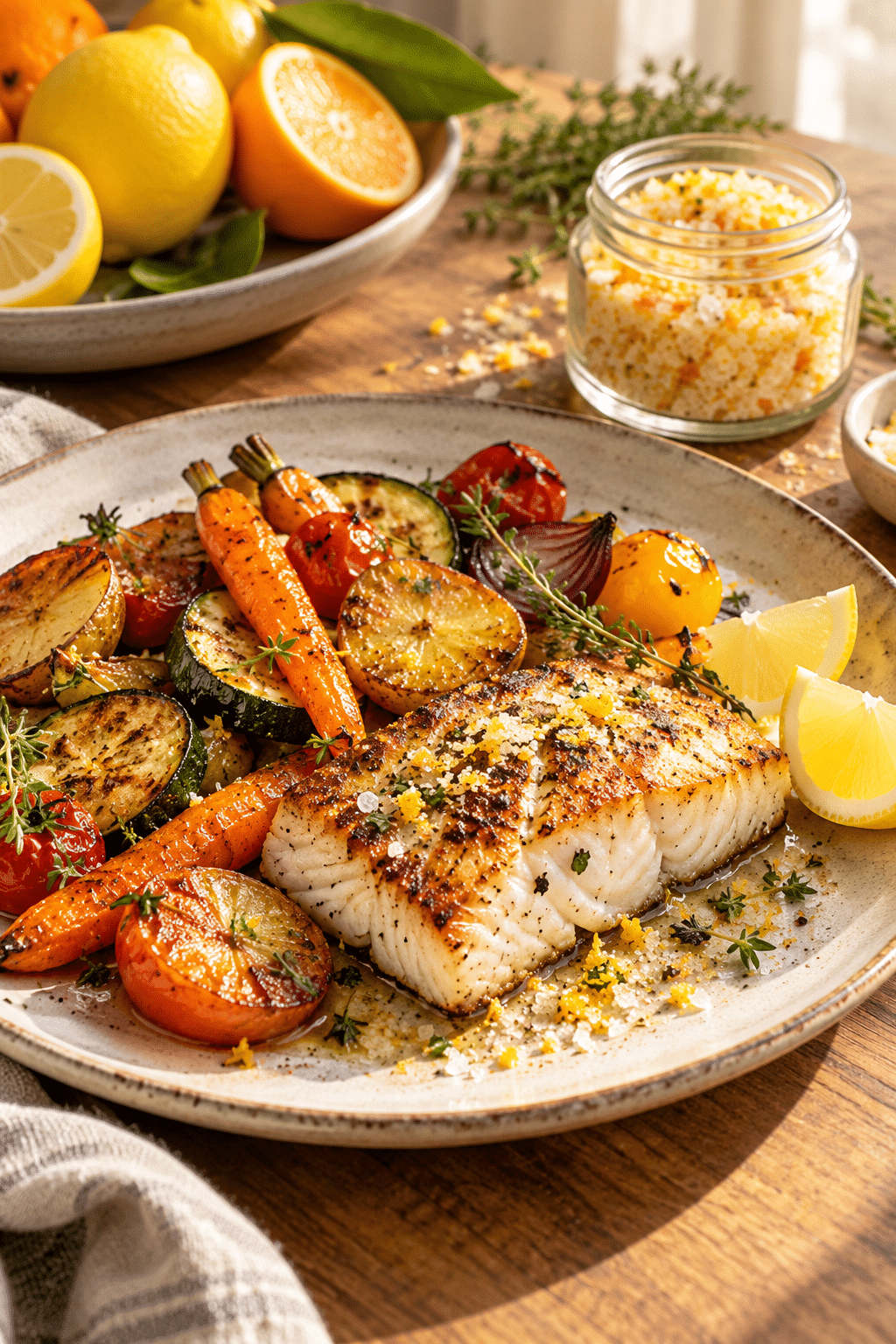
A small jar of easy citrus salts gives everyday dishes a fresh, vivid finish. Make separate flavors, label them clearly, and keep the jar ready whenever a meal needs a quick lift.
Small-batch preparation notes
Because this recipe is measured in equal parts, it is easy to scale up or down. A tablespoon of zest with a tablespoon of salt makes a small test batch, while a larger batch is convenient for gifting. Measure the zest after grating rather than relying on the number of fruit pieces, since citrus sizes and peel thickness vary. If you are making several flavors, use separate bowls and spoons so the aromas stay distinct.
For the cleanest result, grate only the colorful outer peel. The white layer underneath contains more bitterness and can make a delicate lemon or lime salt taste harsh. Work over a plate so every strand of zest can be gathered, then spread it thinly instead of leaving it in a mound. A thin layer dries more evenly, and the finished salt remains loose enough to pinch or sprinkle.
Use the seasoning as a finishing touch after cooking. Heat can soften the fresh citrus aroma, while adding it at the end keeps the fragrance vivid. It is especially useful when a dish tastes rich or flat: a pinch of lemon salt can sharpen buttery pasta, orange salt can balance roasted squash, and lime salt can bring freshness to grilled corn or black beans.

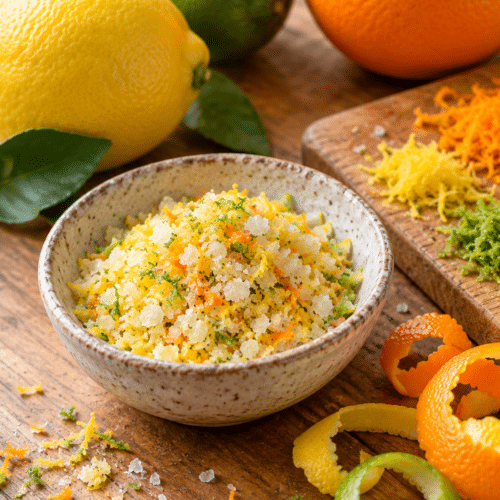
Easy Citrus Salts for Bright Finishing Flavor
Ingredients
Ingredients
- 1 part fresh citrus zest finely grated from lemon, lime, or orange
- 1 part coarse kosher salt use an equal volume to the zest
Instructions
Instructions
- Add an equal amount of coarse kosher salt to the finely grated citrus zest.
- Mix the zest and salt with your fingertips until every strand of zest is coated.
- Spread the mixture in a thin layer, allow it to air-dry, and store it in a covered container.