
Cacio E Pepe: The Italian Pasta Perfection You Need to Try
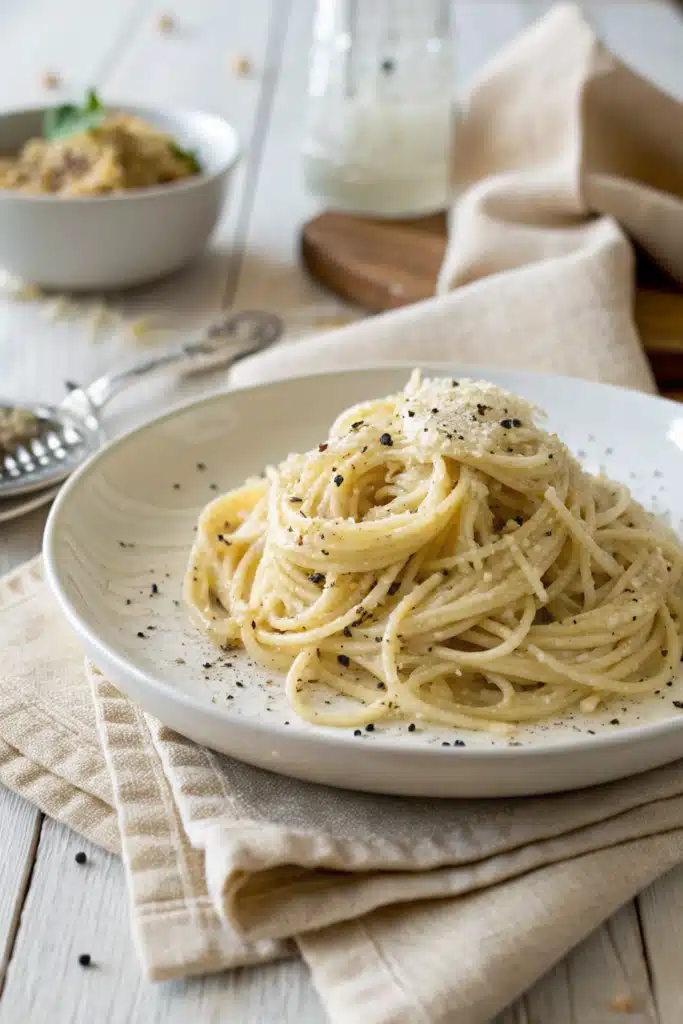
There’s something deeply comforting about a dish that feels both rustic and refined, simple yet profoundly flavorful. Enter Cacio E Pepe, the iconic Roman pasta dish that has captured hearts (and taste buds) around the world. With just four ingredients—spaghetti, Pecorino Romano cheese, Black Pepper, and guanciale—it might seem almost too simple to be remarkable. But trust me when I say, this is one of those recipes where “less is more” truly shines. It’s creamy without cream, rich without butter, and packed with umami depth thanks to aged Pecorino and that unmistakably savory guanciale. I first fell in love with it on a solo trip through Rome, sitting at a tiny corner table with zero English on the menu—and somehow, this dish spoke to me louder than any translation ever could.
Thank you for reading this post, don't forget to subscribe!
What Is Cacio E Pepe?
Cacio E Pepe translates from Italian to “cheese and pepper,” but don’t let its humble name fool you—this isn’t just mac ‘n’ cheese with extra spices. Authentic Cacio E Pepe originated in central Italy, particularly in Lazio, where it was traditionally made by shepherds who mixed fresh pasta with locally sourced Pecorino Romano and freshly ground Black Pepper. The magic lies in how these four core components come together: the starchy pasta water emulsifies with the salty, sharp Pecorino to create a silky, cohesive sauce, while guanciale (cured pork cheek) adds a deeply savory, slightly fatty backbone that balances the richness of the cheese. No heavy creams or oils are needed—just technique, timing, and respect for quality ingredients. When done right, every strand is coated in a glossy, pepper-kissed emulsion that clings beautifully without being greasy.
Why You’ll Love This Recipe
If you’re tired of endless lists of ingredients or complicated sauces that take hours to prepare, Cacio E Pepe will feel like a breath of fresh air. It’s ready in under 30 minutes, uses only whole-food staples, and delivers restaurant-quality results at home. What I love most is how versatile it is—perfect for weeknight dinners when you want something satisfying but not overwhelming, yet elegant enough for guests. Plus, it’s naturally gluten-friendly if you use gluten-free spaghetti, and vegan versions can be achieved by substituting nutritional yeast for cheese and using smoked paprika instead of Black Pepper for heat.
Another reason this dish stands out? Its texture. That velvety mouthfeel comes entirely from the starch in the pasta water binding with the grated Pecorino—no roux, no cream, no fuss. And let’s talk about flavor: the nutty, salty kick of Pecorino Romano pairs flawlessly with earthy black pepper, while guanciale gives a smoky depth that lingers pleasantly. It’s bold, it’s bright, and it leaves you feeling nourished rather than weighed down. Whether you’re cooking for yourself or impressing someone special, this recipe proves that minimalism in cooking can lead to maximum joy.
How to Make Cacio E Pepe
Quick Overview
This recipe takes less than 30 minutes from start to finish. The key is getting the pan temperature just right so the cheese melts into a smooth sauce without scrambling. Start by boiling your pasta (save some starchy water!), then render the guanciale in a hot pan until crispy. Toss in cooked spaghetti, add pasta water gradually, then finish with freshly grated Pecorino and a generous grind of black pepper. Stir constantly over low heat until everything becomes gloriously glossy. Serve immediately—this dish doesn’t hold well!
Ingredients
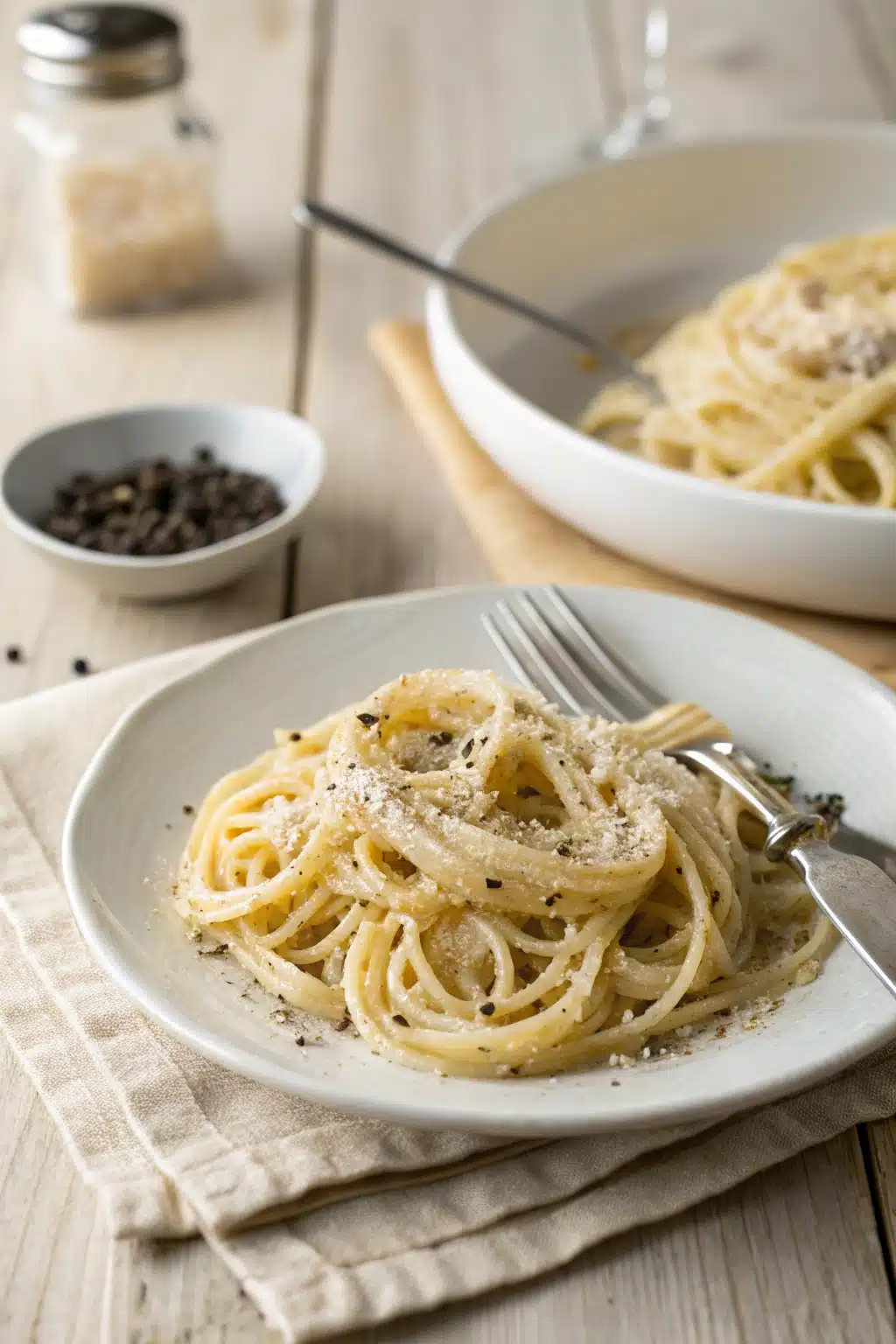
- 12 oz (340g) spaghetti (or gluten-free alternative)
- 6 oz (170g) guanciale, cut into small cubes (or pancetta as substitute)
- 1 cup (100g) Pecorino Romano, finely grated (packed tightly!)
- Freshly ground black pepper (about 1–2 tsp, depending on preference)
- Salt (for pasta water)
Step-by-Step Instructions
Step 1: Preheat & Prep Pan
Bring a large pot of salted water to a rolling boil—you want it as salty as seawater. While that heats up, heat a large skillet or cast-iron pan over medium heat. Add the cubed guanciale and cook slowly, stirring occasionally, until it renders its fat and turns golden brown and crisp (about 8–10 minutes). Don’t rush this step; slow rendering brings out the Best Flavor. Once done, remove half of the rendered fat (about 2 tbsp) and set aside for later, leaving the rest in the pan with the crispy bits.
“The Cacio e Pepe turned out amazing. My kids asked for seconds. Saving this one!”
Step 2: Cook Pasta
Add your spaghetti to the boiling water and cook according to package instructions until al dente. About 1 minute before the end, scoop out and reserve 1½ cups of pasta water. Drain the pasta, shaking off excess water, and transfer it directly into the hot skillet with the guanciale. Turn off the heat immediately to prevent burning.
Step 3: Emulsify the Sauce
Working quickly over low heat, begin adding pasta water a few tablespoons at a time, tossing constantly. The goal is to create a creamy, clingy sauce that coats each strand. After about 1 cup of water, start incorporating the grated Pecorino Romano, a handful at a time, always tossing vigorously. Keep adding water as needed—remember, you can always add more, but you can’t take it back! Finish with a generous amount of freshly ground black pepper. The mixture should look rich, glossy, and almost custardy.
Step 4: Finish & Serve
Give it one final stir, taste for seasoning (add salt only if needed—Pecorino is already salty), then serve immediately topped with extra Pecorino, cracked pepper, and a few extra crispy guanciale pieces for texture. Don’t wait—this dish is best enjoyed straight from the pan!
What to Serve It With
Cacio E Pepe is delicious on its own, but pairing it thoughtfully elevates the experience. A crisp green salad with lemon vinaigrette cuts through the richness, while crusty bread soaked in olive oil is perfect for mopping up every last bit of that luscious sauce. If you’re serving wine, opt for a light, dry white like Frascati or Vermentino—they complement the peppery notes without overpowering the dish. For non-drinkers, sparkling water with a twist of lemon does wonders too. And if you’re entertaining, consider adding a Charcuterie Board with olives, marinated artichokes, and aged Parmesan on the side. Trust me, people will be asking for the recipe long after they’ve finished their plate.
Top Tips for Perfecting Your Cacio E Pepe
First, never skip saving pasta water—that starchy liquid is your secret weapon for creating a silky emulsion. Second, use freshly grated Pecorino, not pre-shredded; the difference in meltability and flavor is night and day. Third, keep the heat low when combining pasta and cheese—high heat can cause the cheese to seize or become stringy. Fourth, always grind your own black pepper at the last moment; pre-ground lacks punch and aroma. Finally, don’t skimp on guanciale—it’s non-negotiable for authentic flavor. If you can’t find it, pancetta works in a pinch, though the taste will be slightly different.
Storing and Reheating Tips
Cacio E Pepe is best eaten fresh—ideally within 15 minutes of making it. However, if you have leftovers (which is rare!), store them in an airtight container in the fridge for up to 2 days. To reheat, gently warm the pasta in a skillet over low heat with a splash of reserved pasta water, stirring constantly until creamy again. Avoid microwaving—it ruins the texture. Note that the sauce may separate upon refrigeration, but fear not! Just whisk in a little warm water or pasta water until smooth.
Frequently Asked Questions
“I don’t know if I’ve ever eaten a better Cacio e Pepe. The rub alone is wonderful, but the sauce??? Over the top!”
Final Thoughts
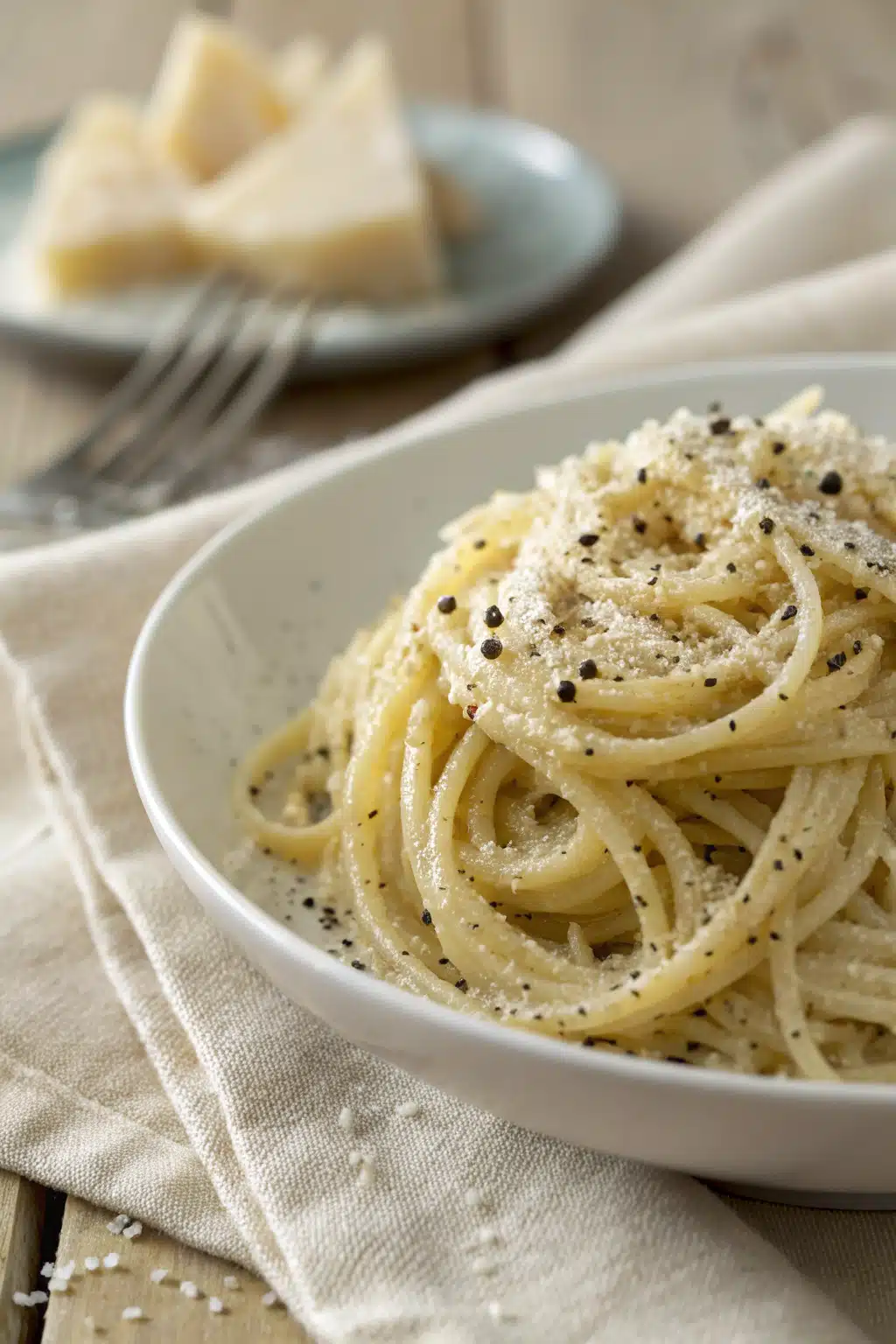
There’s a quiet elegance in simplicity, and Cacio E Pepe embodies that philosophy perfectly. It reminds us that sometimes, the most extraordinary flavors come from the purest ingredients and honest techniques. Every bite offers a taste of Rome—no passport required. Whether you’re cooking for a cozy dinner or hosting friends, this dish never fails to spark conversation and delight. So next time you crave something decadent yet effortless, remember: sometimes all you need is pasta, cheese, pepper, and a little love. Buon appetito!

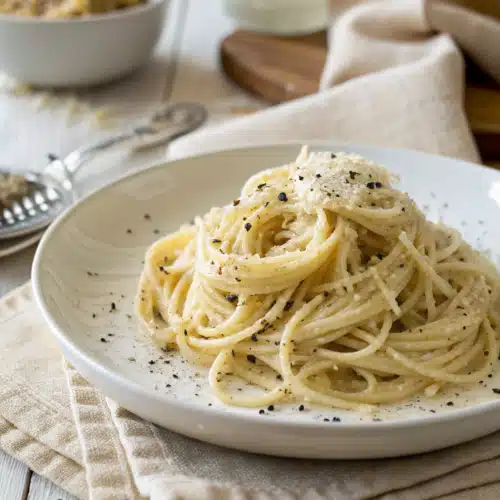
Cacio e Pepe
Ingredients
Main Ingredients
- 8 oz spaghetti
- 0.5 cup freshly grated Pecorino Romano cheese
- 0.25 cup freshly grated Parmigiano-Reggiano cheese
- 1.5 tsp freshly ground black pepper about 0.5 tsp coarse
- 0.5 tsp fine sea salt
Instructions
Preparation Steps
- Bring a large pot of salted water to a rolling boil. Add the spaghetti and cook until al dente, about 1 minute less than package instructions.
- While the pasta cooks, heat a dry skillet over medium heat. Add the black pepper and toast, stirring frequently, for 1–2 minutes until fragrant. Remove from heat.
- Reserve 1 cup of pasta cooking water before draining. Drain the spaghetti and return it to the pot.
- Add the toasted black pepper, both cheeses, and a pinch of salt to the hot pasta. Toss well to combine.
- Gradually add reserved pasta water, a little at a time, tossing continuously until the sauce is glossy and coats the pasta. The mixture should be creamy but not soupy.
- Serve immediately in warmed bowls, garnished with extra cheese and freshly ground black pepper if desired.