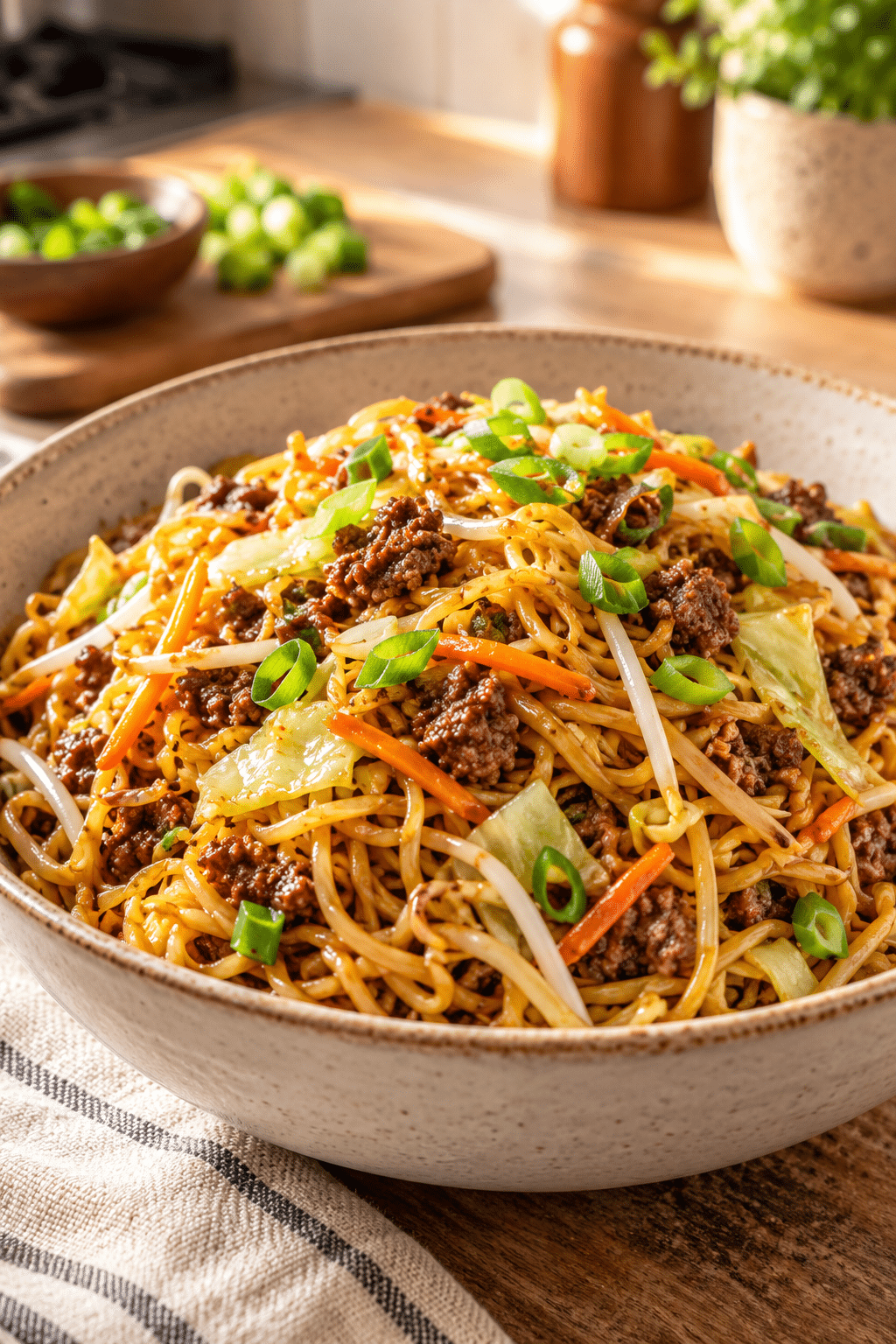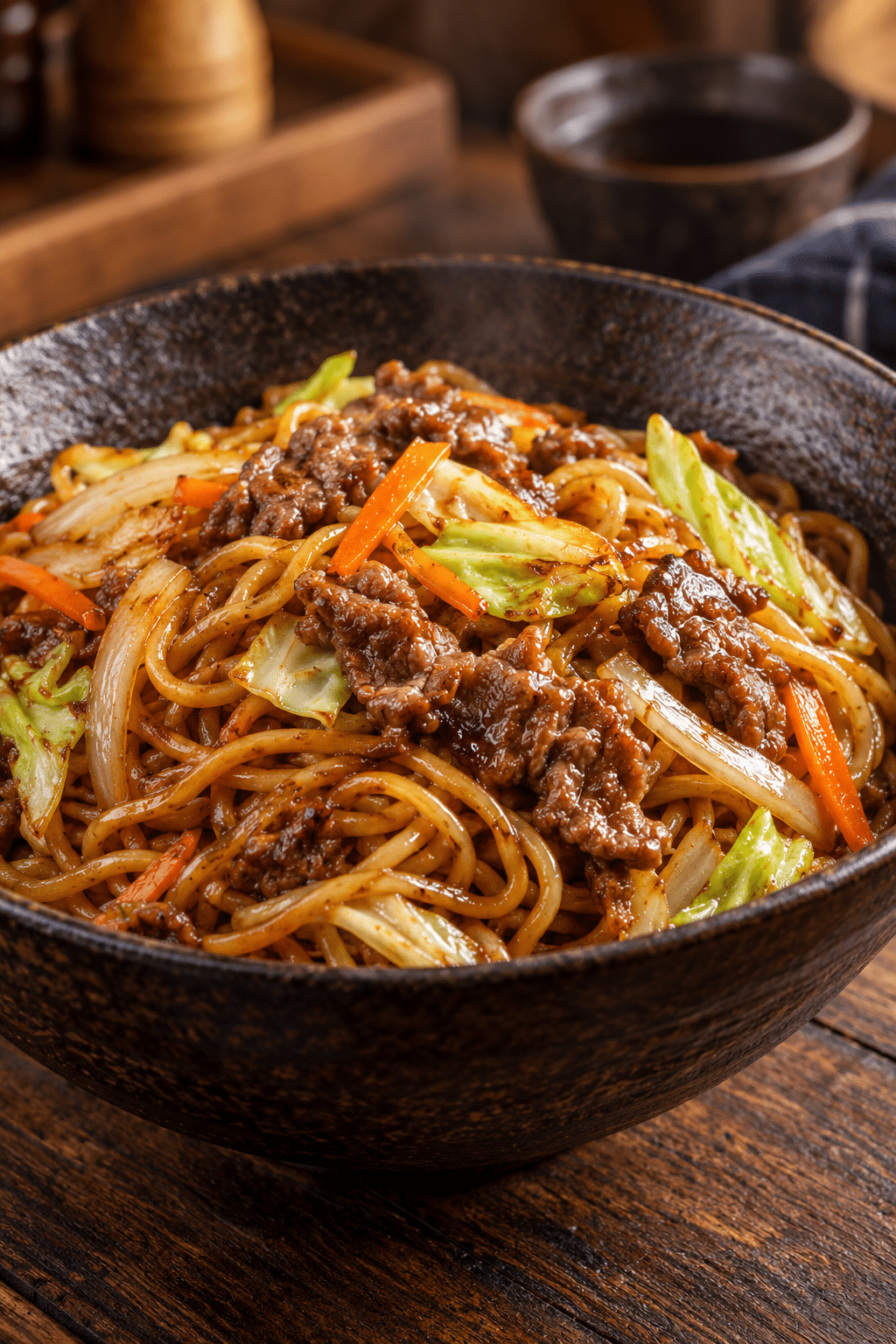

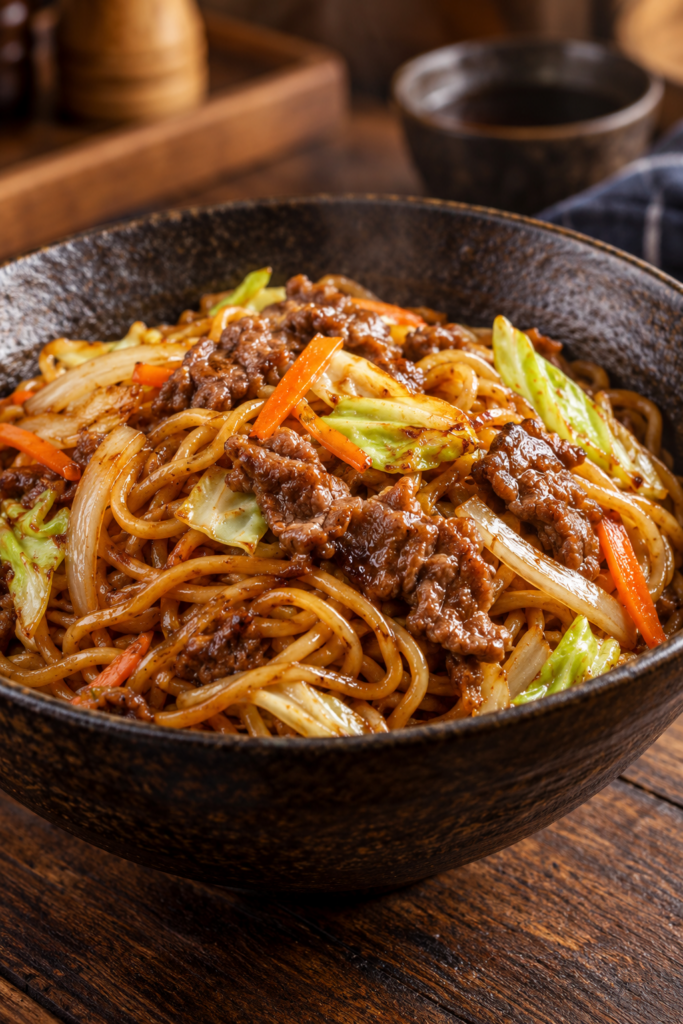
Beef yakisoba is a quick skillet meal of springy noodles, browned beef, and crisp-tender vegetables coated in a savory sauce. This version keeps the cooking streamlined: prepare the noodles, sear the beef, stir-fry the vegetables, then bring everything together in one pan. The result is deeply savory, lightly smoky, and ready in about 30 minutes, making it a practical dinner when you want takeout-style noodles at home.
What is beef yakisoba?
Yakisoba is a Japanese-style stir-fried noodle dish. Here, beef sirloin adds a rich, browned flavor while cabbage, carrot, and onion provide sweetness and contrast. The sauce is deliberately compact so it coats rather than pools around the noodles.
Why this recipe works
Thin slices of beef cook quickly, and cooking the components separately keeps each one at its best. A wide skillet gives the vegetables room to sear. Drain the noodles thoroughly so they can absorb sauce without making the pan watery.
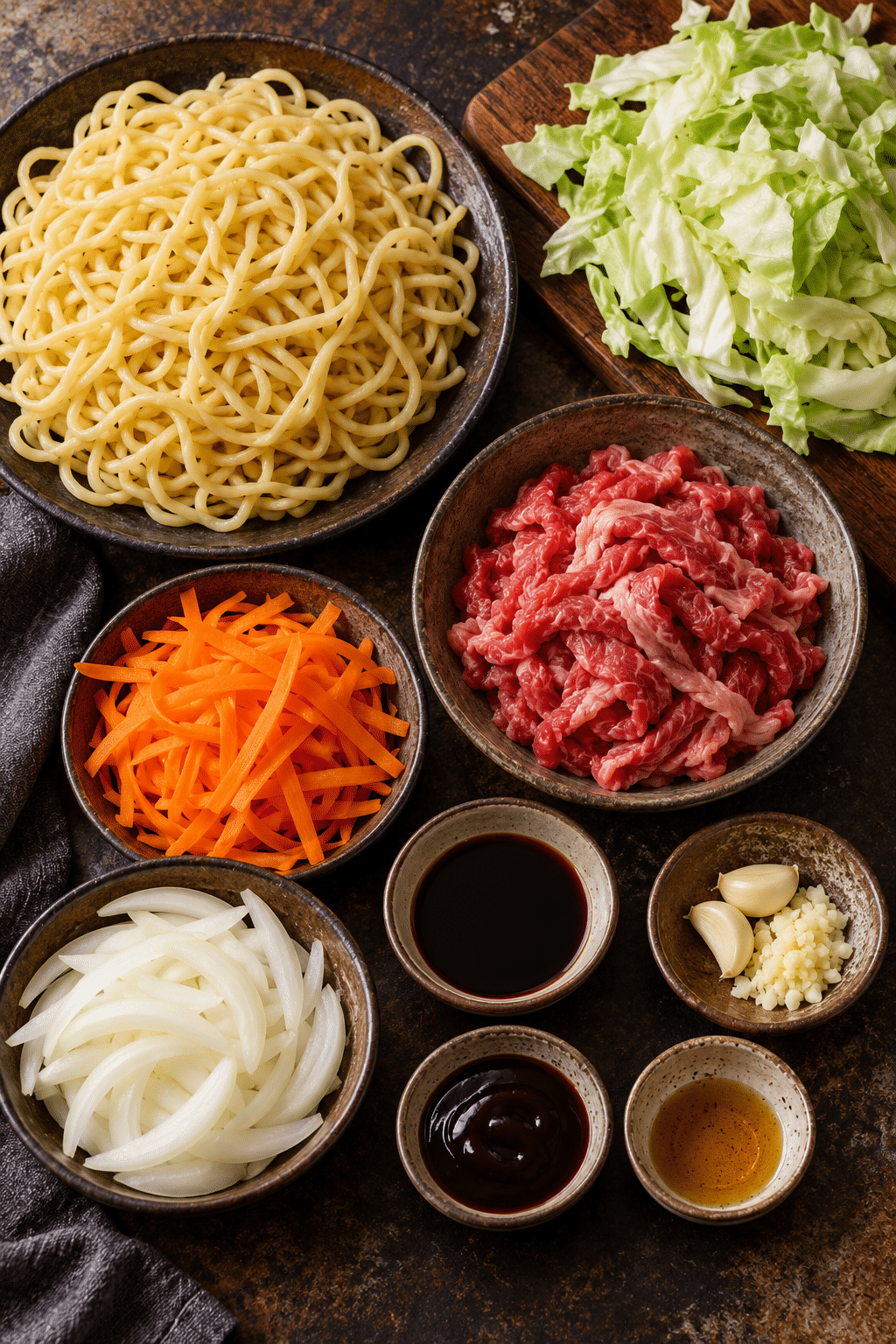
Ingredients
- 8 ounces cooked and drained yakiniku or yakisoba noodles
- 8 ounces thinly sliced beef sirloin
- 1 tablespoon neutral oil, divided
- 1 cup thinly sliced cabbage
- 1/2 cup julienned carrot
- 1/2 cup sliced onion
- 2 tablespoons soy sauce
- 1 tablespoon oyster sauce
- 1 teaspoon sesame oil
- 1 minced garlic clove
How to make beef yakisoba
- Cook and drain the noodles according to the package directions.
- Whisk soy sauce, oyster sauce, sesame oil, and garlic together.
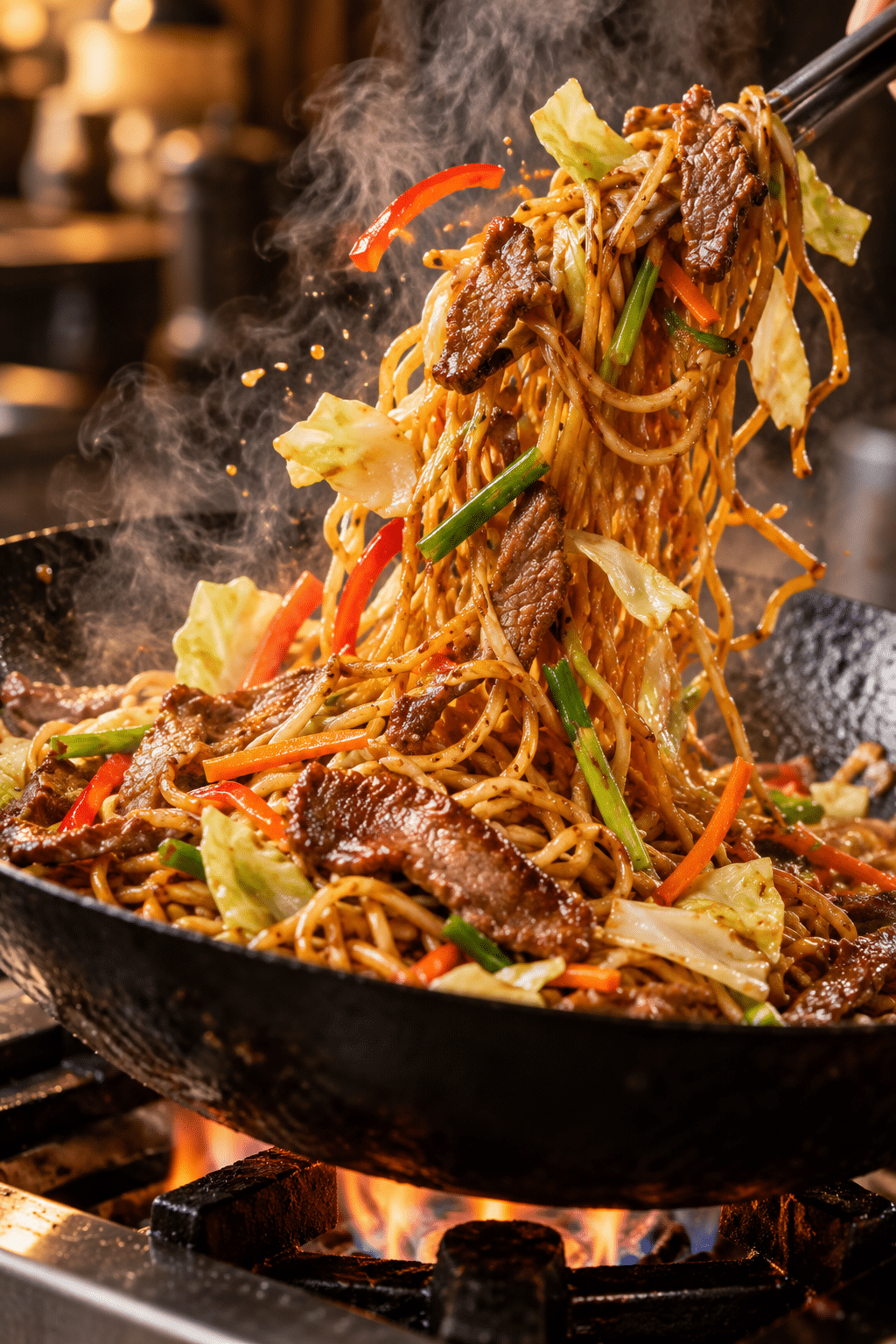
- Heat half the oil in a large skillet or wok and stir-fry the beef until browned; transfer it to a plate.
- Add the remaining oil, cabbage, carrot, and onion; stir-fry until crisp-tender.
- Return the beef and noodles to the pan, pour in the sauce, and toss until hot and evenly coated.
Beef yakisoba is especially useful on busy evenings because the ingredients cook in sequence and the sauce comes together in seconds. Keep the beef thin, the vegetables ready, and the noodles drained before the pan gets hot. This makes it easier to control texture and prevents the noodles from sitting in liquid. The finished dish should be glossy, savory, and hot, with vegetables that still have a little resistance when bitten. Beef yakisoba is especially useful on busy evenings because the ingredients cook in sequence and the sauce comes together in seconds. Keep the beef thin, the vegetables ready, and the noodles drained before the pan gets hot. This makes it easier to control texture and prevents the noodles from sitting in liquid. The finished dish should be glossy, savory, and hot, with vegetables that still have a little resistance when bitten. Beef yakisoba is especially useful on busy evenings because the ingredients cook in sequence and the sauce comes together in seconds. Keep the beef thin, the vegetables ready, and the noodles drained before the pan gets hot. This makes it easier to control texture and prevents the noodles from sitting in liquid. The finished dish should be glossy, savory, and hot, with vegetables that still have a little resistance when bitten. Beef yakisoba is especially useful on busy evenings because the ingredients cook in sequence and the sauce comes together in seconds. Keep the beef thin, the vegetables ready, and the noodles drained before the pan gets hot. This makes it easier to control texture and prevents the noodles from sitting in liquid. The finished dish should be glossy, savory, and hot, with vegetables that still have a little resistance when bitten. Beef yakisoba is especially useful on busy evenings because the ingredients cook in sequence and the sauce comes together in seconds. Keep the beef thin, the vegetables ready, and the noodles drained before the pan gets hot. This makes it easier to control texture and prevents the noodles from sitting in liquid. The finished dish should be glossy, savory, and hot, with vegetables that still have a little resistance when bitten.
For the best beef yakisoba texture, do not crowd a small pan. If the beef releases liquid, let it cook away before adding the vegetables. If the noodles seem dry, add a teaspoon of water with the sauce. If the sauce tastes too salty, add more unsauced noodles or vegetables rather than extra soy sauce. These small adjustments preserve the savory character while keeping the dish balanced.
Cut vegetables into similar sizes so they finish together. Cabbage softens first at the edges, carrot should remain bright, and onion should be tender without losing all of its bite. The beef is done when the slices are browned on the outside and no longer visibly pink in the center. Toss gently at the end to keep the noodles intact.
Serving ideas
Serve immediately while the noodles are glossy. Scallions, sesame seeds, pickled ginger, or chili crisp are optional toppings. A cucumber salad or steamed edamame adds freshness.
Tips and optional variation
Slice across the grain and keep the pan hot. Have everything ready before cooking. For an optional variation, replace beef with thinly sliced chicken and cook it fully before the vegetables.
Storage and reheating
Refrigerate in a sealed container for up to three days. Reheat in a skillet with a teaspoon of water until steaming hot.
FAQ
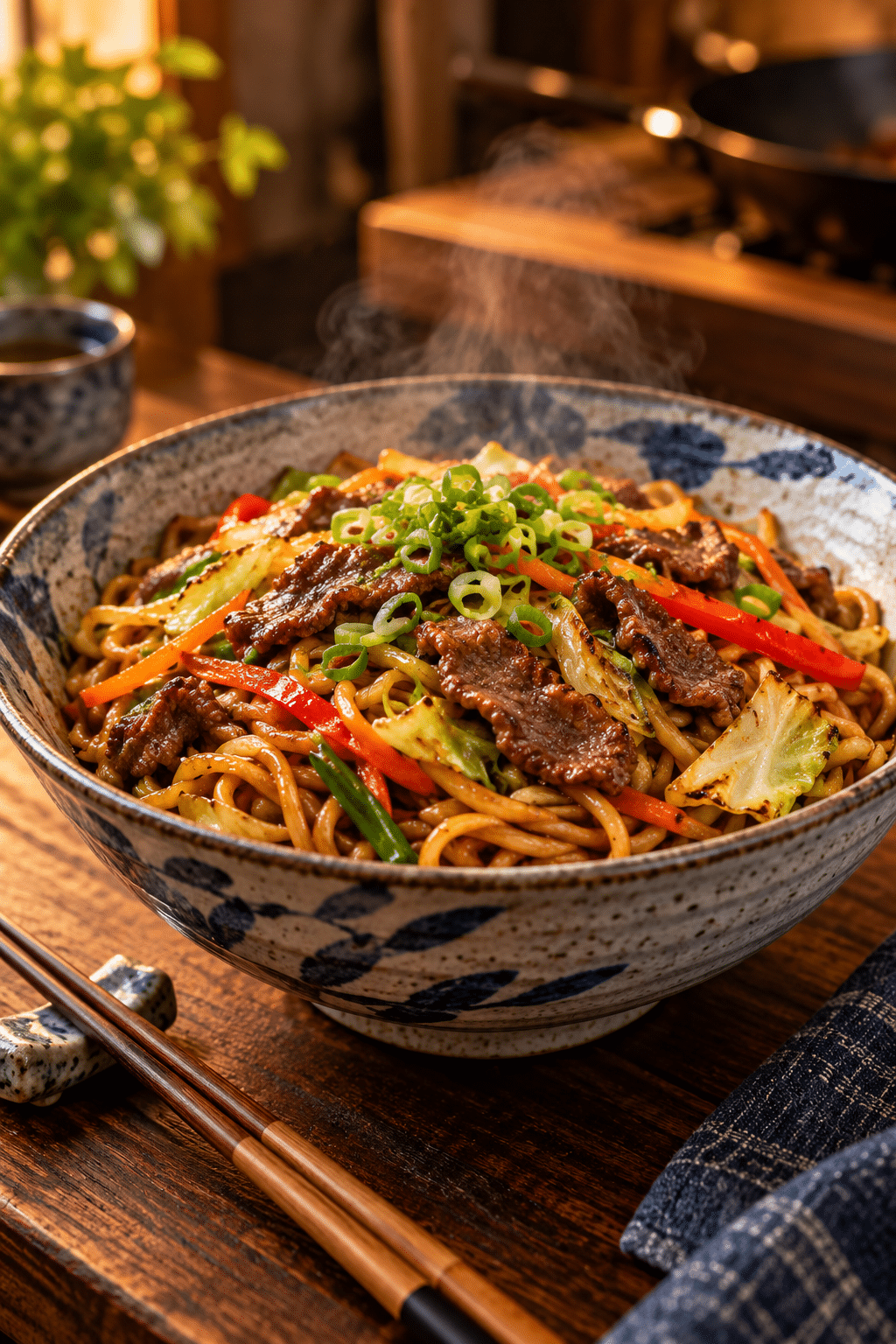
Beef yakisoba is at its best straight from the pan: savory noodles, browned beef, and vegetables with just enough crunch for contrast.

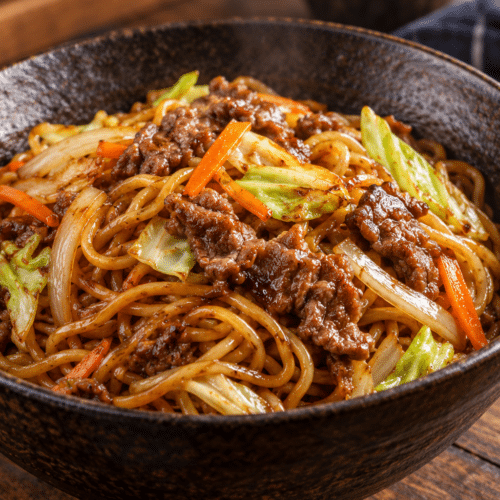
Beef Yakisoba
Ingredients
Ingredients
- 8 ounces yakiniku or yakisoba noodles cooked and drained
- 8 ounces beef sirloin thinly sliced
- 1 tablespoon neutral oil divided
- 1 cup cabbage thinly sliced
- 1/2 cup carrot julienned
- 1/2 cup onion sliced
- 2 tablespoons soy sauce
- 1 tablespoon oyster sauce
- 1 teaspoon sesame oil
- 1 clove garlic minced
Instructions
Instructions
- Cook and drain the noodles according to the package directions.
- Whisk soy sauce, oyster sauce, sesame oil, and garlic together.
- Heat half the oil in a large skillet or wok and stir-fry the beef until browned; transfer it to a plate.
- Add the remaining oil, cabbage, carrot, and onion; stir-fry until crisp-tender.
- Return the beef and noodles to the pan, pour in the sauce, and toss until hot and evenly coated.