

Vienna bread is a soft, lightly sweet loaf with a tender crumb and a glossy, scored crust. This Vienna bread recipe turns a simple yeast dough into six small sandwich-style loaves, using warm milk for richness and a final egg wash for color. The dough needs two rises, but the hands-on work is straightforward: mix, knead, shape, score, and bake until the rolls are golden and sound hollow when tapped.
What is Vienna bread?
Vienna bread, also called pain viennois, is an Austrian-style bread known for its fine crumb, mild sweetness, and distinctive parallel scoring. The dough is enriched with milk, butter, and a little sugar, so it is softer than a lean baguette while still sturdy enough for sandwiches. Shaping six individual loaves gives you useful portions for breakfast, lunch, or a bread basket.
Why this Vienna bread works
Warm milk helps the yeast start efficiently, while softened butter makes the dough supple during kneading. The first rise builds flavor and structure; the short rest after dividing relaxes the dough so it shapes without springing back. Scoring the tops gives the loaves room to expand and creates the classic appearance.
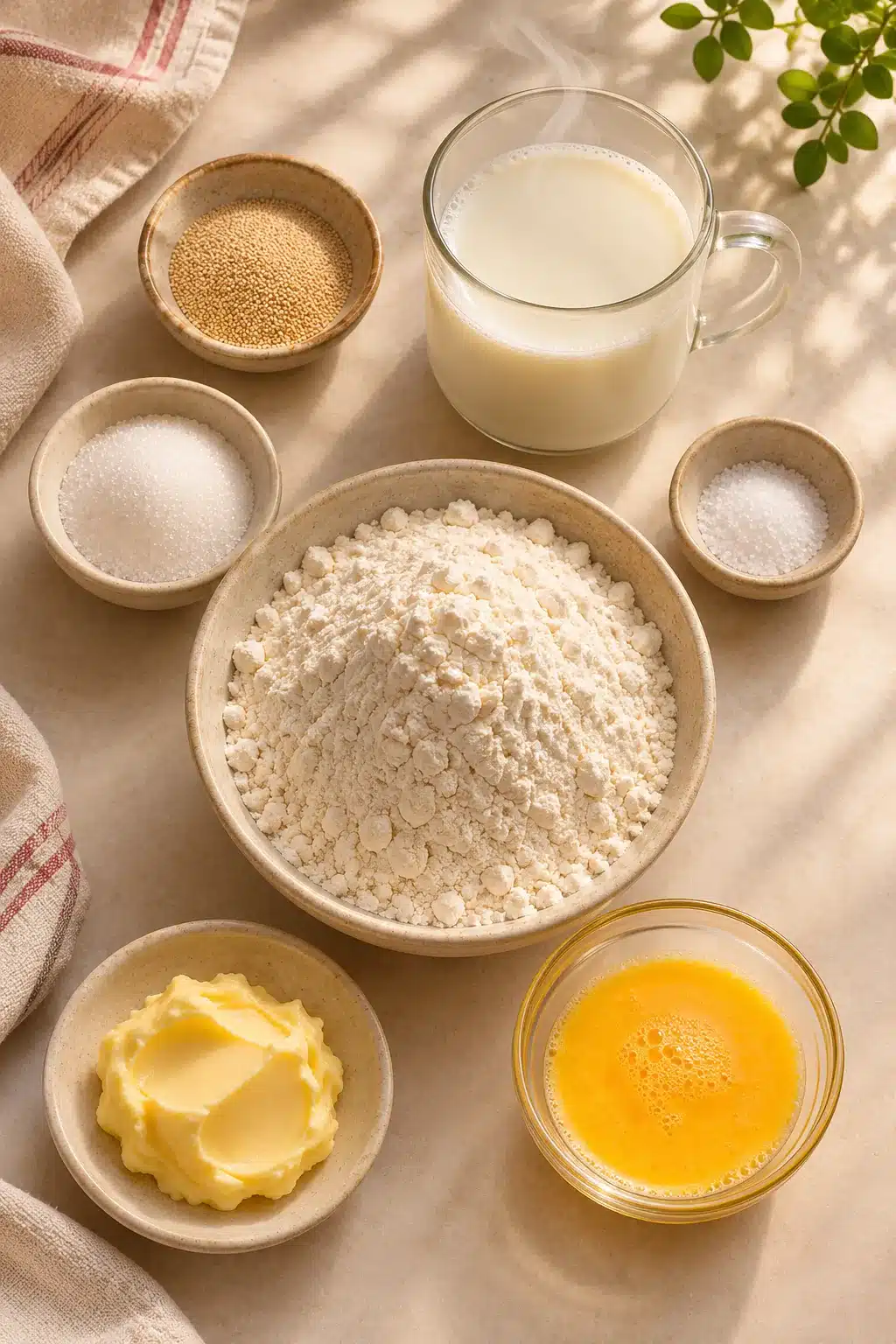
Vienna bread ingredients
- 1 packet active dry yeast, about 2 1/2 teaspoons
- 2 tablespoons sugar
- 1 1/3 cups warm fat-free skim milk
- 1 1/2 teaspoons salt
- 3 1/2 cups plus 2 tablespoons all-purpose flour
- 3 tablespoons softened unsalted butter
- 1 egg beaten with a pinch of salt for egg wash
How to make Vienna bread
Use milk that feels warm but not hot. Excess heat can weaken yeast, while cool milk simply lengthens the activation time.
- Mix the warm milk and sugar, sprinkle in the yeast, cover, and let it activate for 10 minutes.
- Add the salt and flour to the yeast mixture and mix until a rough dough forms.
- Move the dough to a work surface and knead in the softened butter. Knead with the palms and heels of your hands for 8 to 10 minutes, without adding extra flour, until the dough is soft and cohesive.
- Put the dough in a bowl, cover, and let it rise for 45 minutes to 1 hour, or until doubled in size.
- Divide the dough into six equal portions. Shape each into a ball, cover with a kitchen towel, and rest for 15 minutes.
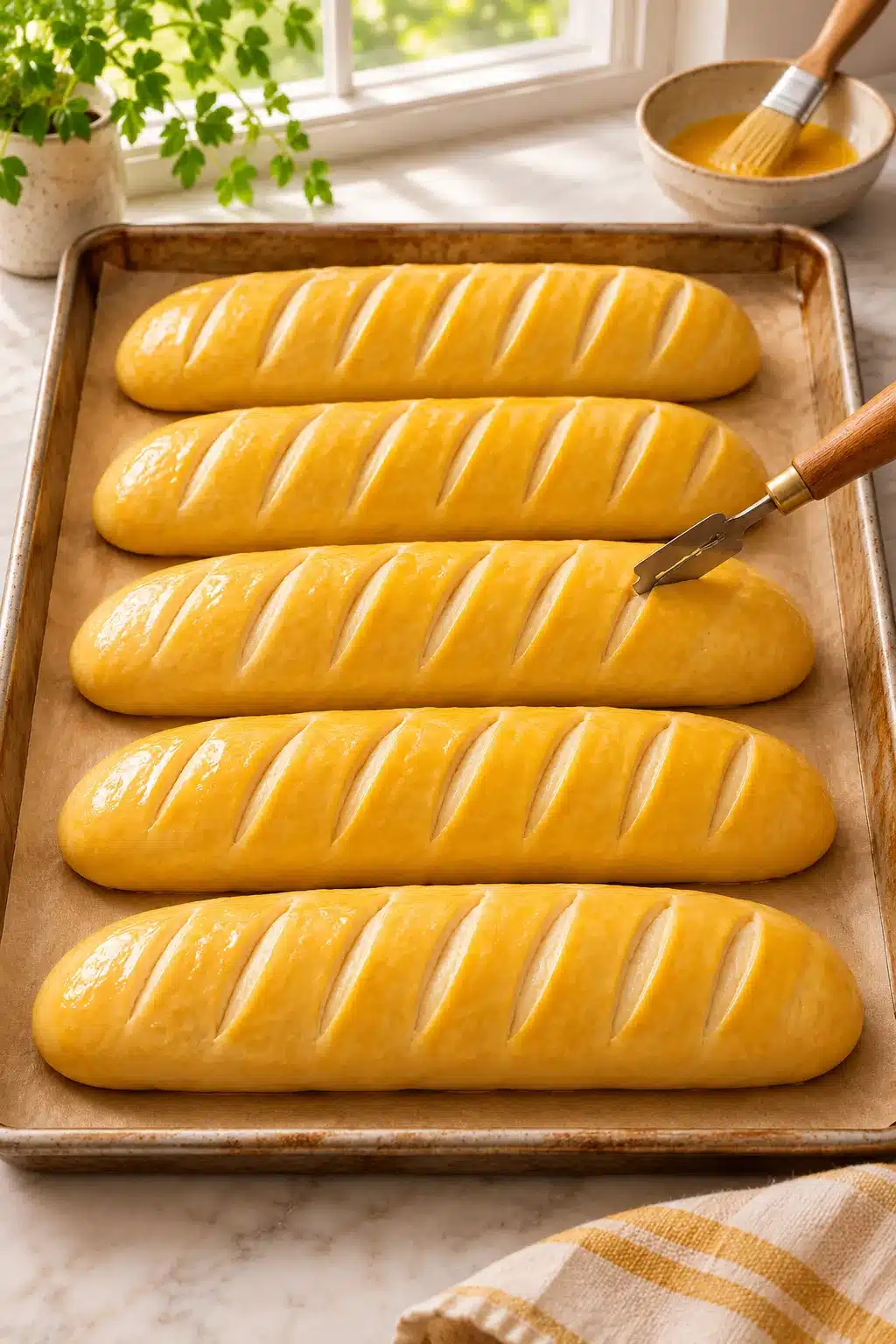
- Flatten each ball gently to remove large air bubbles, then shape it tightly into a sandwich roll or short baguette. Place the loaves on a baking pan 3 to 4 inches apart and brush with egg wash.
- Score each loaf at least 10 times with a sharp knife or razor. Cover loosely and proof for 1 hour.
- Heat the oven to 450 degrees F. Brush the loaves again with egg wash if desired, then bake for about 15 minutes, until golden and cooked through. Cool before serving.
Serving ideas
Use the cooled loaves for ham and cheese sandwiches, egg sandwiches, or buttered toast with jam. Their small size also makes them practical for a picnic basket or a dinner bread service. For a simple breakfast, split one lengthwise and toast it until the cut surface is crisp while the center stays tender.
Tips and optional variation
The dough should feel soft and slightly tacky, not dry. If it sticks heavily after several minutes of kneading, dust the surface with only a small amount of flour. Watch the first rise by volume rather than the clock, since room temperature changes fermentation speed. Optional variation: add a tablespoon of sesame or poppy seeds to the egg-washed tops, keeping the base dough unchanged.
Storage and reheating
Store fully cooled loaves in an airtight bag at room temperature for up to 2 days. Refresh them in a 350-degree F oven for 5 to 8 minutes. For longer storage, wrap the cooled bread well and freeze it for up to 2 months; thaw at room temperature and warm briefly before serving. Avoid refrigerating the bread, which makes the crumb stale more quickly.
Planning the bake
Because the recipe makes six loaves, it fits several everyday meals. Bake the bread in the morning and use the first loaf while it is still gently warm, then keep the rest for packed lunches. The enriched dough has enough flavor to stand on its own, but it also accepts savory fillings without becoming fragile. Slice the bread only after it has cooled; cutting too soon can compress the crumb and make the center seem gummy even when the loaf is fully baked.
Fermentation is the part that deserves the most attention. A cool kitchen may require the full hour, while a warm kitchen can move the dough along faster. Look for a doubled dough and puffy shaped loaves rather than relying only on the timer. When you press a shaped loaf lightly, the mark should begin to spring back. If it collapses, it has likely proofed too far; bake it promptly and expect a slightly flatter roll. If it springs back immediately, give it more time.
For a neat finish, keep the score marks shallow and evenly spaced. The cuts should open in the oven without slicing all the way through the dough. Egg wash adds shine and color, so brush it gently across the surface without flooding the cuts. Let the baked loaves cool on a rack where air can circulate underneath. This keeps the bottoms from trapping steam and preserves the delicate crust.
Vienna bread questions
How do I know the yeast is active? After 10 minutes, the milk mixture should look lightly foamy or show bubbles. If it remains completely flat, start again with fresh yeast.
Why score the loaves so many times? The shallow cuts guide expansion across the surface and create the signature ridged look. Use a very sharp blade and light, quick strokes.
Can I make the dough ahead? Yes. After kneading, cover it and refrigerate overnight. Let it warm and complete the rise before shaping, then continue with the second proof.
FAQs
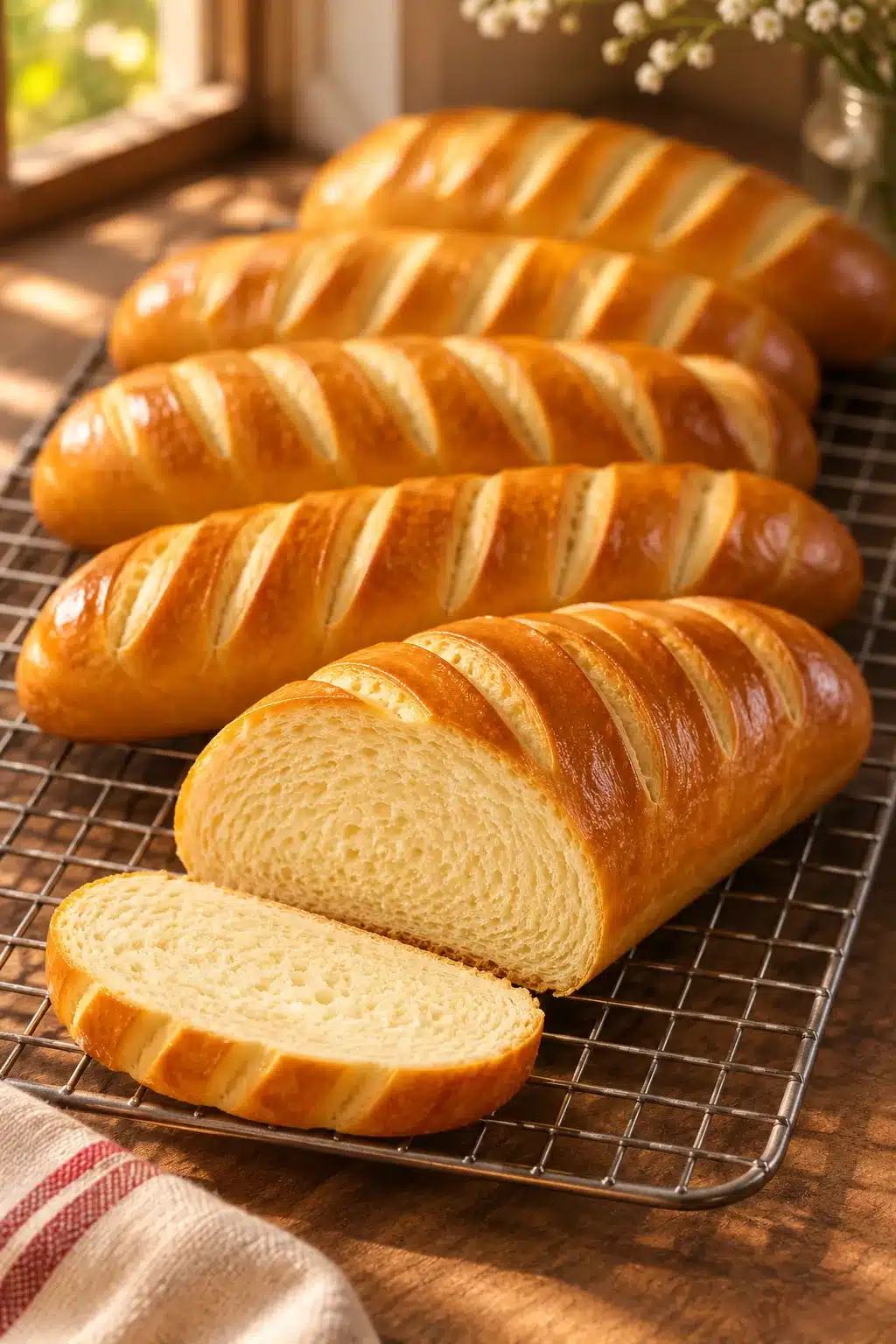
Once the loaves have cooled, their fine crumb and lightly sweet flavor are ready for sandwiches, toast, or a warm loaf shared at the table.


Vienna Bread
Ingredients
Ingredients
- 1 packet active dry yeast about 2 1/2 teaspoons
- 2 tbsp sugar
- 1 1/3 cup fat-free skim milk warm
- 1 1/2 tsp salt
- 3 1/2 cups all-purpose flour plus 2 tablespoons
- 3 tbsp unsalted butter softened
- 1 egg wash one egg beaten with a pinch of salt
Instructions
Instructions
- Mix the warm milk and sugar, sprinkle in the yeast, cover, and let it activate for 10 minutes.
- Add the salt and flour to the yeast mixture and mix until a rough dough forms.
- Move the dough to a work surface and knead in the softened butter. Knead with the palms and heels of your hands for 8 to 10 minutes, without adding extra flour, until the dough is soft and cohesive.
- Put the dough in a bowl, cover, and let it rise for 45 minutes to 1 hour, or until doubled in size.
- Divide the dough into six equal portions. Shape each into a ball, cover with a kitchen towel, and rest for 15 minutes.
- Flatten each ball gently to remove large air bubbles, then shape it tightly into a sandwich roll or short baguette. Place the loaves on a baking pan 3 to 4 inches apart and brush with egg wash.
- Score each loaf at least 10 times with a sharp knife or razor. Cover loosely and proof for 1 hour.
- Heat the oven to 450 degrees F. Brush the loaves again with egg wash if desired, then bake for about 15 minutes, until golden and cooked through. Cool before serving.