
Vegan Olive oil brioche is a tender, golden loaf made without dairy or eggs, using aquafaba for a soft, airy crumb and extra virgin olive oil for delicate richness. The dough takes patience while it kneads and rises, but the hands-on work is straightforward. Serve thick slices warm with fruit spread, or toast them for breakfast once the loaf has cooled.
What is vegan olive oil brioche?
This vegan olive oil brioche is a naturally enriched bread built from yeast, nondairy milk, aquafaba, flour, sugar, salt, and olive oil. Aquafaba helps give the loaf structure and tenderness, while olive oil keeps the crumb moist without butter. The finished bread is lightly sweet, fragrant, and flexible enough for breakfast or dessert.
Why this vegan olive oil brioche works
The recipe adds olive oil gradually during kneading, allowing the dough to absorb the fat and develop a smooth texture. Two rises create the loaf’s lift, while the maple-aquafaba wash encourages a glossy golden crust. Using both all-purpose and bread flour gives the bread enough strength to rise while keeping each slice tender.
Ingredients and preparation
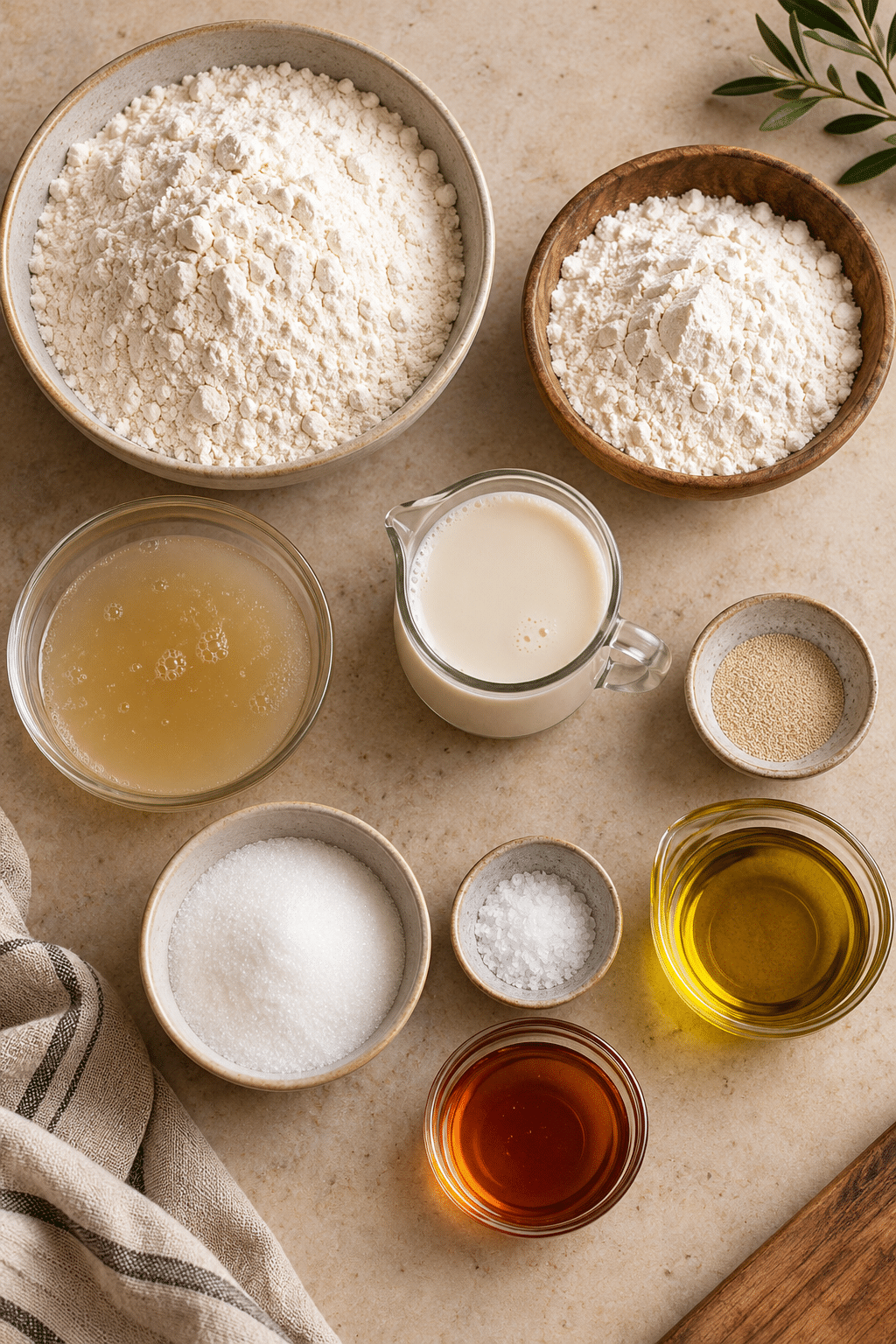
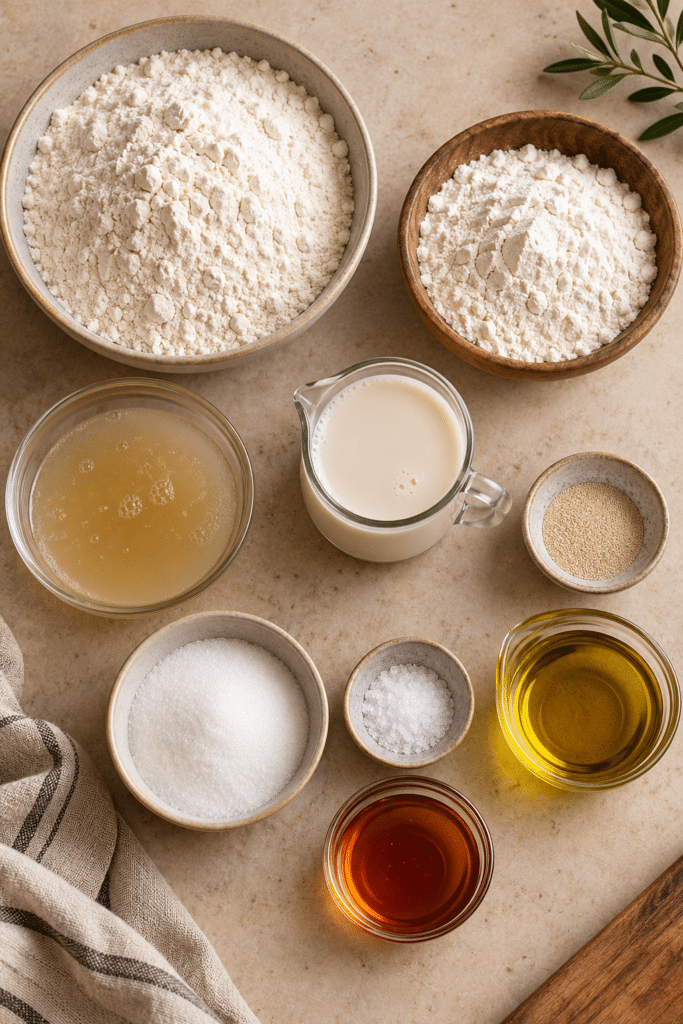
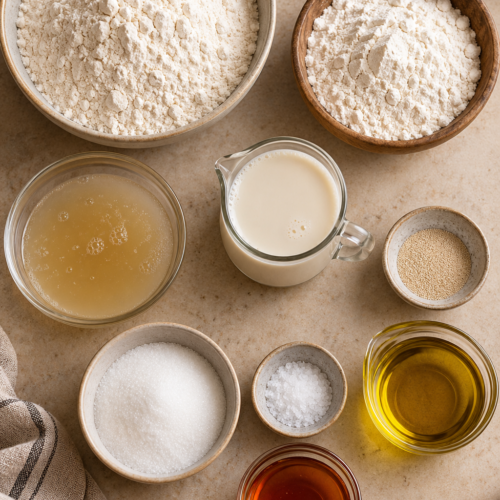
Gather active dry yeast, lukewarm nondairy milk, unbleached all-purpose flour, bread flour, aquafaba, salt, sugar, extra virgin olive oil, maple syrup, and a little additional aquafaba for brushing. Keep the milk lukewarm rather than hot so the yeast can bloom properly. Measure the flour carefully and have the olive oil ready before kneading begins.
How to make vegan olive oil brioche
Begin by blooming the yeast in the lukewarm nondairy milk for about five minutes. Add the all-purpose flour, aquafaba, sugar, and salt, then mix until incorporated. Add the bread flour and knead for five minutes. The dough will become more cohesive as the flour hydrates.
- Combine the yeast and lukewarm nondairy milk in a stand-mixer bowl and let it bloom for about five minutes.
- Add the all-purpose flour, aquafaba, sugar, and salt, and mix on medium speed until incorporated. Add the bread flour and knead for five minutes.
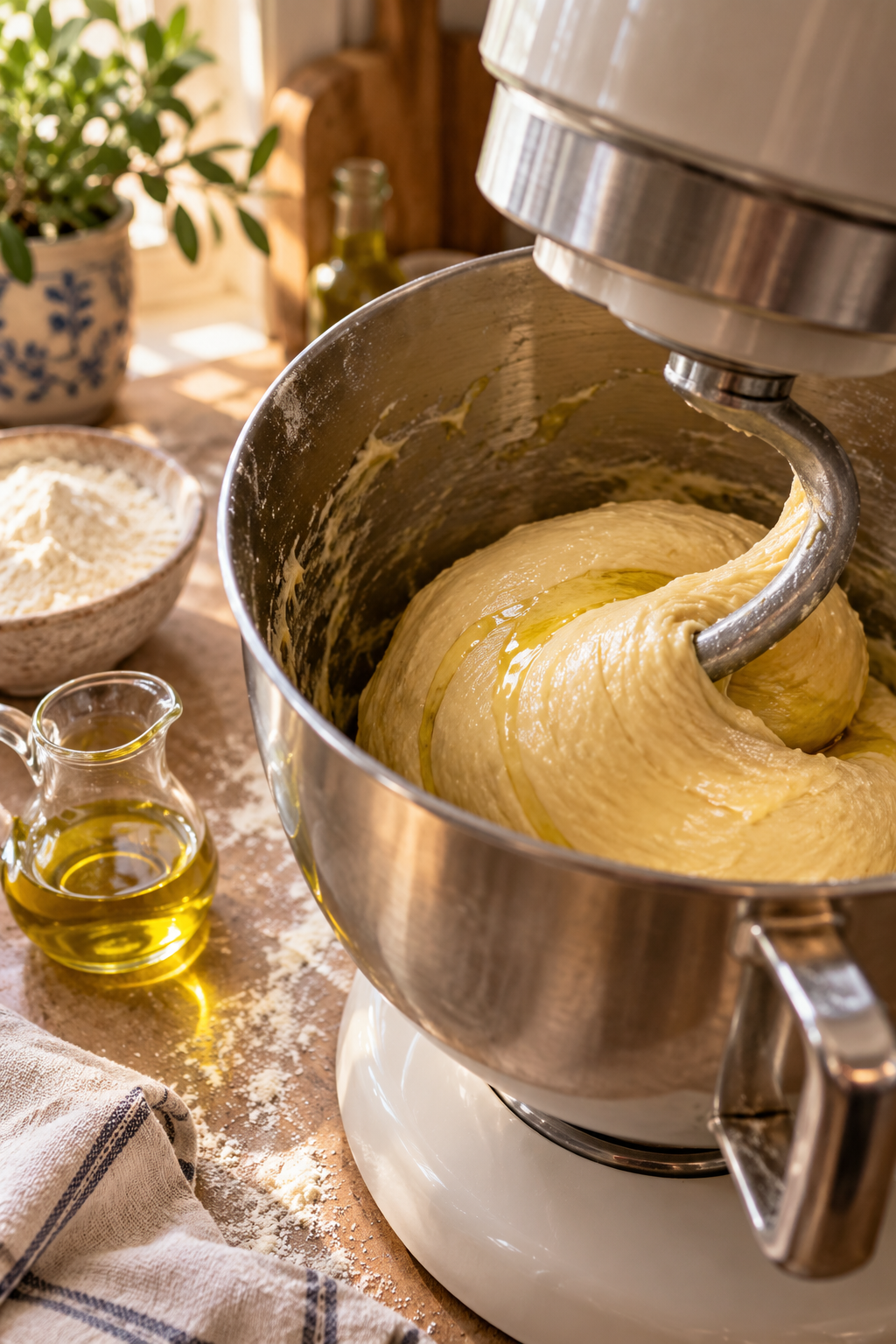
- Knead in the olive oil one third at a time, waiting for each addition to absorb before adding the next. Shape the smooth dough into a ball.
- Place the dough in an oiled bowl, cover, and let it rise in a warm place for about 90 minutes, until doubled.
- Gently shape the risen dough into a loaf and place it in a loaf pan. Let it rise again until puffy, about 30 minutes.
- Whisk the maple syrup, aquafaba, and remaining teaspoon of olive oil. Brush the loaf, then bake at 375°F until golden and cooked through, about 30 minutes.
- Cool the brioche in the pan briefly, transfer it to a rack, and let it cool before slicing.
Managing the dough
Olive oil can make dough look loose when it is first added, so avoid rushing the kneading. Add one third of the oil, wait until the dough absorbs it, and repeat. The finished dough should look smooth and feel soft, with a slight stickiness at the bottom of the bowl. If it is difficult to handle, lightly oil your hands rather than adding a large amount of extra flour.
Getting a good rise
Place the covered bowl somewhere warm and free from drafts. The first rise should take about 90 minutes, although the dough’s appearance matters more than the clock. It should be visibly puffy and close to doubled. After shaping, allow the loaf to rise again until it looks airy. A slow rise in a cooler room may take longer.
Baking and cooling tips
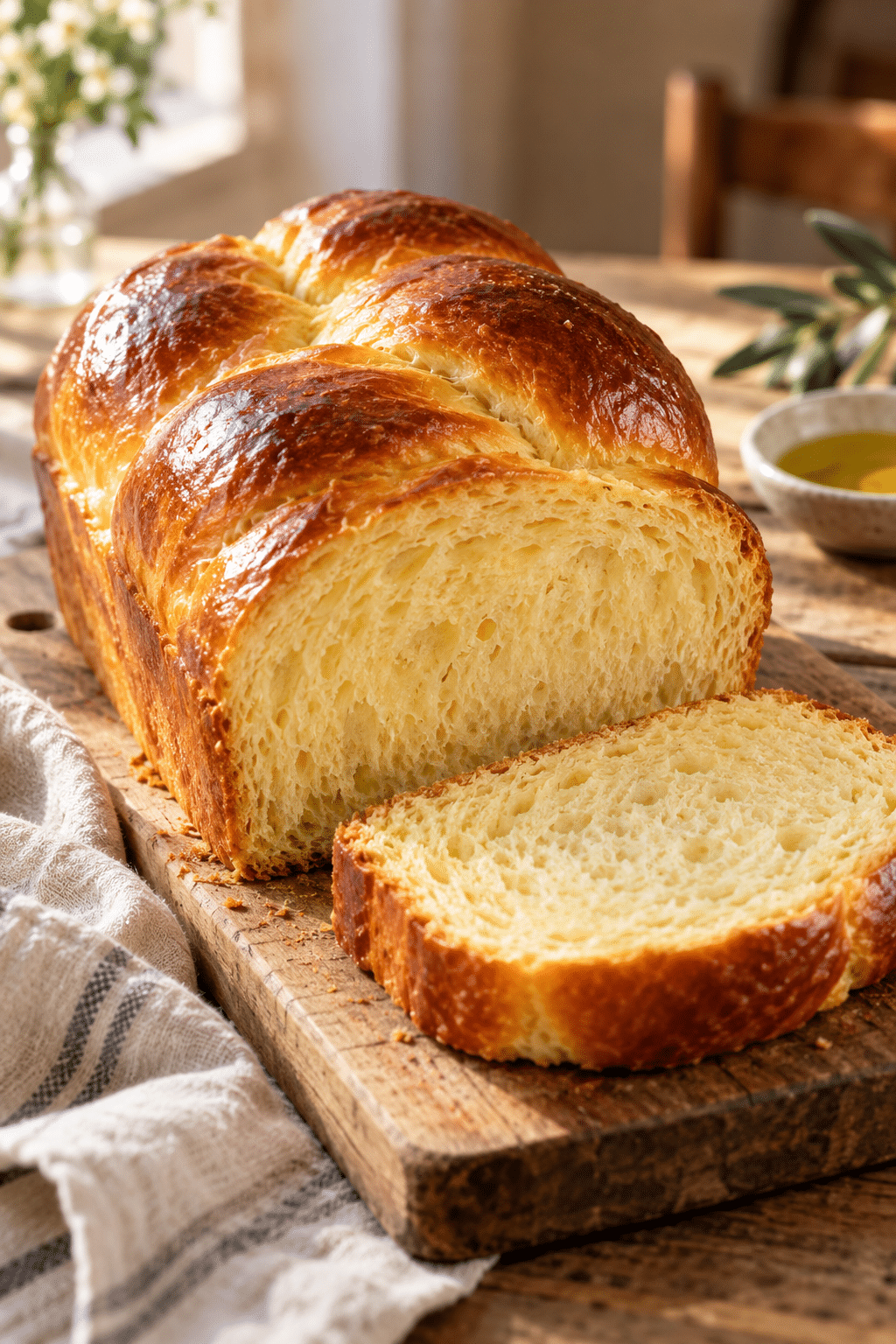
Brush the shaped loaf with the maple syrup, aquafaba, and olive oil mixture just before baking. This thin coating helps the crust brown evenly and adds a subtle sheen. Bake until the top is deeply golden and the loaf feels set. Let it cool before slicing so the interior can finish setting and the crumb does not compress.
Use a light-colored Loaf Pan when possible, since a dark pan can brown the bottom faster. If the top colors before the center is ready, loosely tent it with foil for the final minutes. Let the loaf rest in the pan for a few minutes, then move it to a rack so air can circulate around the sides. Slicing too early may make the crumb seem gummy even when the bread was baked correctly.
Serving ideas
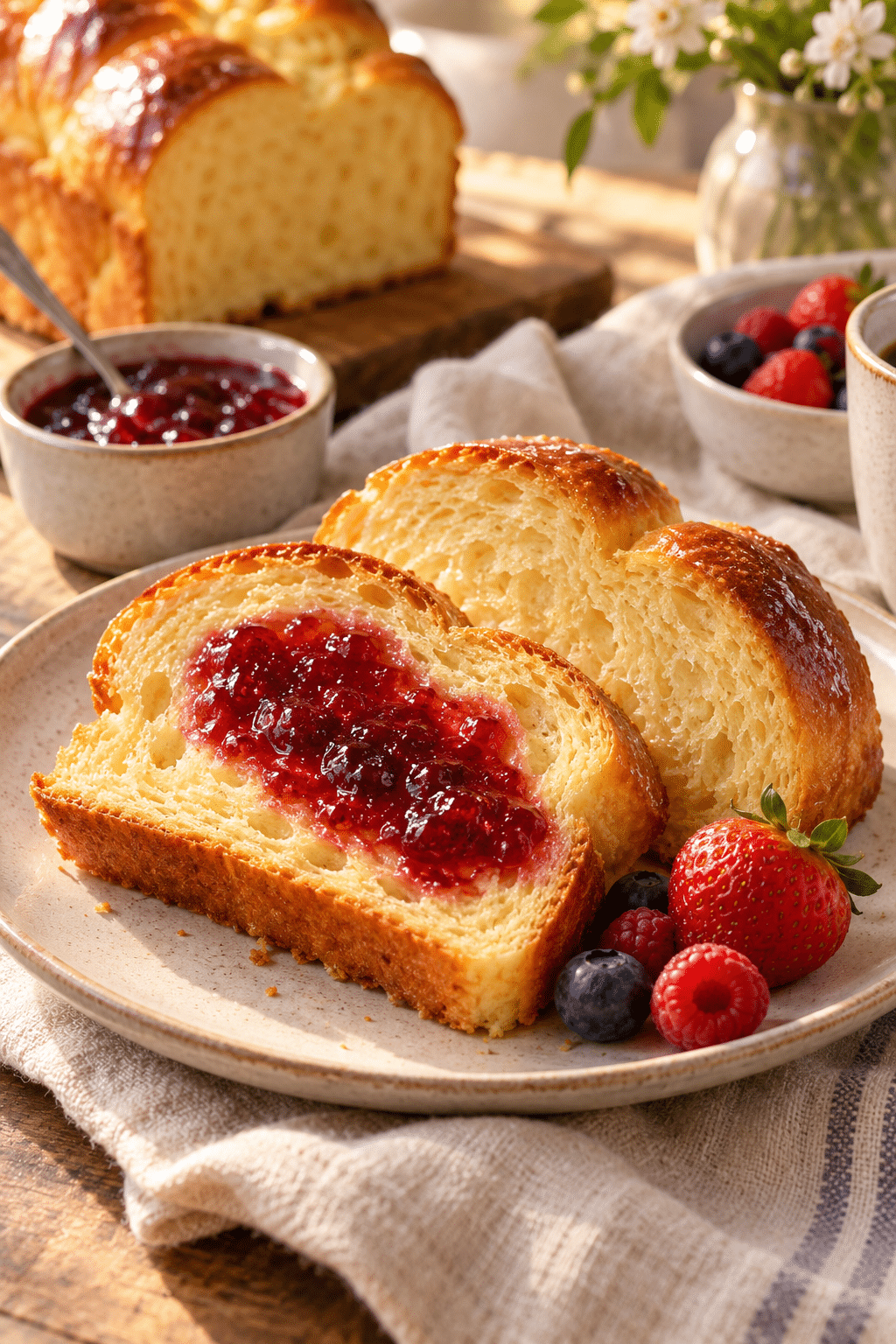
Serve thick slices with jam, fresh fruit, or a drizzle of maple syrup. The mild olive oil flavor also pairs well with savory spreads and roasted vegetables. Once the loaf is a day old, toast it gently until the edges are crisp while the center remains soft.
For a simple brunch plate, serve the brioche with citrus segments and a spoonful of berry preserves. The loaf is also useful for a quiet afternoon snack because its restrained sweetness does not overpower toppings. Cut slices with a serrated knife using a gentle sawing motion; pressing straight down can flatten the airy interior.
Optional variation
For an optional variation, add a pinch of ground cardamom or finely grated orange zest with the sugar. The dough keeps the same kneading, rising, and baking schedule, but the finished loaf has a brighter aroma. Do not add a large amount of extra flour to compensate for the flavoring; keep the dough soft and let the mixer do the work.
Storage and reheating
Keep the cooled brioche in an airtight container at room temperature for a short period. For longer storage, slice the loaf and freeze the slices between sheets of parchment. Reheat individual slices in a toaster or warm oven. Avoid sealing the loaf while it is still warm, since trapped steam can soften the crust.
If the loaf is stored overnight, refresh it in a 300°F oven for several minutes before serving. Frozen slices can go directly into a toaster on a low setting, followed by a second brief cycle if needed. Always check the center of a reheated slice before serving, because thick pieces warm more slowly than thin toast.
FAQ: vegan olive oil brioche questions
What is aquafaba?
Aquafaba is the liquid from cooked chickpeas. It is used here as a plant-based ingredient that contributes moisture and structure.
Can I use another nondairy milk?
Yes. Choose an unsweetened nondairy milk with a mild flavor, and warm it gently before combining it with the yeast.
Why add the oil slowly?
Gradual additions help the dough absorb the oil evenly, producing a smoother, more elastic dough.
Final thought
With a slow olive-oil knead and two patient rises, vegan olive oil brioche becomes a tender homemade loaf with a glossy crust and plenty of breakfast possibilities.

Vegan Olive Oil Brioche
Ingredients
Ingredients
- 2 1/4 tsp active dry yeast
- 1/3 cup nondairy milk lukewarm
- 1 cup unbleached all-purpose flour
- 1 3/4 cups bread flour
- 3/4 cup aquafaba
- 1/4 tsp salt
- 3 tbsp sugar
- 3/4 cup extra virgin olive oil divided
- 1 tsp extra virgin olive oil for the bowl
- 1 tsp maple syrup
- 1 tsp aquafaba for brushing
Instructions
Instructions
- Combine the yeast and lukewarm nondairy milk in a stand-mixer bowl and let it bloom for about five minutes.
- Add the all-purpose flour, aquafaba, sugar, and salt, and mix on medium speed until incorporated. Add the bread flour and knead for five minutes.
- Knead in the olive oil one third at a time, waiting for each addition to absorb before adding the next. Shape the smooth dough into a ball.
- Place the dough in an oiled bowl, cover, and let it rise in a warm place for about 90 minutes, until doubled.
- Gently shape the risen dough into a loaf and place it in a loaf pan. Let it rise again until puffy, about 30 minutes.
- Whisk the maple syrup, aquafaba, and remaining teaspoon of olive oil. Brush the loaf, then bake at 375°F until golden and cooked through, about 30 minutes.
- Cool the brioche in the pan briefly, transfer it to a rack, and let it cool before slicing.