
A quick sourdough starter with yeast is a practical way to begin baking with a lively culture. This small batch combines filtered water, unbleached all-purpose flour, and a little active dry yeast, then uses equal-weight feedings to build bubbles and strength. The process is simple enough for a first attempt, yet it teaches useful habits: use a clean roomy jar, watch the rise, avoid an airtight lid, and feed by weight. Because the first ferment takes about 18 hours and the next feeding can become active within 6 to 8 hours, you can plan the starter around your kitchen schedule.
Thank you for reading this post, don't forget to subscribe!What is a quick sourdough starter with yeast?
This starter combines flour and water with active dry yeast to help the first fermentation begin. Once bubbly and doubled, it can be used in bread recipes or maintained for future baking. The starter is kept at 100 percent hydration, meaning retained starter, water, and flour are measured in equal weights. That ratio makes the mixture easy to refresh and understand.
Why use yeast in the first feeding?
Beginning bakers often worry that a new starter will look quiet. A little active dry yeast creates visible fermentation while flour and water settle into a repeatable routine. You still learn to judge bubbles, volume, aroma, and timing. Choose unbleached all-purpose flour and filtered water when possible, and use a warm, stable location.
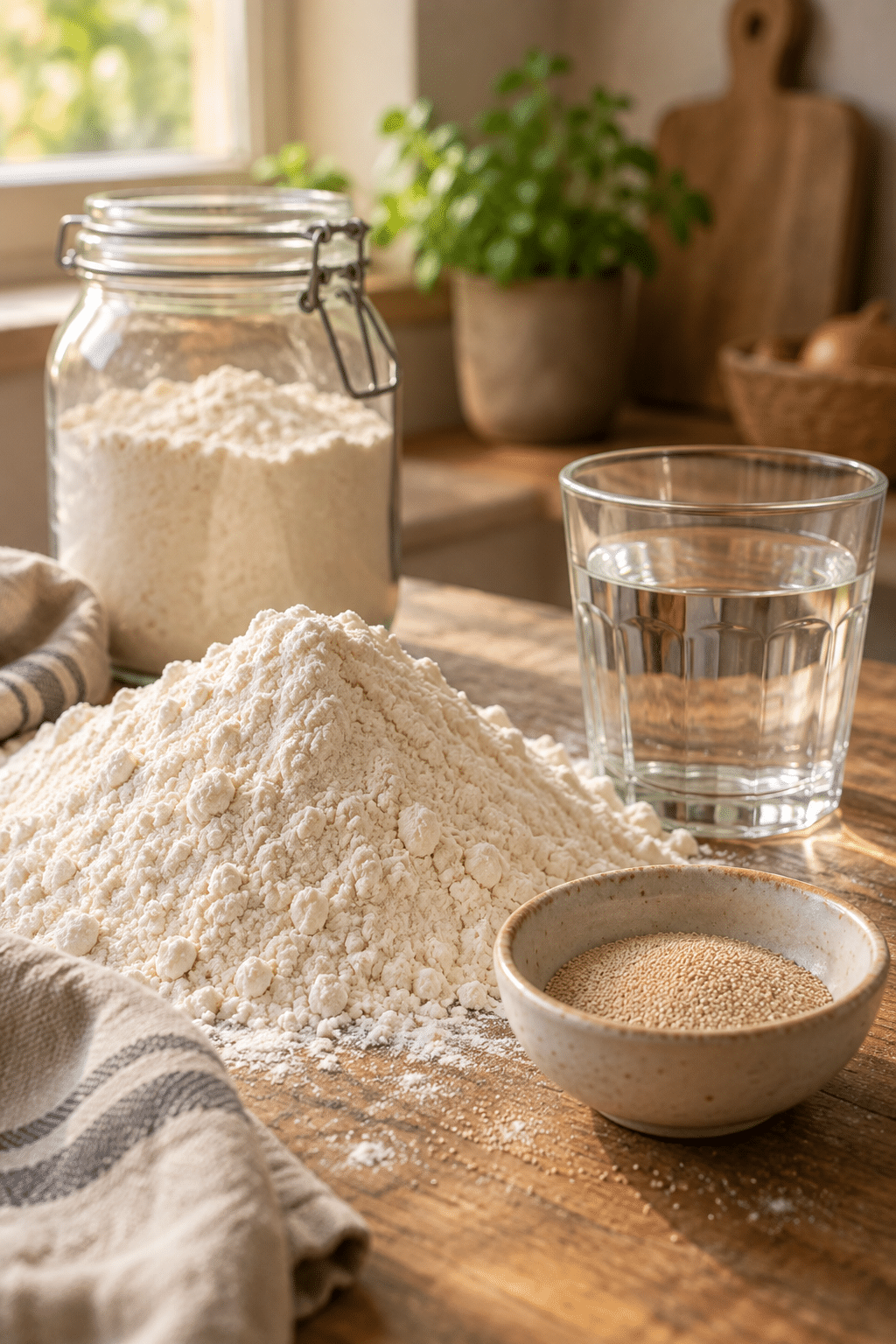
Ingredients for the starter
You need 100 g filtered water, 100 g unbleached all-purpose flour, and 1/2 teaspoon active dry yeast. The feeding uses 50 g retained starter, 50 g filtered water, and 50 g unbleached all-purpose flour. Weighing keeps the 1:1:1 ratio accurate.
How to make a quick sourdough starter with yeast
Mix 100 g unbleached all-purpose flour, 100 g room-temperature filtered water, and 1/2 teaspoon active dry yeast until combined. Cover loosely and ferment for about 18 hours. Stir down the bubbles, transfer 50 g starter to a clean jar, then mix in 50 g filtered water and 50 g unbleached all-purpose flour. Stir until smooth.
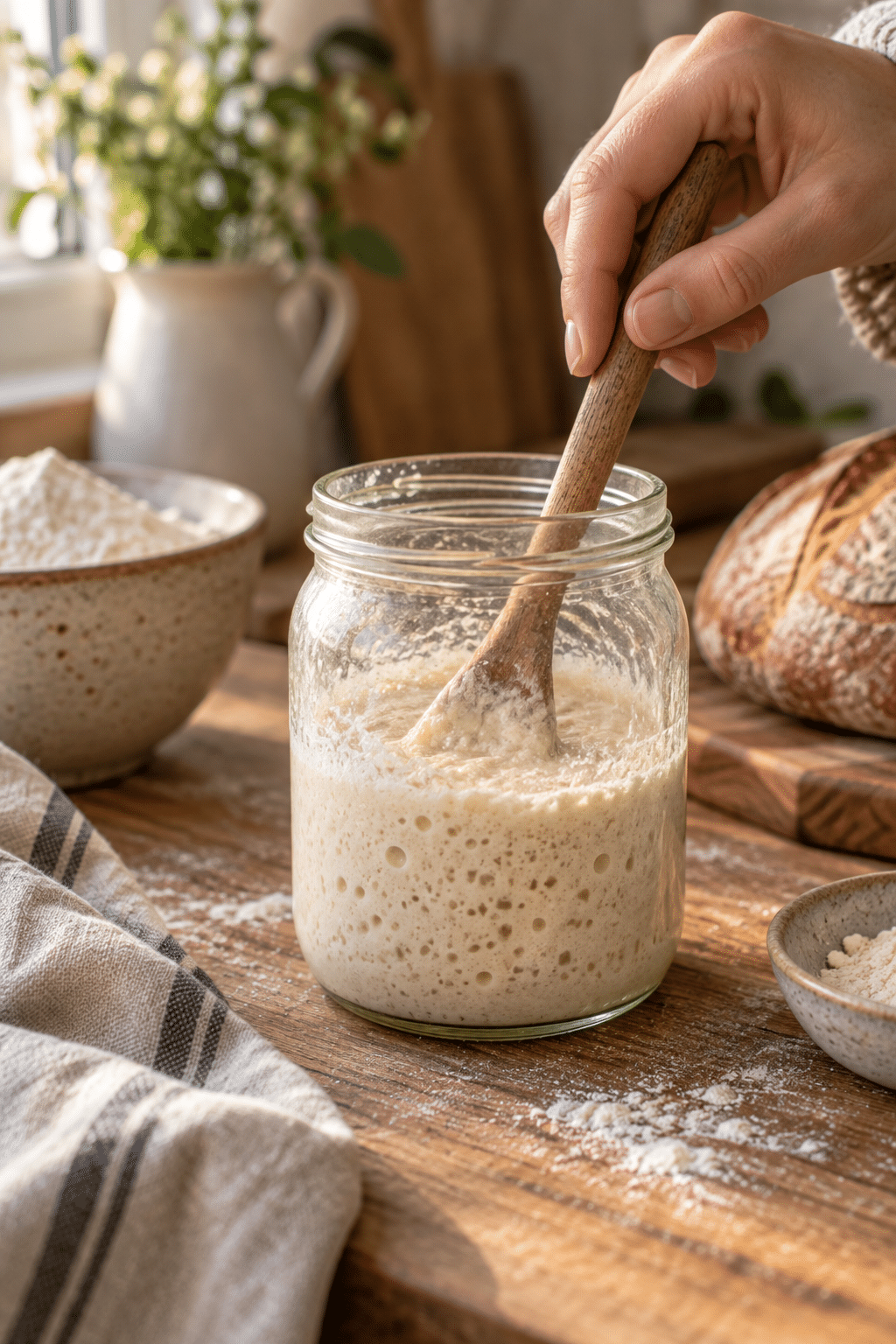
How to know when it is ready
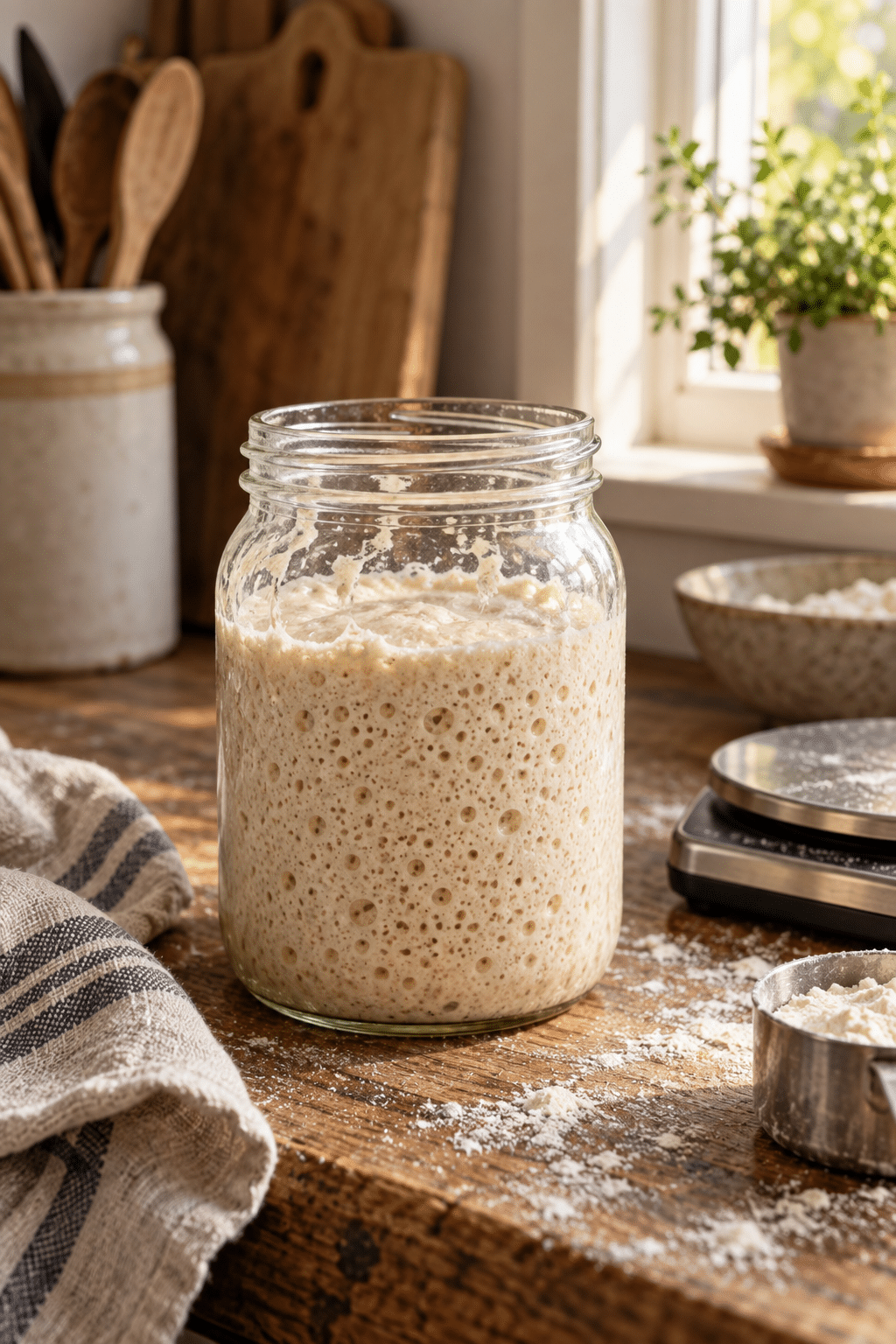
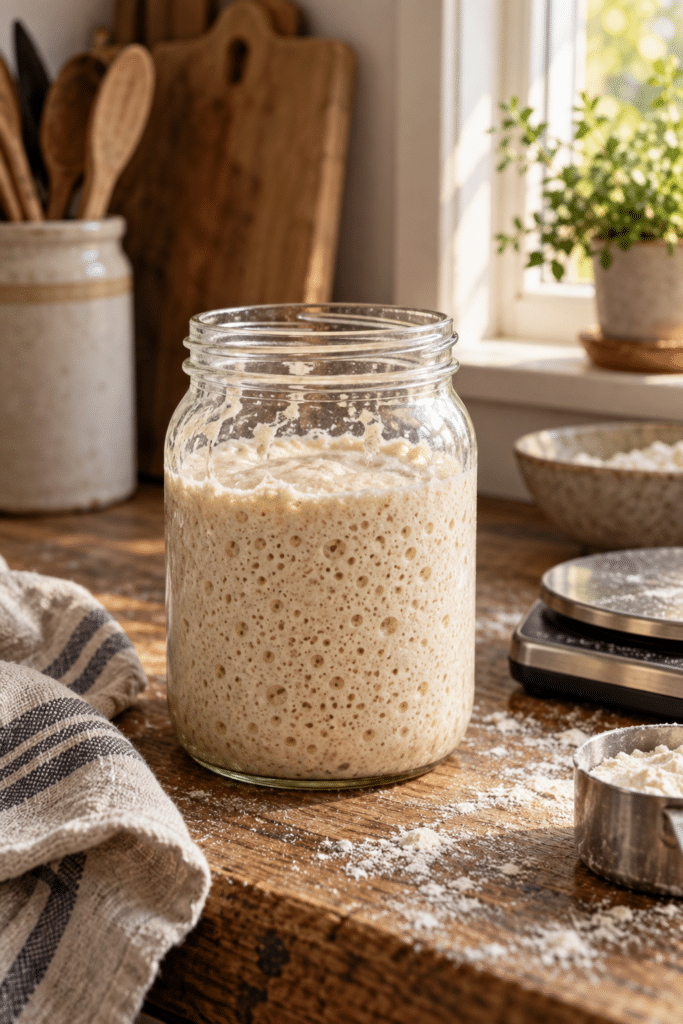
A ready starter looks aerated, smells pleasantly fermented, and shows a clear increase in volume. After feeding, it may take 6 to 8 hours to become bubbly and doubled. Mark the starting level on the jar. The rise is more useful than a strict clock.
“Packed with flavor and so simple. Exactly what I wanted from this Quick Sourdough Starter With Yeast!”
How to feed and store it
For each feeding, retain 50 g starter and mix in 50 g water followed by 50 g flour. Once established, refrigerate it with a loose cover. Before baking, bring it out, feed it, and wait for it to become active. Always use a clean jar and leave headroom.
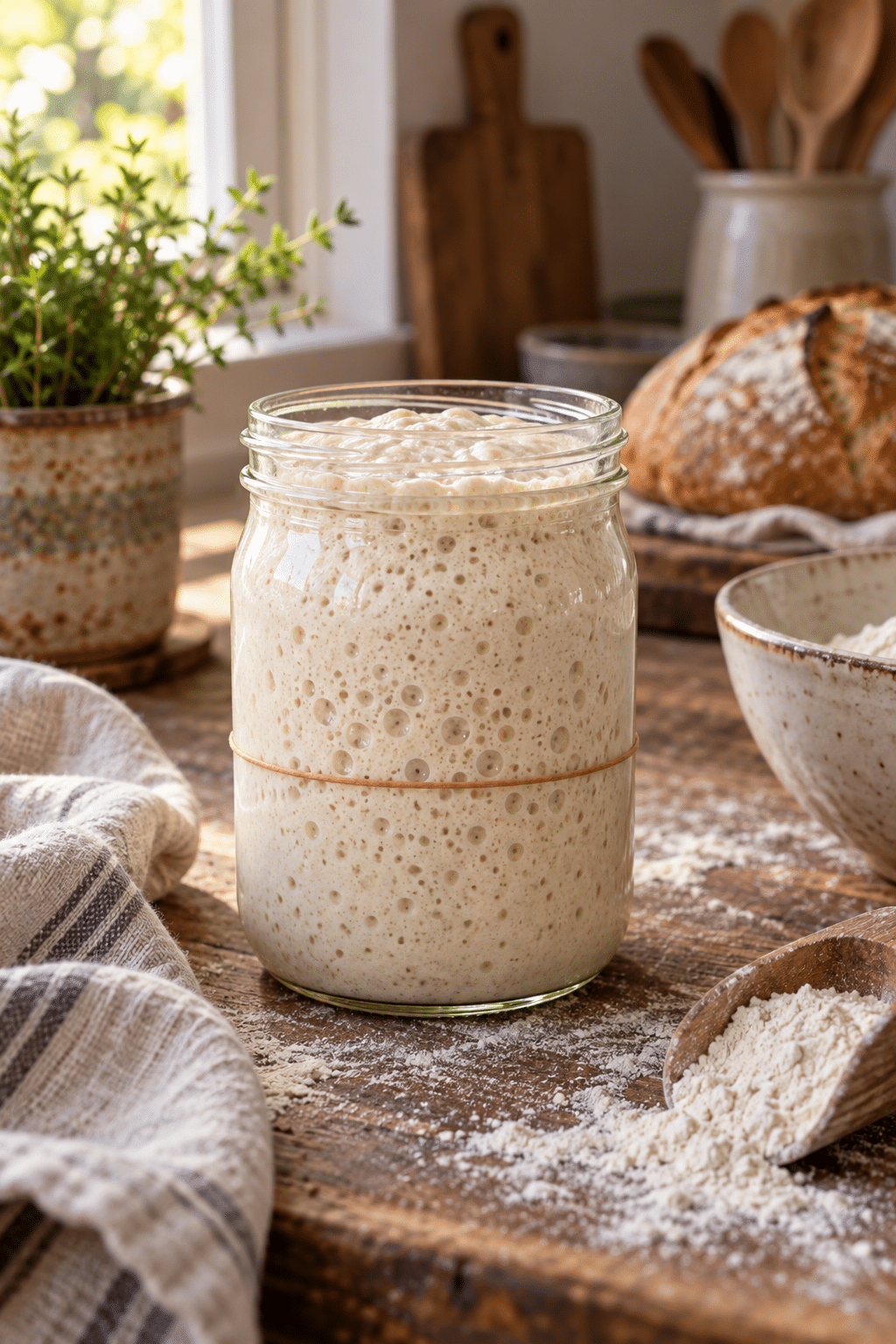
Optional variation
Replace part of the all-purpose flour with whole-wheat flour at a feeding if you want a heartier variation. Keep the same total flour weight and the 1:1:1 ratio. Whole-wheat flour may ferment more quickly, so watch the rise.
Serving and using the starter
Use the active starter in a bread dough when it has doubled and still has a rounded or gently domed top. The flavor will be mild at first and become more complex with regular feedings. Keep notes about room temperature, feeding time, and peak rise. Those observations help you repeat the best timing in your own kitchen. A small starter is convenient because it produces less discard while still giving you enough culture for a loaf. Look for fine bubbles throughout the mixture rather than only a few bubbles at the surface. The jar should feel light and airy when stirred, and the starter should loosen slightly as fermentation develops. If you plan to bake tomorrow, feed it in the evening and check it in the morning. If your kitchen is cool, allow extra time instead of adding more yeast. If your kitchen is warm, use a cooler shelf and watch the rise more closely. Consistent observation is the best way to learn how this quick sourdough starter with yeast behaves in your home.
Helpful troubleshooting tips
If the mixture seems dry, check the scale and stir thoroughly before adding anything. If it rises too fast, move it to a cooler spot or feed it sooner. If it looks quiet, give it more time in a stable warm place. A thin liquid layer can be stirred in before discarding and feeding. Avoid using a jar that is too small, because pressure and overflow make the process messy. Clean tools, accurate weights, and patience solve most beginner problems.
Exact method steps
Mix 100 g water, 100 g flour, and yeast in a roomy non-metallic container. Cover loosely and ferment in a warm, draft-free spot for about 18 hours. Transfer 50 g starter to a clean jar; mix in 50 g water and then 50 g flour. Keep feeding at a 1:1:1 starter-to-water-to-flour ratio until bubbly and doubled, usually 6 to 8 hours after feeding.
Serving and using the starter
Use the active starter in a bread dough when it has doubled and still has a rounded or gently domed top. The flavor will be mild at first and become more complex with regular feedings. Keep notes about room temperature, feeding time, and peak rise. Those observations help you repeat the best timing in your own kitchen. A small starter is convenient because it produces less discard while still giving you enough culture for a loaf. Look for fine bubbles throughout the mixture rather than only a few bubbles at the surface. The jar should feel light and airy when stirred, and the starter should loosen slightly as fermentation develops. If you plan to bake tomorrow, feed it in the evening and check it in the morning. If your kitchen is cool, allow extra time instead of adding more yeast. If your kitchen is warm, use a cooler shelf and watch the rise more closely. Consistent observation is the best way to learn how this quick sourdough starter with yeast behaves in your home.
Helpful troubleshooting tips
If the mixture seems dry, check the scale and stir thoroughly before adding anything. If it rises too fast, move it to a cooler spot or feed it sooner. If it looks quiet, give it more time in a stable warm place. A thin liquid layer can be stirred in before discarding and feeding. Avoid using a jar that is too small, because pressure and overflow make the process messy. Clean tools, accurate weights, and patience solve most beginner troubleshooting problems and make the next feeding easier to judge.
FAQ: Frequently asked questions
Can I use tap water?
Filtered water is safest when tap water is strongly chlorinated.
“The Quick Sourdough Starter With Yeast turned out amazing. My kids asked for seconds. Saving this one!”
Should the jar be sealed?
No. Cover it loosely so gas can escape.
Why discard starter?
Discarding keeps the culture manageable and gives each feeding fresh flour and water.
When can I bake?
Bake when the starter is bubbly and doubled after feeding.

Quick Sourdough Starter With Yeast
Ingredients
Ingredients
- 100 g filtered water room temperature
- 100 g unbleached all-purpose flour
- 1/2 teaspoon active dry yeast
- 50 g filtered water for feeding
- 50 g unbleached all-purpose flour for feeding
Instructions
Instructions
- Mix 100 g water, 100 g flour, and yeast in a roomy non-metallic container.
- Cover loosely and ferment in a warm, draft-free spot for about 18 hours.
- Transfer 50 g starter to a clean jar; mix in 50 g water and then 50 g flour.
- Keep feeding at a 1:1:1 starter-to-water-to-flour ratio until bubbly and doubled, usually 6 to 8 hours after feeding.