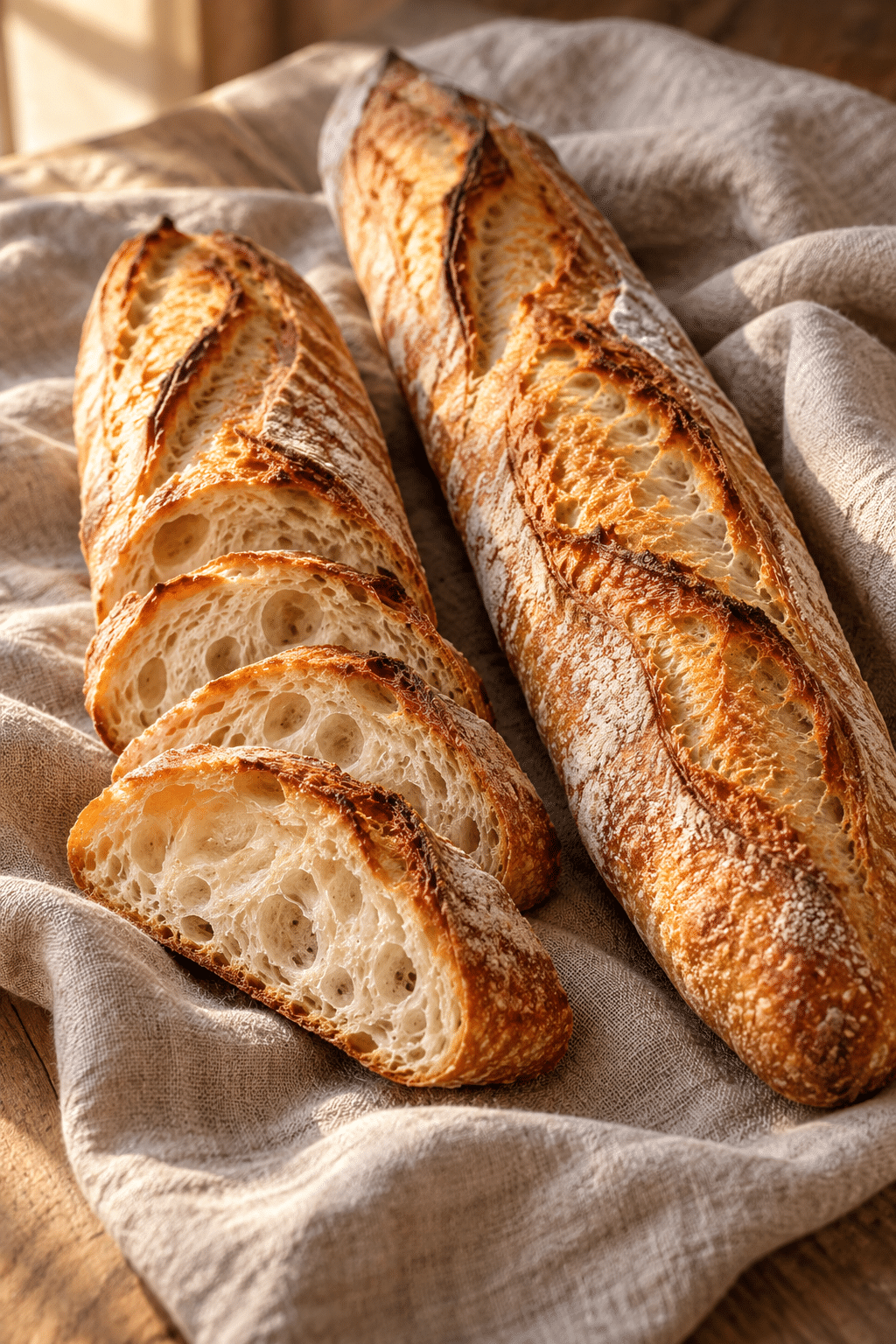

Homemade baguette has a reputation for requiring professional equipment, but a bowl, a baking sheet, and a little patience are enough to create two slender loaves with a crisp crust and tender, airy center. This recipe uses a soft yeast dough, a short first rise, and a burst of oven steam to encourage good lift. You will learn how to judge the dough by feel, shape it without knocking out all the air, and bake it until the crust is deeply golden.
What makes this homemade baguette work
The dough is moderately hydrated, so it stays manageable while still producing an open crumb. Honey gives the yeast a gentle start and helps the crust brown, while bread flour supplies the gluten needed for a loaf that holds its shape. The final rest lets the shaped dough relax before baking.
Steam matters during the first minutes in the oven. It keeps the surface flexible while the baguettes expand, then dry heat turns the outside crisp. If the dough feels slightly tacky rather than dry, you are on the right track; adding too much flour makes the finished bread heavy.
Why the steam and scoring matter
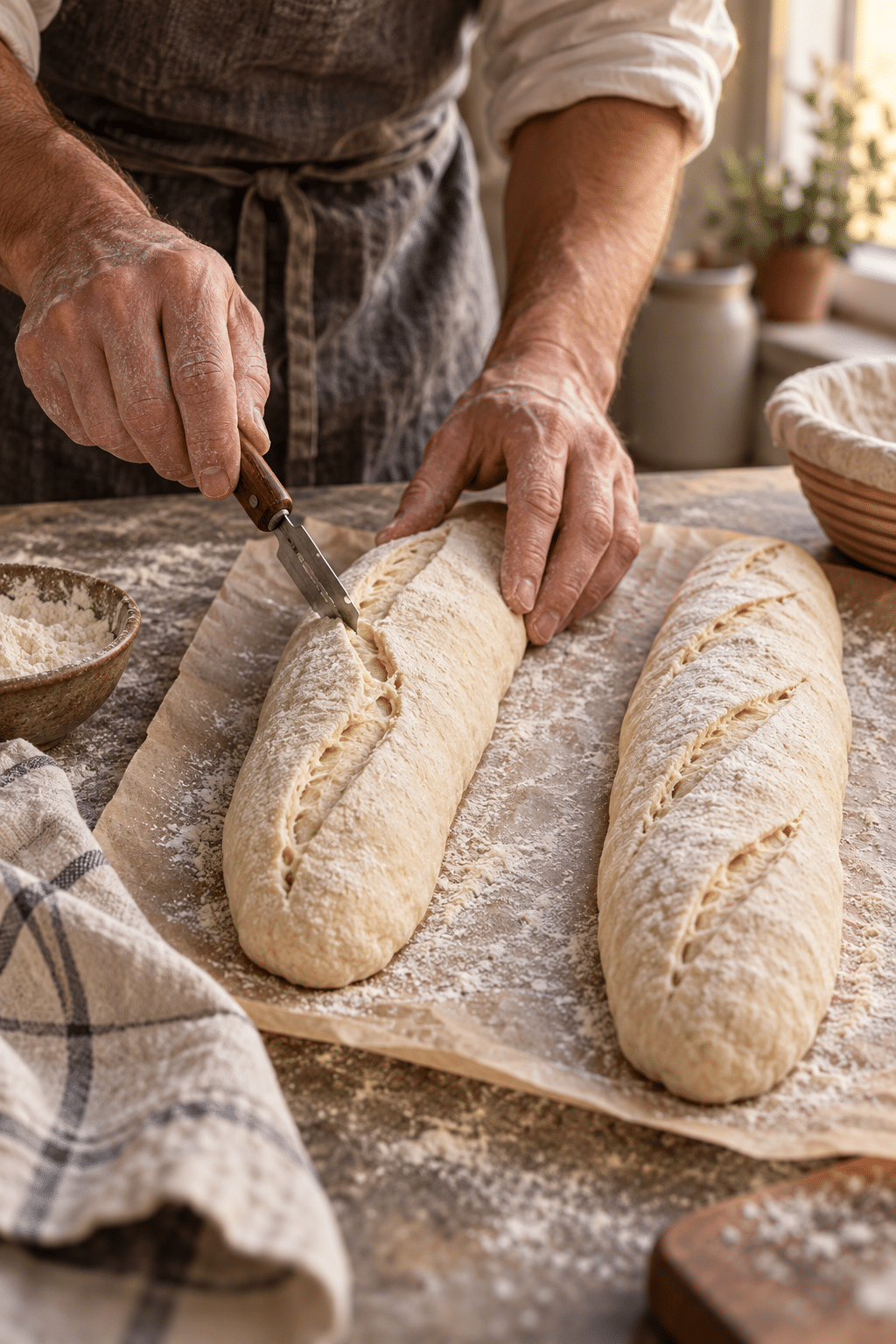
Scoring gives expanding dough a deliberate path to open instead of splitting at a weak seam. The ice creates a humid oven briefly, which delays crust formation and gives the loaves time to spring. Use a very sharp knife and make confident shallow cuts rather than sawing through the dough.
How to make homemade baguette
Ingredients
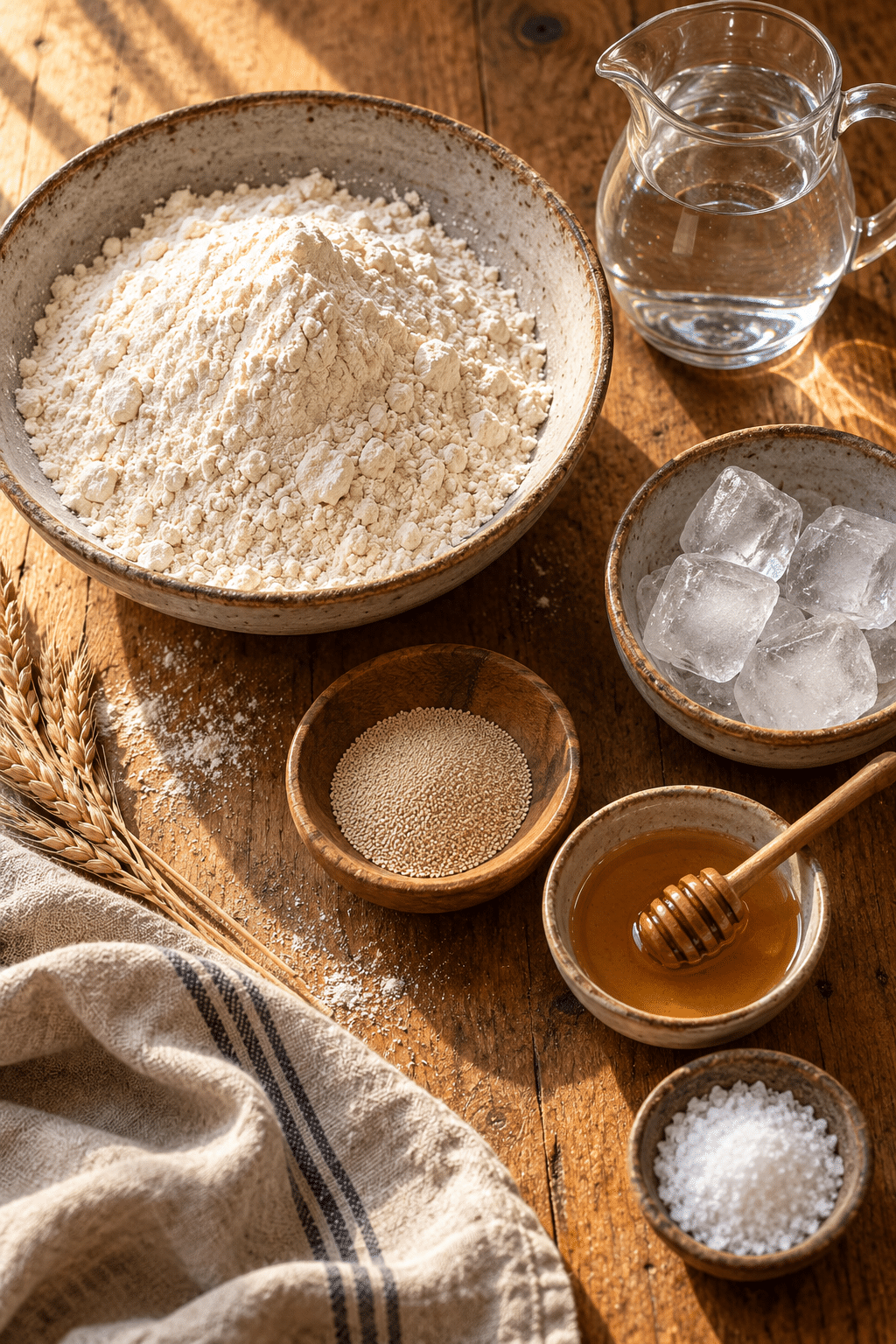
- 1 1/2 cups warm water, about 105°F
- 2 1/4 teaspoons active dry yeast
- 1 tablespoon honey
- 1 1/2 teaspoons fine salt
- 3 1/2 cups bread flour, plus more for shaping
- 1 cup ice cubes for steam
Method
- Stir the warm water, yeast, and honey in a large bowl and rest for 5 minutes, until foamy.
- Mix in the salt and 3 cups flour, then add remaining flour to make a soft, slightly tacky dough.
- Knead for 8 minutes by hand or 5 minutes with a dough hook, until smooth and elastic.
- Cover and let rise about 60 minutes, until doubled.
- Divide in half, shape into tight ovals, place seam-side down on a lined sheet, cover, and rest 30 minutes.
- Heat oven to 450°F and slash each loaf three times with a sharp knife.
- Bake with the ice cubes in a low pan for 20 to 25 minutes, until deeply golden.
- Cool on a rack at least 20 minutes before slicing.
Serving ideas and practical tips
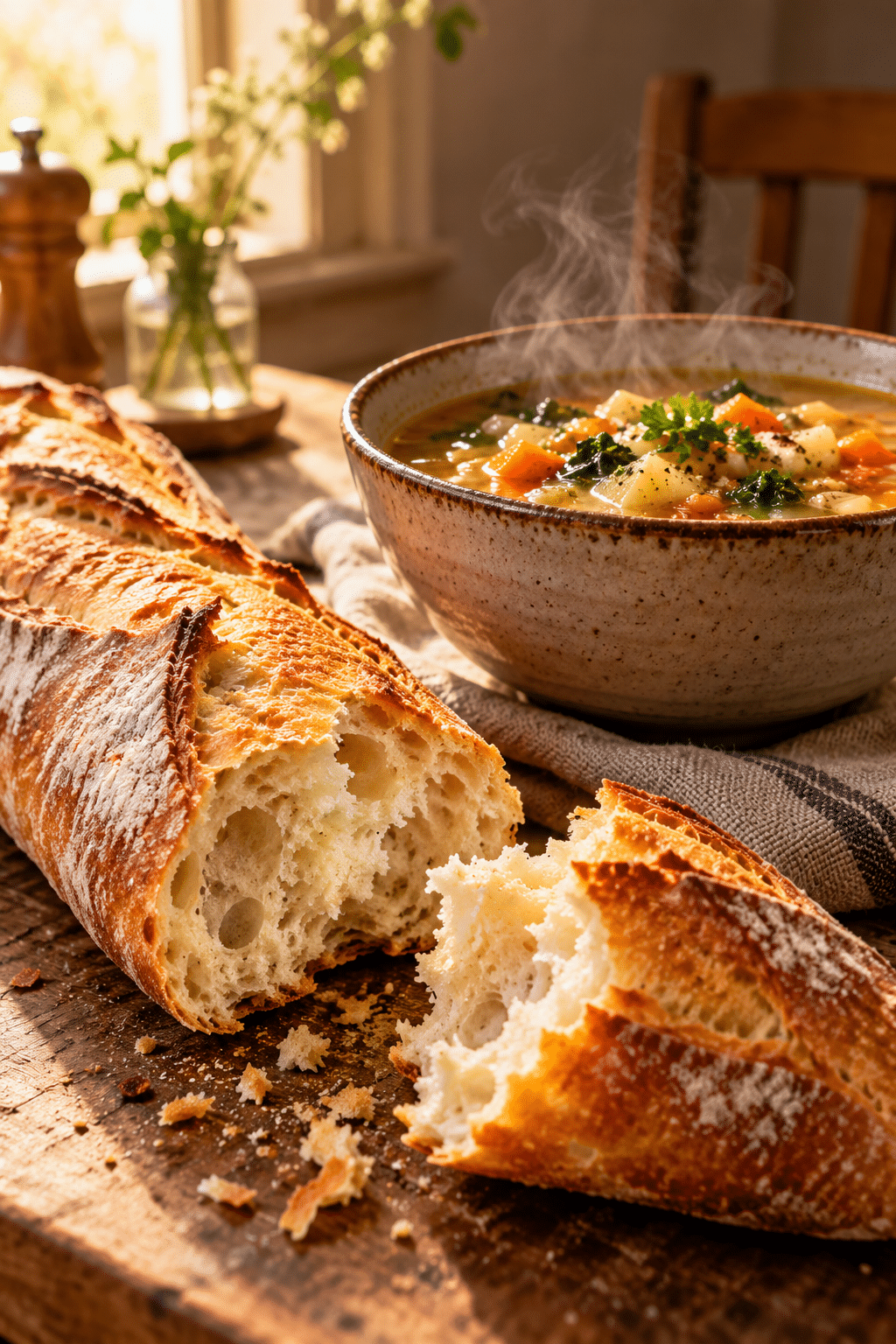
Slice the baguette for soup, use it for sandwiches, or tear it into chunks for dipping in Olive oil. Wait until the loaf is cool enough that the crumb has set. A loaf that sounds hollow when tapped underneath is ready. For a concrete use case, serve warm slices beside tomato soup or use day-old pieces for garlic toast.
Tip: Flour your hands lightly during shaping, but keep the work surface mostly clear. Too much loose flour prevents the seam from sealing and makes the loaf harder to tension.
Optional variation: Add one teaspoon of dried rosemary to the flour for a herbed loaf. This optional flavor change keeps the base quantities and method the same.
Timing and doneness cues
Plan for roughly 25 minutes of hands-on work, but allow the dough its full rise and final rest. A doubled dough should look inflated and feel springy. The baked loaves should be richly golden, feel light for their size, and sound hollow underneath.
Storage and reheating
Keep cooled baguette at room temperature in a paper bag for up to two days. Avoid refrigerating it, which speeds staling. To refresh a day-old loaf, sprinkle the crust lightly with water and heat at 350°F for 8 to 10 minutes. Freeze a fully cooled loaf, tightly wrapped, for up to one month; thaw at room temperature and refresh in the oven.
For the best make-ahead result, freeze individual portions after cooling. A short refresh in a hot oven restores the brittle crust more effectively than a microwave, which softens bread. Slice only what you need so the remaining loaf loses less moisture.
Homemade baguette search answers
Why is my dough sticky? A little tackiness is expected. Knead first, then add flour one tablespoon at a time only if the dough cannot be handled.
How do I get a crisp crust? Use ice-cube steam, bake until richly golden, and cool uncovered on a rack.
Can I make the dough ahead? Yes. After kneading, cover and refrigerate overnight. Let it sit at room temperature until puffy before shaping.
Homemade baguette troubleshooting
If the crust colors too quickly, lower the rack or tent the loaves loosely with foil near the end. If the crumb is dense, check that the yeast foamed and that the dough actually doubled before shaping. If the cuts seal shut, let the shaped loaves rest fully and sharpen the knife.
Homemade baguette FAQ
With attention to dough texture, shaping, and steam, homemade baguette becomes a dependable weekend bake. Let the loaves cool, then enjoy the contrast between crackly crust and soft center.

Homemade Baguette Recipe with a Crisp Crust
Ingredients
Ingredients
- 1 1/2 cups warm water about 105°F
- 2 1/4 teaspoons active dry yeast
- 1 tablespoon honey
- 1 1/2 teaspoons fine salt
- 3 1/2 cups bread flour plus more for shaping
- 1 cup ice cubes for steam
Instructions
Instructions
- Stir the warm water, yeast, and honey in a large bowl and rest for 5 minutes, until foamy.
- Mix in the salt and 3 cups flour, then add remaining flour to make a soft, slightly tacky dough.
- Knead for 8 minutes by hand or 5 minutes with a dough hook, until smooth and elastic.
- Cover and let rise about 60 minutes, until doubled.
- Divide in half, shape into tight ovals, place seam-side down on a lined sheet, cover, and rest 30 minutes.
- Heat oven to 450°F and slash each loaf three times with a sharp knife.
- Bake with the ice cubes in a low pan for 20 to 25 minutes, until deeply golden.
- Cool on a rack at least 20 minutes before slicing.