
When you need bread quickly, emergency no yeast bread gives you a warm, sliceable loaf without waiting for dough to rise. This four-ingredient recipe uses baking powder for lift, so the mixing is brief and the oven does the work. Shape the dough as a thin round, score it deeply, and you can have a rustic loaf ready for butter, soup, or toast in about 40 minutes.
What this emergency no yeast bread is like
This is a compact, tender loaf with a lightly crisp, pale crust rather than a deeply browned yeast-bread exterior. The dough is deliberately shaped into a disc because a thick ball can stay underbaked in the center. Milk adds tenderness; water plus a little fat also works.
Why the method works
Baking powder supplies lift without fermentation, which removes both yeast and rising time. Heating the baking surface first helps the dough begin baking immediately. The deep X increases the exposed surface and helps the center cook evenly.
How to make it
Ingredients
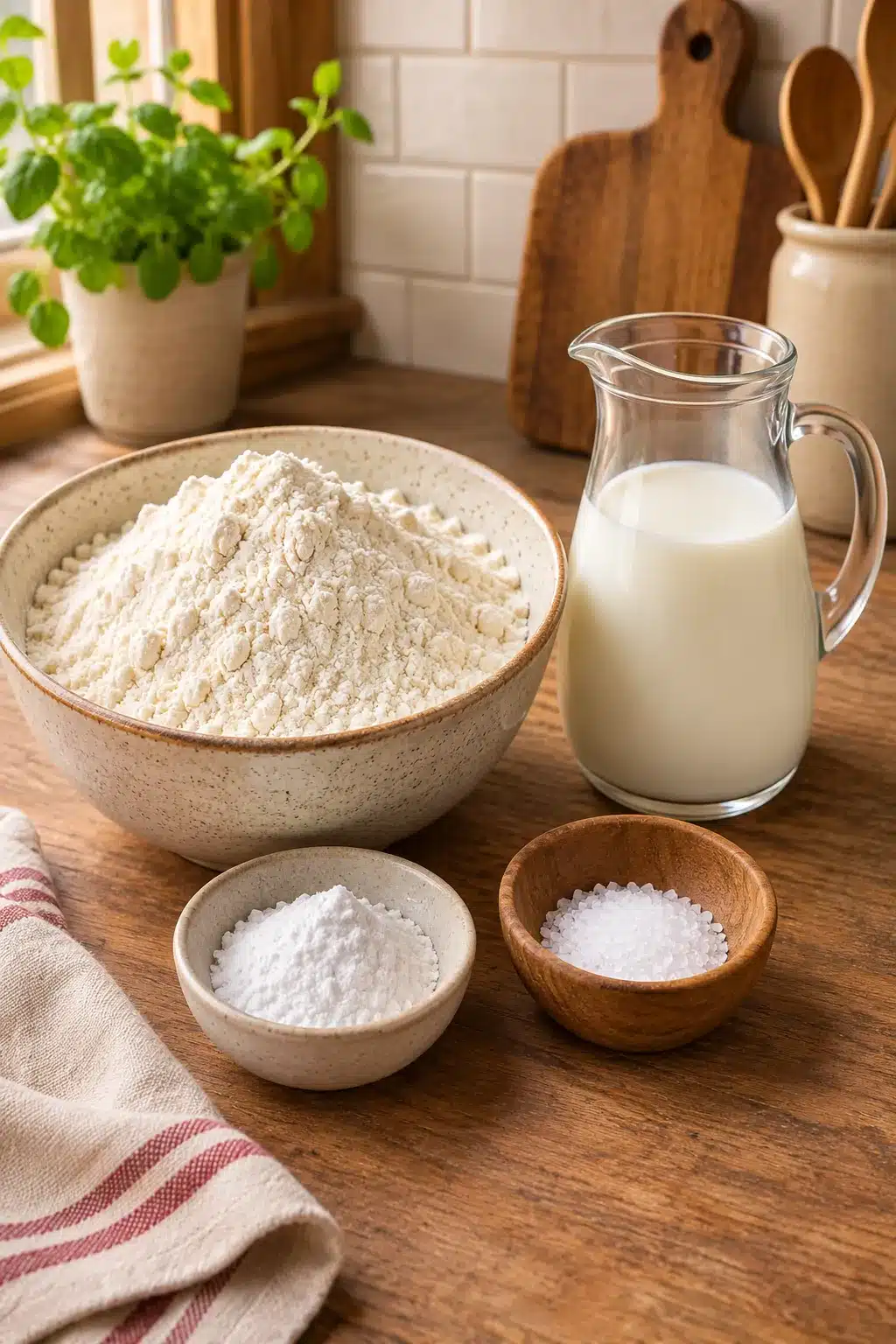
- 500 g plain flour (all-purpose flour)
- 2 teaspoons baking powder
- 1 teaspoon salt
- 310 ml milk, or water with a spoon of oil or melted butter
Method
- Test the baking powder with boiling water; it should bubble and fizz vigorously.
- Heat the oven to 375°F (190°C fan or 210°C regular) and heat a baking stone or heavy sheet.
- Mix the flour, baking powder, and salt. Stir in the milk until a dough forms.
- Knead briefly until the dough has a uniform consistency.
- Shape a 3 cm thick round disc and score a deep X on top.
- Bake for about 35 minutes until pale brown and hollow-sounding underneath.
Serving ideas
Slice the loaf once it is cool enough to handle and serve it with butter, jam, or a bowl of soup. It is also useful beside eggs at breakfast or toasted with a savory spread for a quick lunch.
Tips and an optional variation
The most important tip is to keep the loaf flat enough to bake through. If the dough feels dry, add a small splash of milk; if it is sticky, dust the surface lightly with flour. Optional variation: replace the milk with water plus a spoon of oil or melted butter for a slightly different crumb.
Storage and reheating
Keep the cooled bread wrapped at room temperature for a day or two. Rewarm slices in a toaster or a hot oven so the crust firms again. Freeze extra slices in a sealed container and thaw them before toasting.
Search questions answered
Can you make bread without yeast?
Yes. Baking powder can provide lift in a quick loaf, although the texture is denser and more scone-like than a risen yeast bread.
How do you know no yeast bread is done?
The loaf should be pale brown and sound hollow when tapped on the bottom. The deep score should be set, not wet or doughy.
Why make the loaf thin?
A disc around 3 cm thick cooks through more reliably than a round ball of dough in the same baking time.
Choosing the flour and liquid
Plain flour keeps this emergency no yeast bread light enough to bake quickly. Bread flour or wholewheat flour can absorb liquid differently, so the measured all-purpose flour gives the most predictable dough. Milk makes the crumb tender, while water with a little oil or melted butter is a practical pantry substitute. Measure the flour into a bowl rather than compacting it, then add liquid gradually if your flour is unusually thirsty.
Before you mix the dough
Test the baking powder is still good by putting a teaspoon in a small dish and pouring boiling water over. It should immediately bubble and fizz vigorously. This small check matters because baking powder is the only leavening in the loaf. Heat the oven to 190°C Fan (210°C regular) / 375°F / GM 6. Place a baking stone or heavy baking sheet in the oven to heat.
Mixing without overworking
Mix the dry ingredients. Stir in the milk, and stir the ingredients until the milk is mixed with the flour and forms a dough. It is easiest to do this with your hands rather than a wooden spoon. Turn the dough out onto your work surface and knead briefly until the dough has a uniform consistency. Stop as soon as it comes together; extended kneading can make this quick loaf firm.
Shaping and checking doneness
Shape the dough into a round disc, about an inch to an inch and a half (about 3 cm) thick. Score the top deeply with an X. This is important: do not make a round ball of dough, as it will not cook in the middle. Bake on the hot stone or baking sheet for about 35 minutes until pale brown. This loaf will not turn a deep gold, so do not wait too long to check it. When ready, it should sound hollow when tapped on the bottom.
What to do if the dough feels wrong
A dry, crumbly dough usually needs a teaspoon or two more liquid, while a very sticky dough needs only a light dusting of flour on the work surface. Avoid correcting it with a large amount of flour because that can make the finished bread heavy. If the top colors before the center feels set, lower the rack or loosely cover the loaf near the end, then continue baking until the hollow sound returns.
Serving the finished loaf
Let the bread stand briefly before slicing so the interior can settle. Serve thick slices with salted butter, sharp cheese, soup, or a fried egg. The loaf also makes a useful base for toast: slice it once cool, toast until the edges crisp, and add jam or a savory spread. Because the crumb is compact, thin slices are often easier to toast evenly than very thick ones.
Make-ahead and freezer notes
This loaf is intended for quick use, but it can still be managed efficiently. Cool it fully before wrapping so trapped steam does not soften the crust. If you know you will not finish it within a day or two, slice it and freeze the portions with parchment between them. Toast from thawed or partially thawed, checking the center before adding wet toppings.
Quick troubleshooting answers
If the loaf is dense, check that the baking powder fizzed and that the disc was not too thick. If it crumbles, the dough may have been too dry or overworked. If the crust stays pale, that is normal for this formula; don’t use color alone as the doneness test. The hollow tap and a firm center are more useful indicators.
FAQs
The exact recipe checkpoints are worth repeating: Test the baking powder is still good by putting a teaspoon in a small dish and pouring boiling water over. It should immediately bubble and fizz vigorously. Heat the oven to 190°C Fan (210°C regular) / 375°F / GM 6. Place a baking stone or heavy baking sheet in the oven to heat. Turn the dough out onto your work surface and knead briefly until the dough has a uniform consistency. Shape the dough into a round disc, about an inch to an inch and a half (about 3 cm) thick. Score the top deeply with an X. This is important! Don’t make a round ball of dough as it won’t cook in the middle. Bake on the hot stone or baking sheet for about 35 minutes until pale brown. (This loaf won’t turn a deep gold so don’t wait too long to check it.) When ready, it should sound hollow when tapped on the bottom.
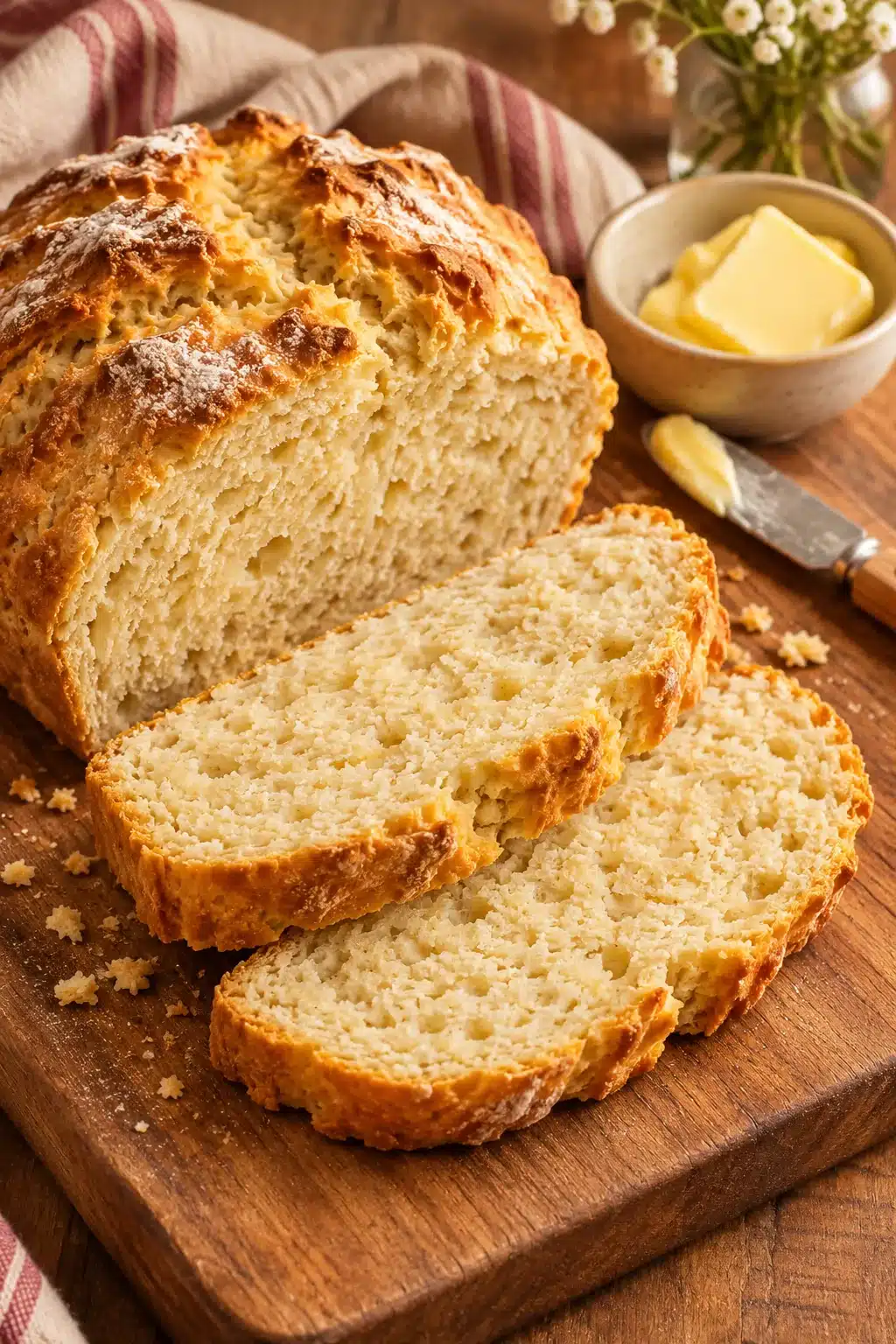
Emergency no yeast bread is at its best when served warm and simply. Keep the shape flat, use active baking powder, and let the hollow-tap test guide the finish.

Emergency No Yeast Bread
Ingredients
Ingredients
- 500 g plain flour regular all-purpose flour, not bread or wholewheat flour
- 2 tsp baking powder
- 1 tsp salt
- 310 ml milk or water with a spoon of oil or melted butter
Instructions
Instructions
- Test the baking powder is still good by putting a teaspoon in a small dish and pouring boiling water over. It should immediately bubble and fizz vigorously.
- Heat the oven to 190°C Fan (210°C regular) / 375°F / GM 6. Place a baking stone or heavy baking sheet in the oven to heat.
- Mix the dry ingredients. Stir in the milk, and stir the ingredients until the milk is mixed with the flour and forms a dough.
- Turn the dough out onto your work surface and knead briefly until the dough has a uniform consistency.
- Shape the dough into a round disc, about an inch to an inch and a half (about 3 cm) thick. Score the top deeply with an X. This is important: do not make a round ball of dough, as it will not cook in the middle.
- Bake on the hot stone or baking sheet for about 35 minutes until pale brown. This loaf will not turn a deep gold, so do not wait too long to check it. When ready, it should sound hollow when tapped on the bottom.