

Easy 3-ingredient lemonade scones bring a light, tender bake to the table with self-raising flour, cream, and clear carbonated lemonade. The dough comes together quickly, and the finished scones are ready in about 30 minutes, making them useful for an afternoon tea, a weekend breakfast, or a last-minute plate for guests. Keep the dough lightly handled, bake the rounds while they still touch, and look for a golden top with a clean pull-apart seam.
What Are Easy 3-Ingredient Lemonade Scones?
These are soft, round scones built around a remarkably short ingredient list. Self-raising flour supplies the structure and lift, cream adds richness and moisture, and carbonated lemonade brings sweetness and acidity along with extra lightness. The lemonade should be a clear fizzy soft drink rather than homemade lemon juice and sugar. Heavy cream, whipping cream, or Australian-style thickened cream can be used.
Why This Simple Scone Recipe Works
The formula removes the butter-rubbing and extended mixing found in many traditional scone recipes. Cream supplies the fat that helps keep the crumb tender, while the bubbles in the lemonade loosen the mixture. Because the dough is wet and sticky at first, the key is to add only enough flour while shaping to make it workable. Too much extra flour can make the scones heavy.
There is also a useful timing advantage: the flour, cream, and lemonade can be mixed while the oven finishes heating. Once the dough is combined, avoid beating it smooth like cake batter. A few rough areas are fine, because the dough will be lightly kneaded and flattened on the floured board. That short handling keeps the finished interior soft and gives the rounds enough structure to rise.
How to Make Easy 3-Ingredient Lemonade Scones
Heat the oven before mixing so the shaped dough can go straight onto the tray. Line the tray, flour the work surface and cutter, and keep a little extra flour nearby for handling. The recipe yields about 20 scones.
Ingredients
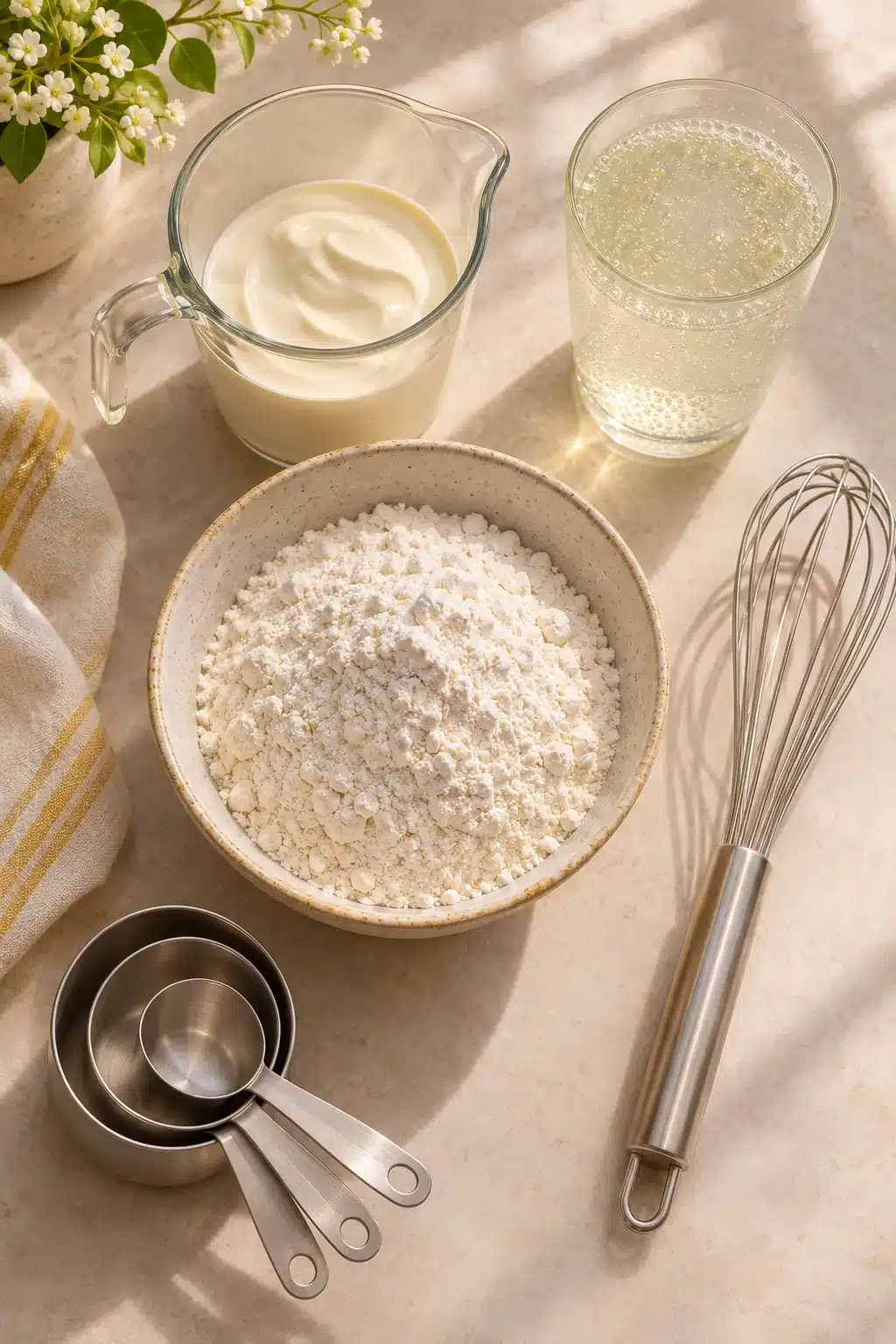
- 3 cups (450 g) self-raising flour
- 1 cup (250 ml) thickened cream or heavy cream
- 1 cup (250 ml) clear carbonated lemonade, such as Sprite
Method
- Heat the oven to 200°C (400°F).
- Put the self-raising flour in a large mixing bowl.
- Add the cream and lemonade, then mix just until combined.
- Turn the sticky dough onto a well-floured board and knead with extra flour until smooth.
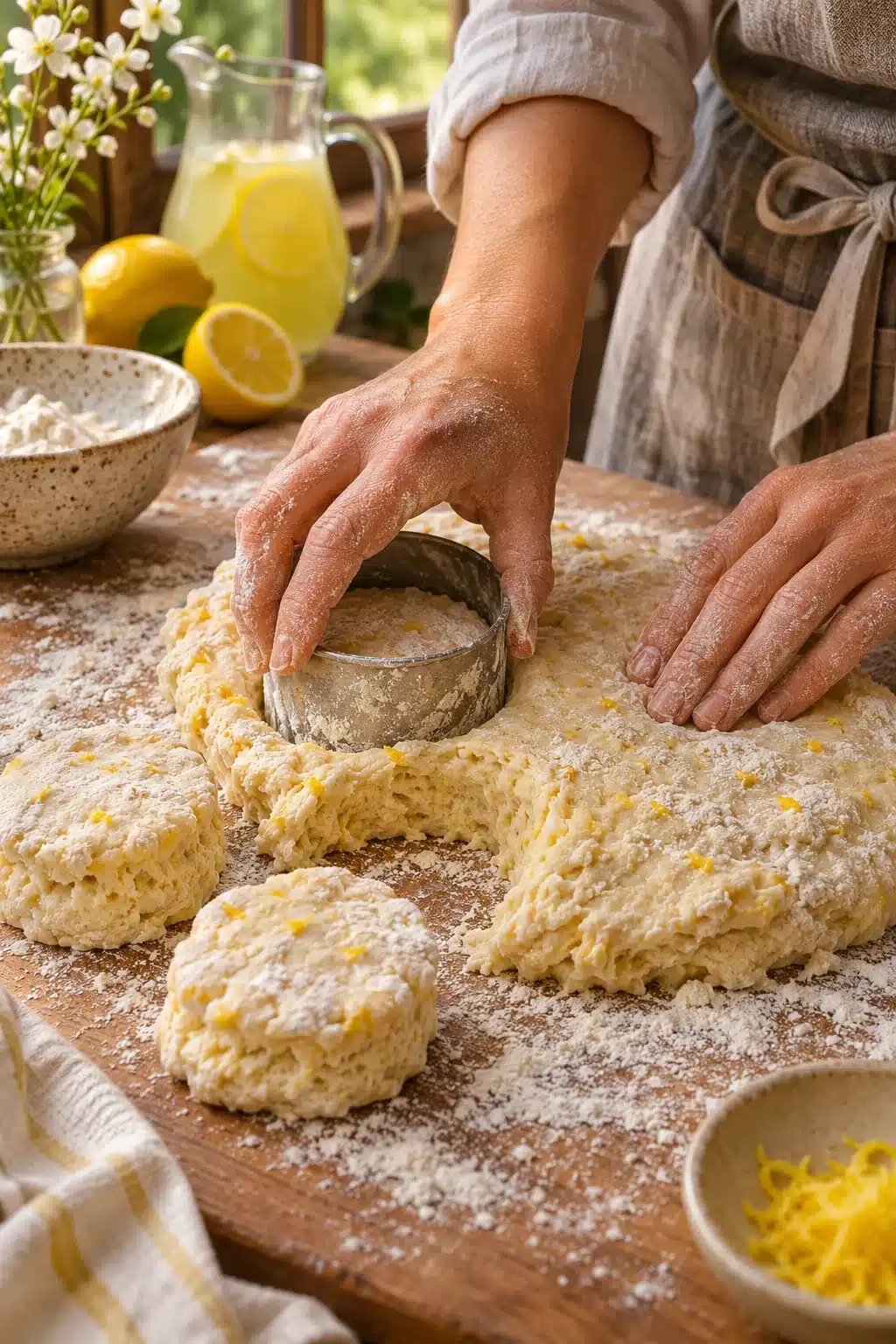
- Flatten the dough to about 2–3 cm (1 inch) thick and cut rounds with a floured scone cutter.
- Place the rounds on a lined baking tray so they just touch, then bake for 15–20 minutes.
- The scones are ready when golden brown and easy to pull apart where they have joined.
Serving Ideas for Fresh Scones
Serve the scones warm or just cooled with jam and cream for a classic afternoon-tea plate. Their mild sweetness also works with lemon curd, berry preserves, or a little honey. For breakfast, pair one with fresh fruit and tea or coffee. Split the scones gently along their natural seam so the crumb stays soft rather than compressed.
For a simple afternoon-tea setup, arrange the scones in a lined basket and put the jam and cream in separate bowls so everyone can build their own. If you are serving them later in the day, bake until the tops are golden but do not leave them in the oven beyond the point of doneness. The best texture is tender in the center with a lightly firm, browned edge.
Tips for Soft, Tall Scones
The dough is expected to be sticky. If it feels difficult to manage, start by adding only half of the lemonade, mix, and then add enough of the remaining liquid to bring the dough together. This can make shaping easier, although the batch may yield one or two fewer scones. Work quickly and lightly, and flour the cutter between cuts so it releases cleanly.
Keep the cutter moving straight down and back up rather than twisting it. A twist can pinch the sides of a round and make the rise less even. Place the cut pieces close together on the tray: the touching sides support one another as they bake, while the exposed tops brown. If the first batch looks pale, allow a few extra minutes, but use the golden color and easy pull-apart seam as the main doneness cues.
Troubleshooting the Dough
If the mixture seems dry before it has come together, add the remaining lemonade gradually rather than adding extra cream. If it is too wet to move, dust the board and the top of the dough with flour and give it a brief fold. The goal is a workable surface, not a dry dough. If the baked scones are dense, the likely causes are overworking the dough or adding more flour than needed during shaping.
Optional Lemonade Scone Variation
For a lower-sugar version, use sugar-free clear lemonade. Keep the flour and cream quantities the same, and judge the dough by texture rather than sweetness. This is an optional variation; the primary recipe remains the standard clear lemonade version.
Storage and Reheating
Cool leftover scones completely before storing them in an airtight container for short-term use. For longer storage, freeze them well wrapped. Thaw as needed and warm briefly in the microwave, or reheat gently until just soft and warm. Avoid overheating, which can dry the crumb and toughen the edges.
Easy Scone Recipe Questions
Can I use lemonade made with lemon juice? No. The recipe means clear carbonated lemonade, such as Sprite, not still lemon juice mixed with sugar.
What cream should I use? Use a rich heavy, whipping, or thickened cream. A higher-fat cream helps the scones stay tender.
Why is the dough sticky? The high moisture is normal. Flour the board and cutter, or add the lemonade gradually to make shaping easier.
FAQs

With three everyday ingredients and a short bake, these lemonade scones are a practical way to make a warm, tender treat whenever the craving arrives.


Easy 3-Ingredient Lemonade Scones
Ingredients
Ingredients
- 3 cups (450 g) self-raising flour
- 1 cup (250 ml) thickened cream or heavy cream
- 1 cup (250 ml) clear carbonated lemonade such as Sprite
Instructions
Instructions
- Heat the oven to 200°C (400°F).
- Put the self-raising flour in a large mixing bowl.
- Add the cream and lemonade, then mix just until combined.
- Turn the sticky dough onto a well-floured board and knead with extra flour until smooth.
- Flatten the dough to about 2–3 cm (1 inch) thick and cut rounds with a floured scone cutter.
- Place the rounds on a lined baking tray so they just touch, then bake for 15–20 minutes.
- The scones are ready when golden brown and easy to pull apart where they have joined.