
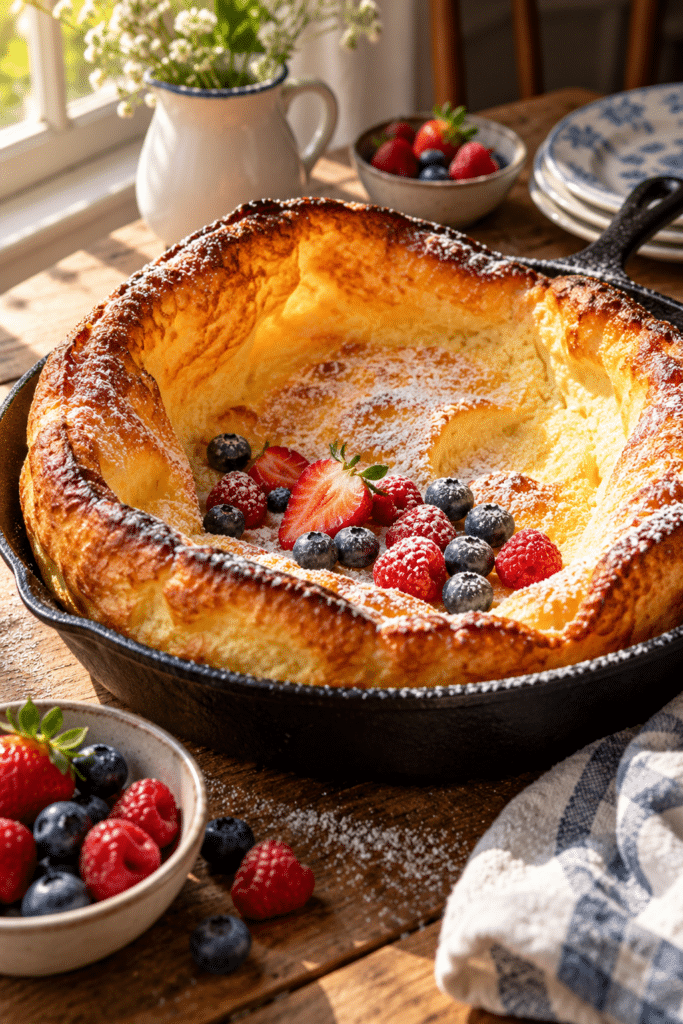
This dutch baby german pancake is the breakfast to make when you want something warm, dramatic, and easy enough for a relaxed morning. The batter takes only a few minutes in a blender, then it puffs around the edges in a preheated skillet while the center stays tender. Serve the pancake hot in wedges with powdered sugar, syrup, or berries for a family-style breakfast that feeds eight from One Pan.
What is a dutch baby german pancake?
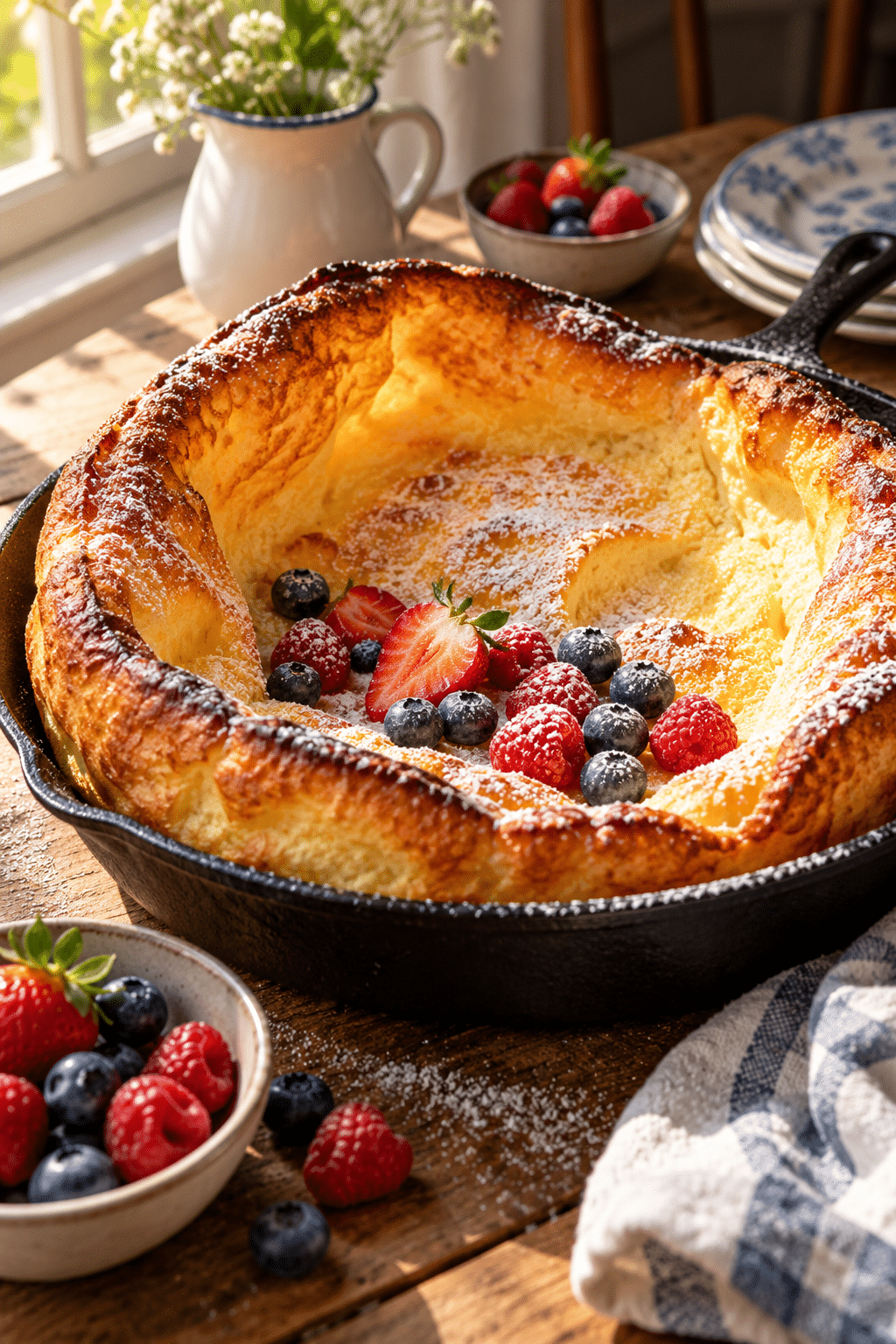
A Dutch baby is a large oven pancake with the airy lift of a popover, the soft middle of a crepe, and browned edges that curl up the sides of the pan. It is also called a German pancake. Unlike stovetop pancakes, the batter is poured into a hot, buttered pan and baked without flipping, so the oven supplies the even heat and the skillet gives the edges a deep golden finish.
The dramatic rise is temporary, but the contrast remains: crisp, buttery edges surround a delicate center. It is best served as soon as it comes out of the oven, when the shape is tallest and the surface is still warm enough to melt a dusting of sugar.
Why this dutch baby german pancake works
The method depends on three small details. Warming the milk helps the batter blend smoothly, room-temperature eggs add structure, and preheating the skillet gives the batter an immediate burst of heat. Blending for 30 seconds incorporates the ingredients evenly without requiring a separate bowl of dry ingredients.
Keeping the oven door closed during the 25-minute bake protects the steam and heat that create the puff. The extra five-minute rest in the switched-off oven lets the pancake settle gently instead of collapsing all at once when the door opens.
How to make the pancake
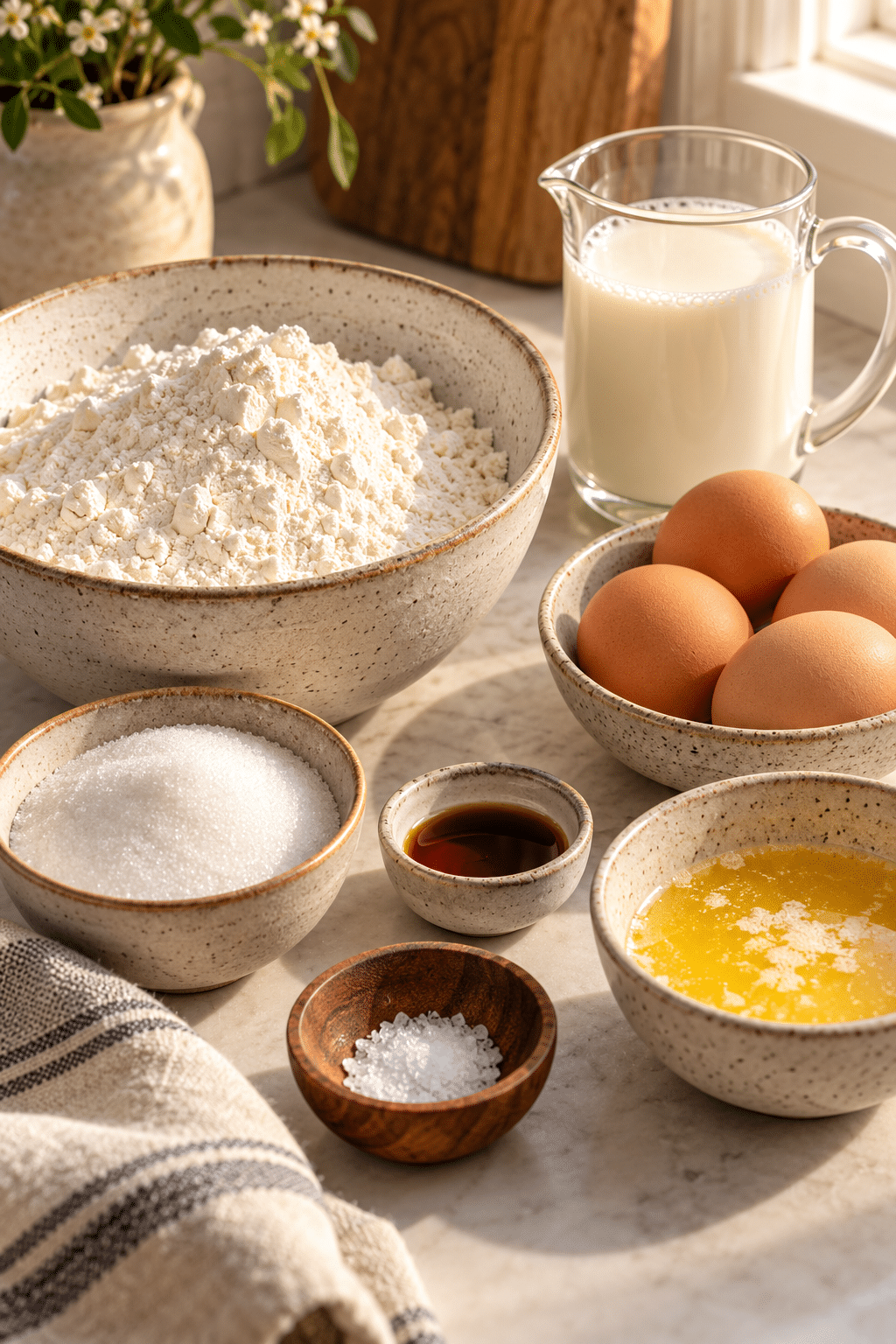
Gather the ingredients before preheating so the batter can go into the skillet while it is hot. A 12-inch cast iron skillet gives the most pronounced edges, but a 9×13-inch baking dish also works. Use oven mitts for every step after the pan enters the oven.
Ingredients
- 2 cups flour
- 2 cups warm milk
- 6 large eggs, at room temperature
- 2 tablespoons sugar
- 2 teaspoons vanilla extract
- 1 teaspoon salt
- 2 tablespoons unsalted butter, melted
- Optional toppings: syrup, powdered sugar, berries, etc.
Method
Preheat oven to 425°F. Place 12-inch cast iron skillet (or 9×13 baking dish) in oven while preheating.
Mix all ingredients, except the butter, in a blender for 30 seconds; set aside.
Once oven is preheated, remove hot pan from oven. Pour in melted butter and swirl pan to coat bottom and sides.
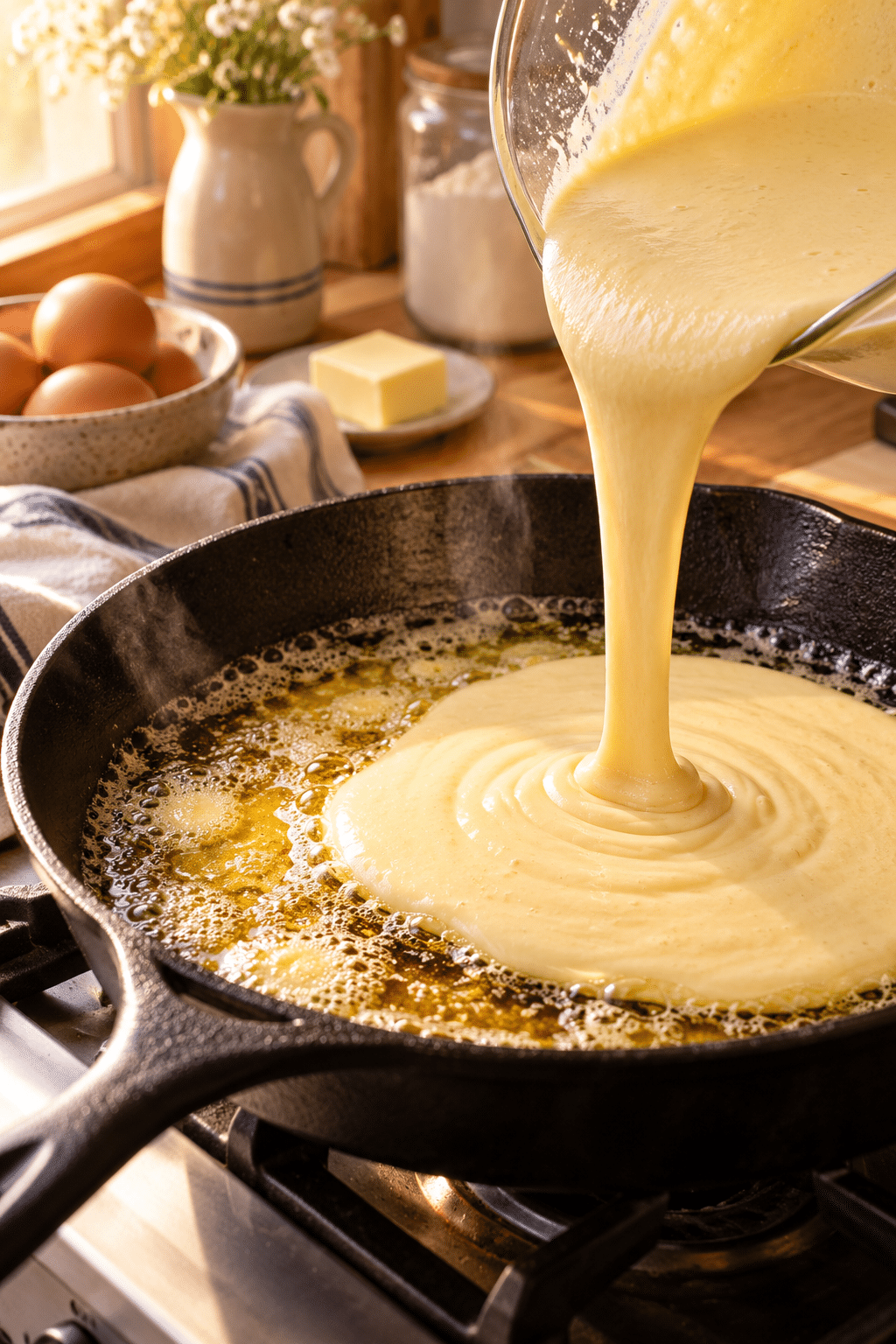
Pour batter into the pan. Bake for 25 minutes (do not open the oven yet!). Turn off oven and let rest 5 more minutes before opening oven door. Remove and slice to serve.
Serve hot with toppings such as powdered sugar, syrup, fresh berries, etc.
Serving ideas for a dutch baby
Bring the skillet to the table on a heatproof trivet and cut the pancake into wedges. Powdered sugar keeps the finish simple, while maple syrup adds a glossy sweetness. Fresh berries bring acidity and color; sliced peaches or sautéed apples make the breakfast feel seasonal. For a larger brunch, pair each wedge with yogurt and a salty breakfast side.
This recipe is especially useful for a weekend breakfast or a holiday brunch because the oven does the cooking after the short blending step. Slice it just before serving so everyone can see the browned, puffed rim.
Tips and optional variation
For the best lift, do not skip preheating the skillet and do not open the oven during the bake. If the center looks soft after the five-minute rest, remember that a tender middle is part of the pancake’s texture; it should not look liquid. Let the butter coat the sides as well as the bottom so the batter can climb.
Optional variation: make a lemon-berry version by adding finely grated lemon zest to the batter and serving the finished pancake with berries. This optional variation changes the flavor at the table without changing the primary batter, timing, or baking method.
Storage and reheating
A Dutch baby is most impressive fresh, but leftover wedges can be cooled, covered, and refrigerated for up to two days. Reheat them on a baking sheet in a 350°F oven until warmed through. The edges will not be quite as crisp as they were from the skillet, so add fresh toppings after reheating rather than before.
Search-query answers
Can I make a Dutch baby without cast iron?
Yes. Use a 9×13-inch baking dish that can safely go into a 425°F oven. The pancake may spread into a thinner shape, but the same hot-pan method still works.
Why did my German pancake deflate?
Some deflation is normal as the steam escapes. Opening the oven early, using a cold pan, or leaving the pancake to sit for a long time before serving can make the change more noticeable.
What toppings go on a Dutch baby?
Powdered sugar, syrup, and fresh berries are classic choices. Yogurt, cooked fruit, or a little lemon zest also work well with the lightly sweet batter.
FAQs
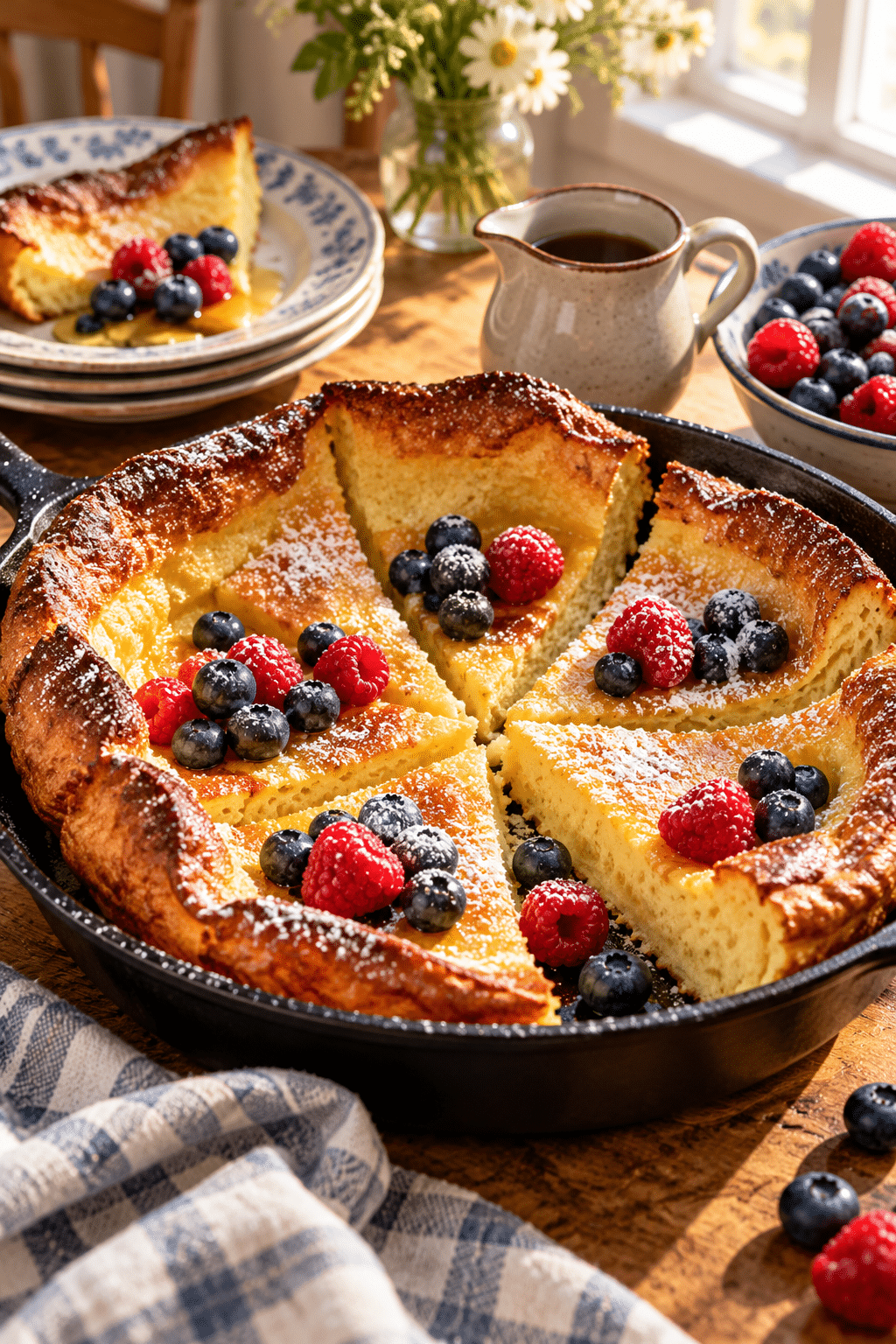
Serve this dutch baby german pancake while it is hot, when the browned edges are at their most dramatic and the center is still soft. One Skillet, a quick blender batter, and a few toppings turn simple ingredients into a breakfast everyone can share.

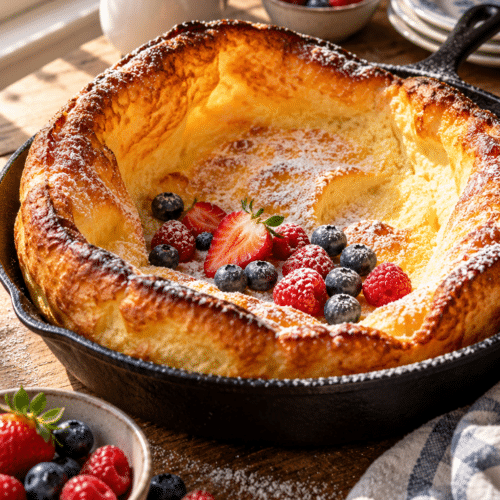
Dutch Baby German Pancake: An Easy Puffy Breakfast
Ingredients
Ingredients
- 2 cups flour
- 2 cups warm milk
- 6 large eggs at room temperature
- 2 tablespoons sugar
- 2 teaspoons vanilla extract
- 1 teaspoon salt
- 2 tablespoons unsalted butter melted
- as needed toppings syrup, powdered sugar, berries, etc.
Instructions
Instructions
- Preheat oven to 425°F. Place 12-inch cast iron skillet (or 9x13 baking dish) in oven while preheating.
- Mix all ingredients, except the butter, in a blender for 30 seconds; set aside.
- Once oven is preheated, remove hot pan from oven. Pour in melted butter and swirl pan to coat bottom and sides.
- Pour batter into the pan. Bake for 25 minutes (do not open the oven yet!). Turn off oven and let rest 5 more minutes before opening oven door. Remove and slice to serve.
- Serve hot with toppings such as powdered sugar, syrup, fresh berries, etc.